1. Abnormal current does not equal simple overload
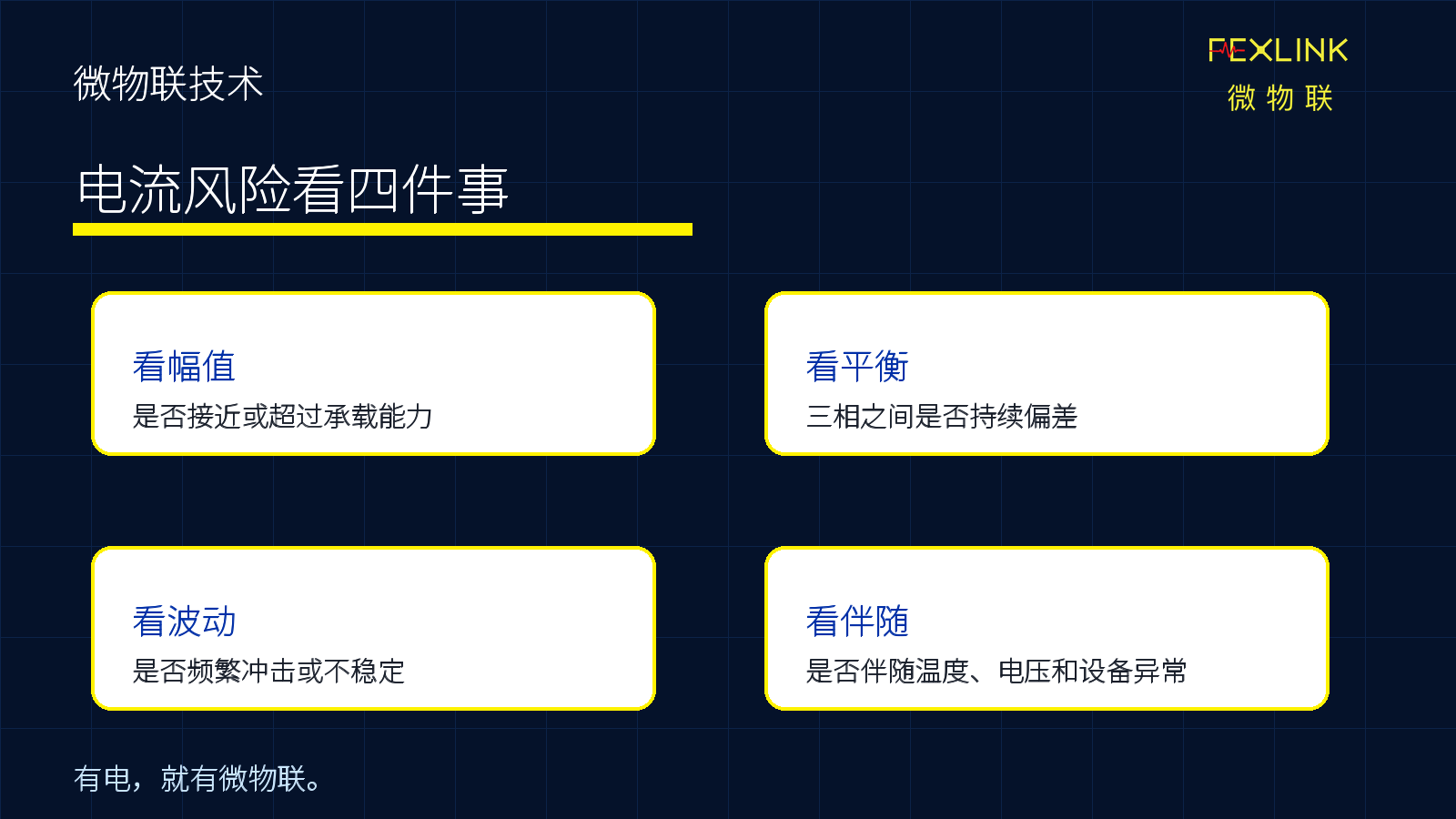
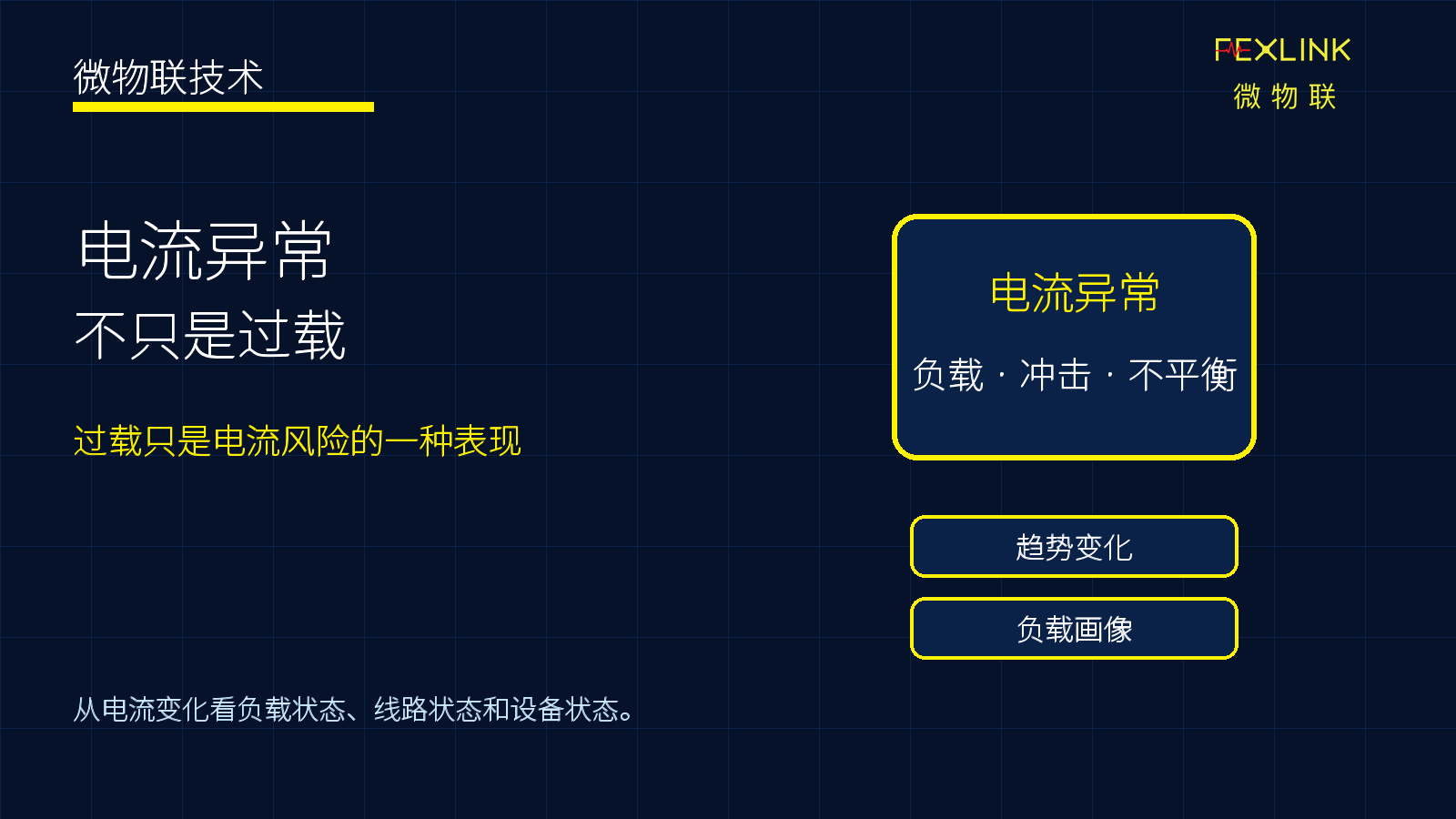
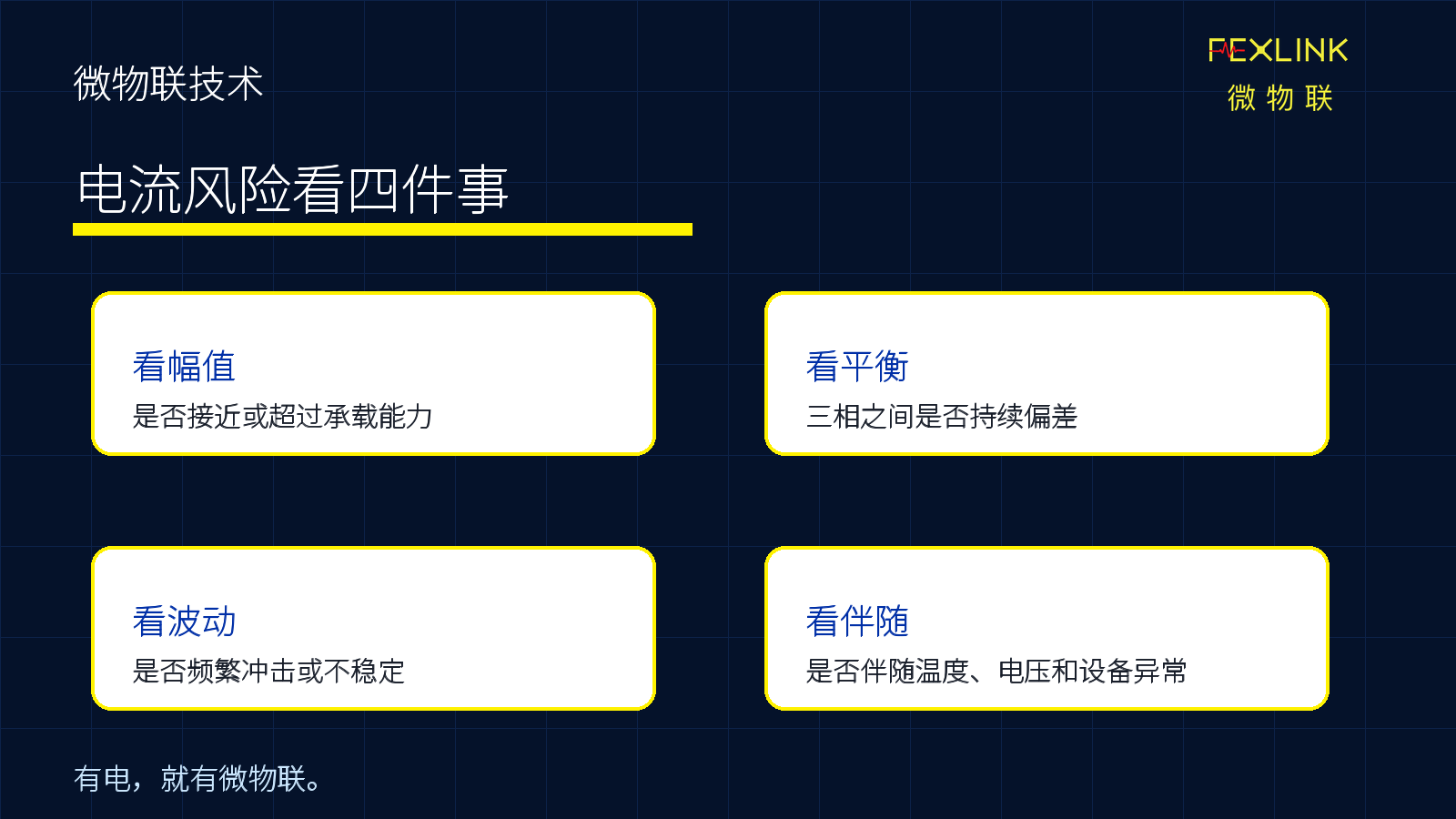
In traditional operation and maintenance, current risk is often understood as whether it is overloaded. Overload is indeed important, but it is only a dominant manifestation of current abnormalities. Many risks have already been manifested through current waveform, three-phase relationship, impact frequency and load changes before overloading.
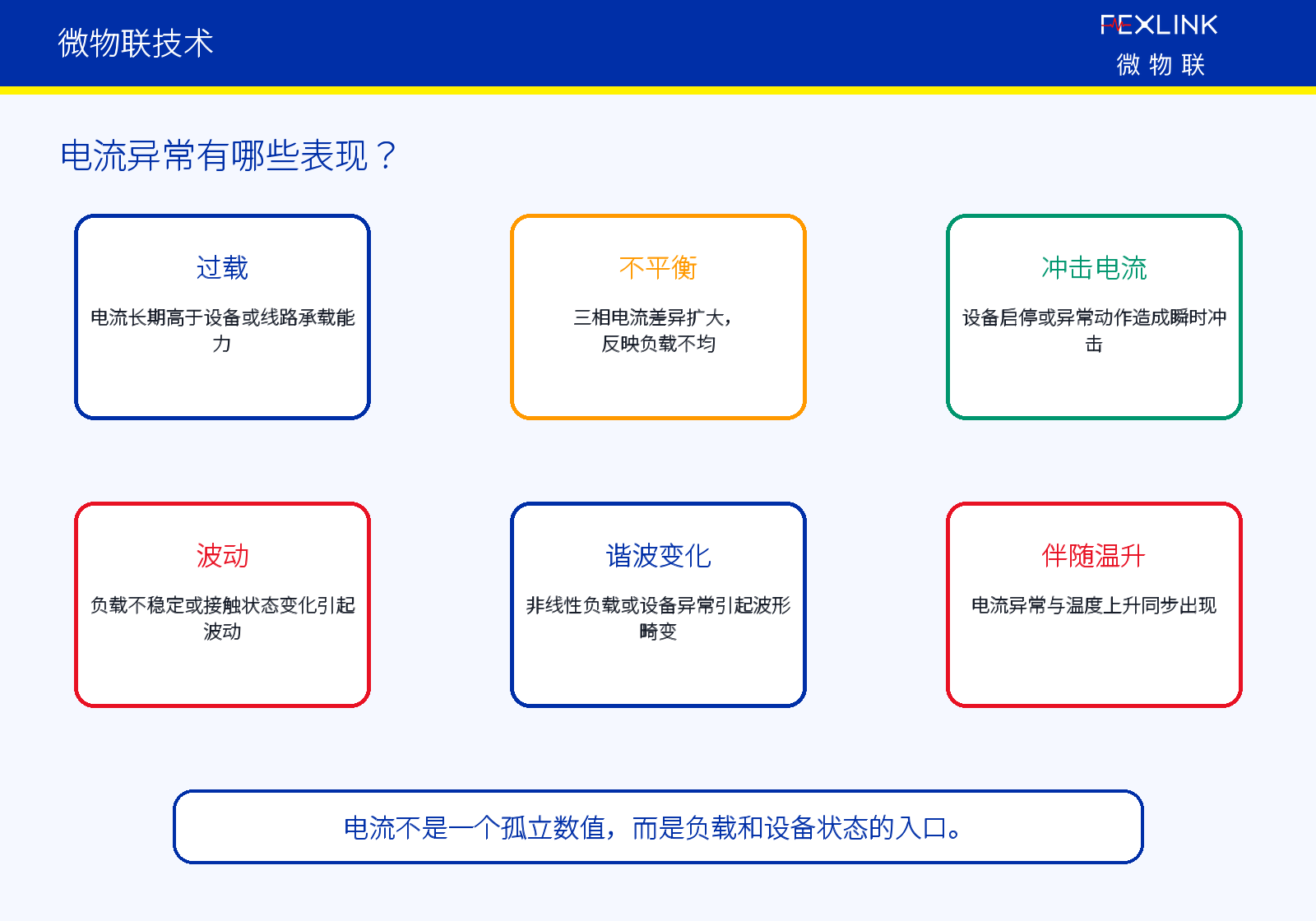
For example, poor contact may cause current fluctuations and local temperature rises; abnormal motor operation may cause phase imbalance; frequent starts and stops may cause repeated shocks. These do not necessarily exceed the circuit breaker operating value immediately, but they already indicate that the system status is changing.
2. What may be the reasons behind the abnormal current?
Abnormal current may be caused by abnormal load, aging circuits, loose terminals, motor failure, three-phase imbalance or equipment start-stop shock. Different reasons correspond to different treatments.
If you only look at the maximum current value, it is easy to mix different problems together. Overload requires load reduction or capacity expansion, poor contact requires inspection of connection points, motor abnormalities require equipment maintenance, and three-phase imbalance requires load adjustment.
3. Why is it not enough to only look at the maximum current?
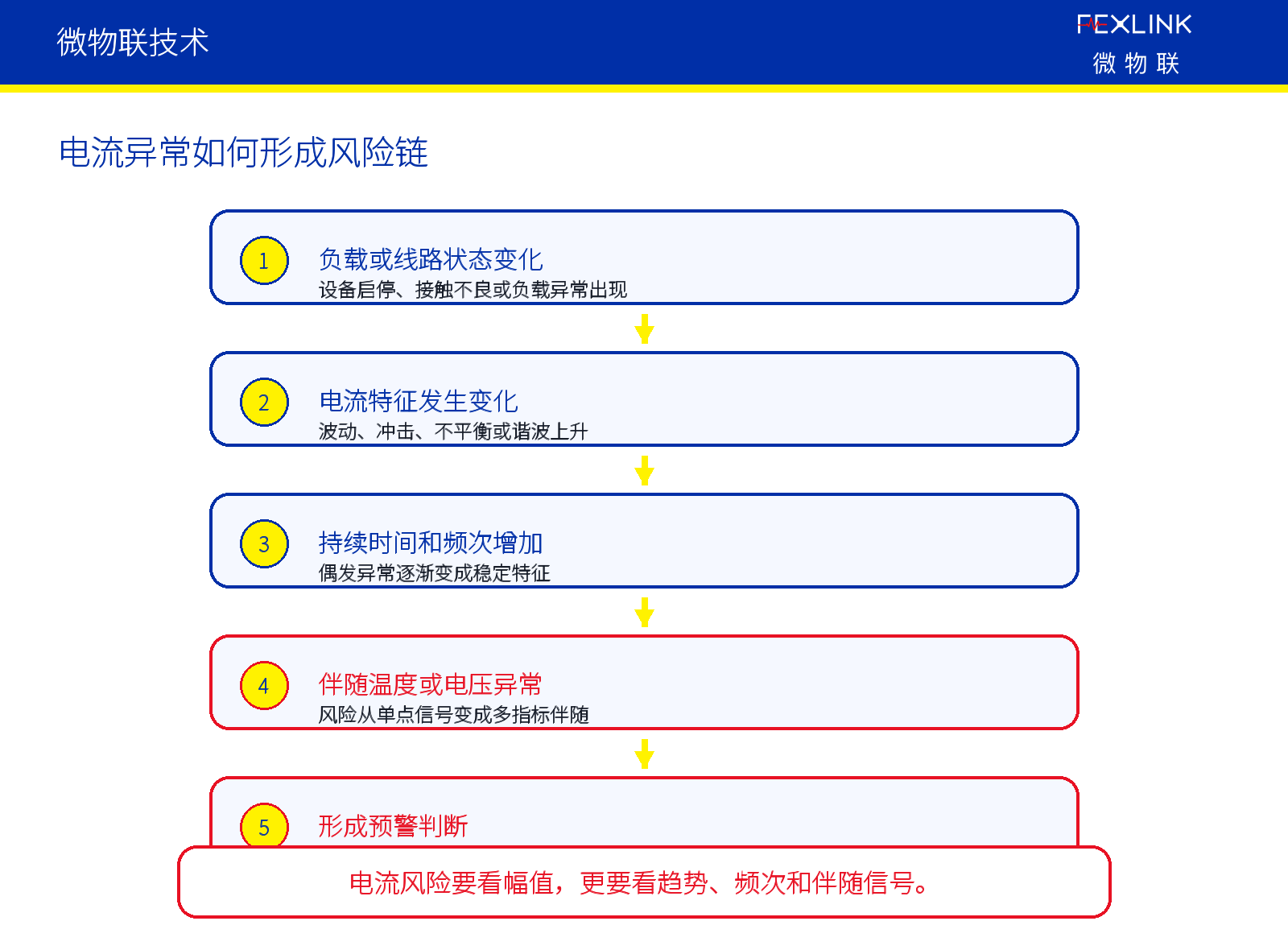
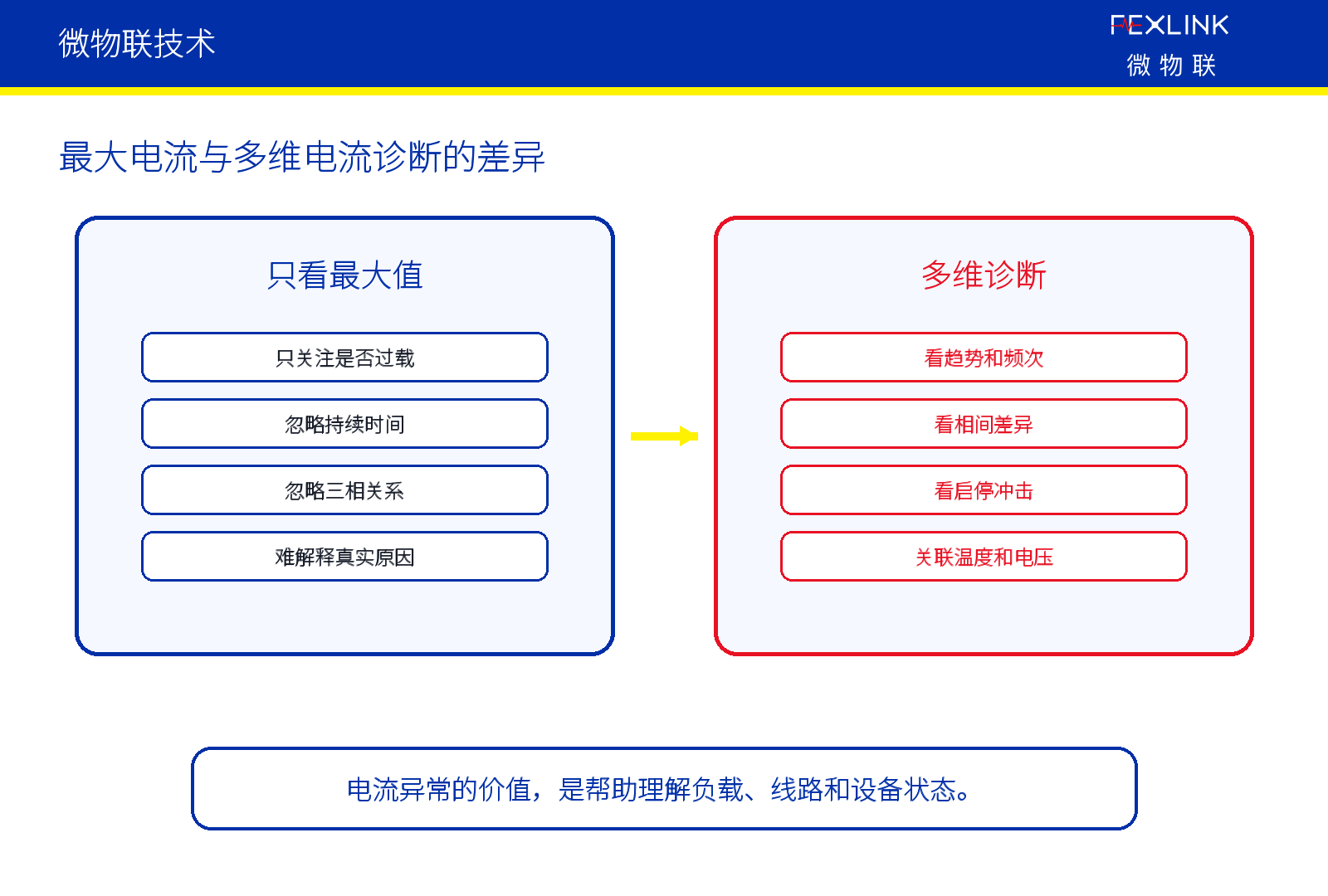
The maximum value ignores duration and frequency of occurrence. An instantaneous shock and a long-term high run have completely different risk implications. The maximum value also ignores the difference between phases. Under the same total current, a certain phase that is high for a long time may be more dangerous.
Therefore, current monitoring should be upgraded from "whether it exceeds the threshold" to "whether the abnormality continues, whether it occurs repeatedly, and whether it changes with other indicators."
4. How to participate in early warning of abnormal current
Abnormal current can be combined with temperature, voltage, leakage and equipment alarms to form an early warning judgment. For example, if the current is not significantly overloaded, but the temperature of a certain contact continues to rise, you should pay attention to the contact resistance. Frequent current surges and increased voltage sag may be related to the start and stop of large loads.
Multidimensional correlations can reduce false positives and help explain the causes of risk.
5. How does FEXLINK understand current data?
FEXLINK believes that current data is not only used for measurement and protection, but also an important entrance to understand load status, line status and equipment status.
Future current monitoring should move from single-point threshold alarms to load profiling, trend diagnosis and risk interpretation.
Conclusion: Let electrical safety move from result management to process management
If the fault is only dealt with after it occurs, a lot of losses have already been caused; if the risk can be seen early in the status change, operation and maintenance will have the opportunity to deal with it in advance.
FEXLINK technology will continue to share content related to electrical safety early warning, digital power distribution, arc fault identification, energy supervision and industrial Internet of Things.
Where there is electricity, there is FEXLINK.