Abstract: The digital lightning protection platform can not only push out anomalies, but also achieve alarm classification, responsibility dispatch, disposal tracking, review and confirmation, and file precipitation. Only by forming a closed loop from alarm to work order to review can the lightning protection system truly enter a manageable state.
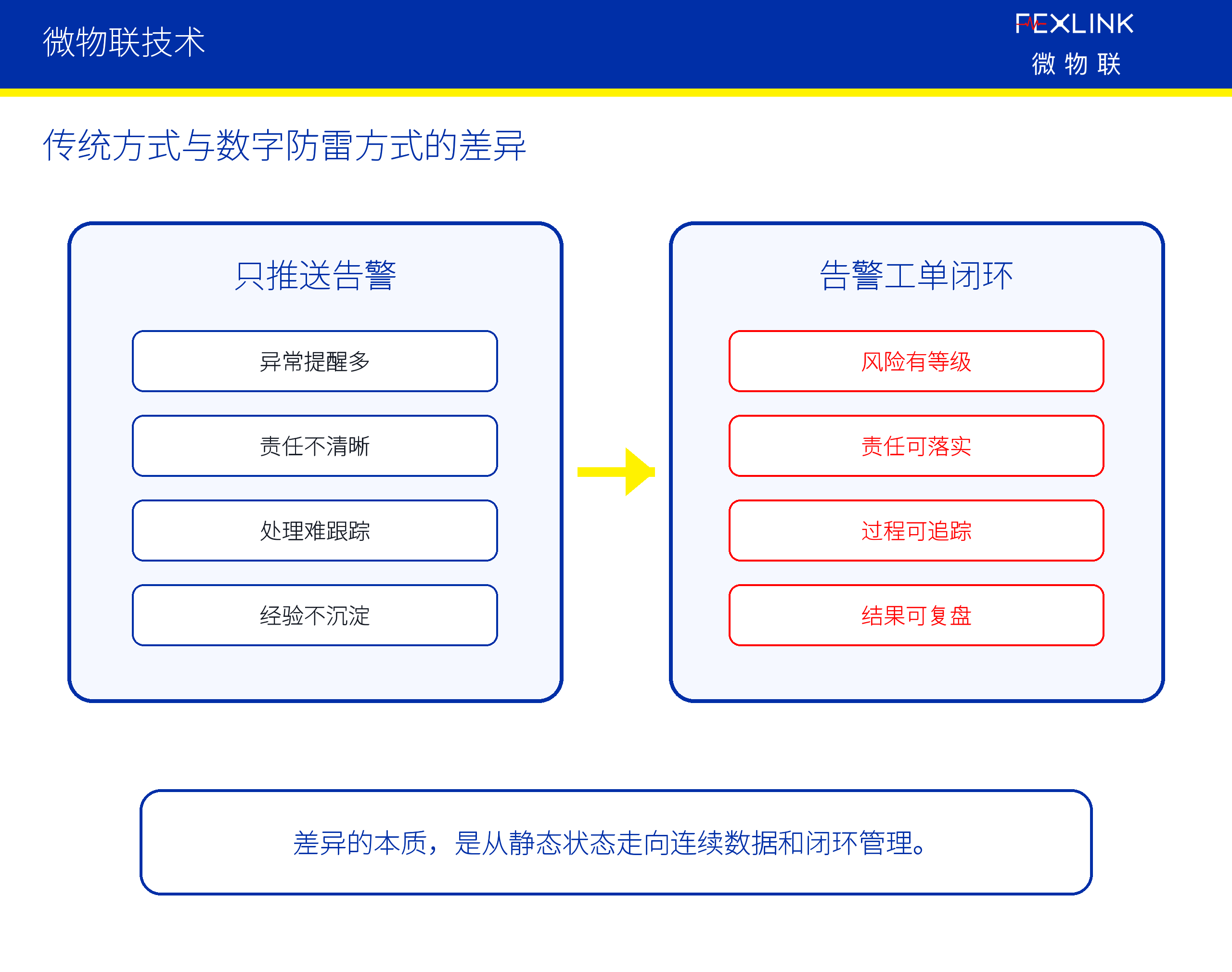
Many platforms can detect anomalies but fail to truly manage them. After an alarm pops up, who will handle it, when it will be handled, what the result will be, and whether it will be reviewed. If there is no record, the risk will still remain outside the system.
The value of the digital lightning protection platform is not to push more alarms, but to turn alarms into actions.
1. Why alarms must be classified
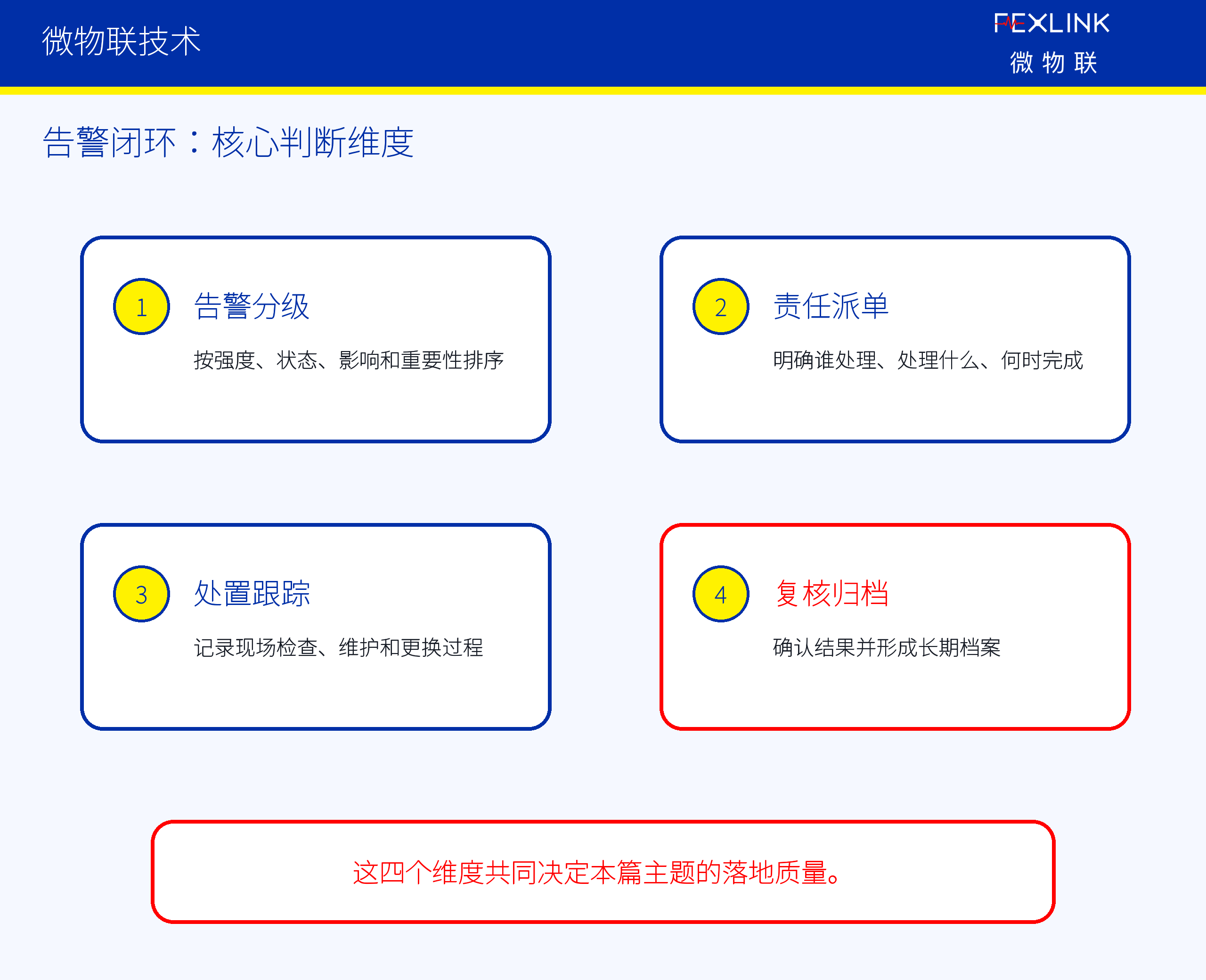
If all alarms are equally important, operations personnel will eventually ignore them. Alarm classification should take into account lightning strike intensity, SPD status, grounding changes, equipment impact and site importance.
High-intensity lightning strikes superimposed with SPD anomalies and equipment alarms should be handled with priority; minor events with normal status can be observed and archived.
2. What links does the work order closed loop include?
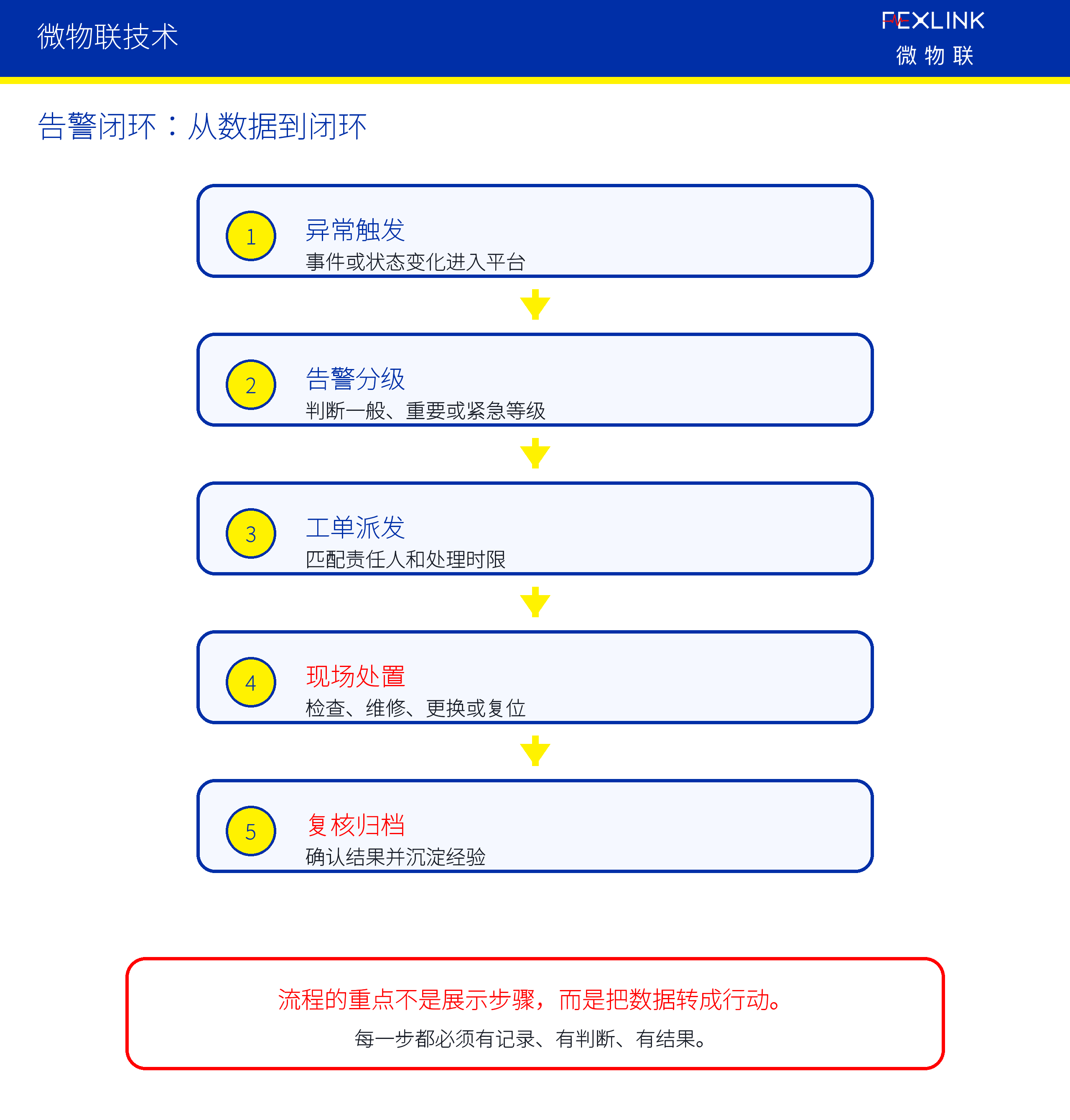
The complete closed loop includes alarm generation, risk classification, work order dispatch, on-site processing, result uploading, review and confirmation, and file archiving.
Each step must have time, responsible person, action and result, otherwise it cannot be called a closed loop.
3. How to reduce invalid alarms
The platform should reduce duplicate alarms through thresholds, trends, scenario rules and correlation analysis. Orders are not issued for every fluctuation, but abnormalities in key combinations must be escalated in time.
An effective platform is not to raise more alarms, but to allow important risks to be seen first.
4. How to reversely optimize closed-loop data management
Long-term work order data can analyze which sites have the most problems, which alarms are the most effective, and which maintenance actions are the most common.
This information can reversely optimize inspection plans, spare parts strategies and risk classification models.
5. How does FEXLINK understand platform closed loop?
FEXLINK believes that the core capability of the digital lightning protection platform is to turn data into actions. The FEXLINK platform should not only display data, but also form alarm classification, work order handling and review archiving. For the full picture of sensing, features and technology, see the smart & digital lightning protection platform overview.
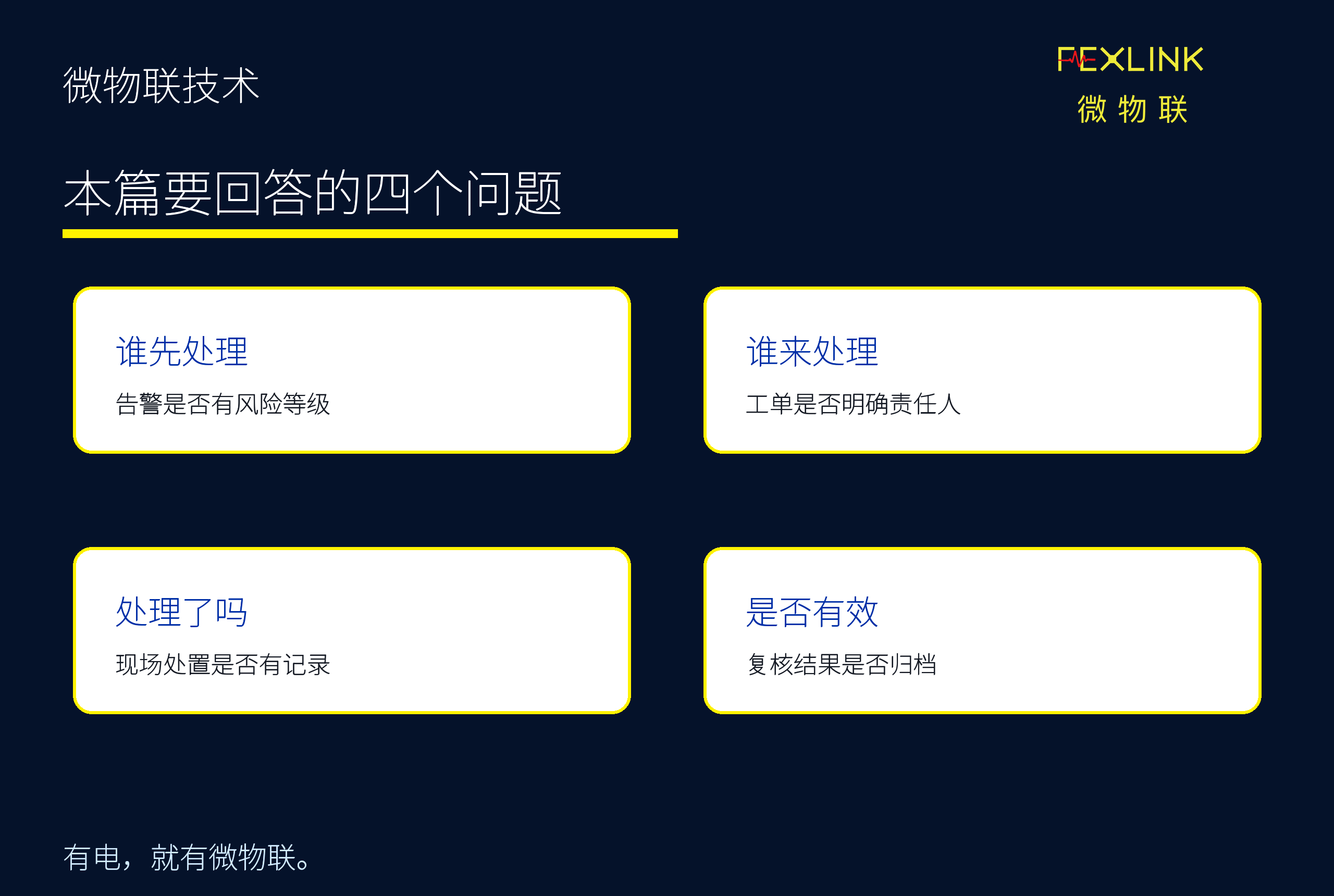
Alarm classification determines who should be processed first, work order closed loop determines whether the processing is completed, and file precipitation determines whether optimization can be continued.
Conclusion: Alarm is not the end point, closed loop is the management result
The real value of the digital lightning protection platform is to form a complete chain of anomalies from being discovered, dispatched, processed to reviewed. Only when a closed loop is formed can the lightning protection system truly enter a manageable state.
FEXLINK technology will continue to share content related to intelligent lightning protection, early warning of electrical safety, digital power distribution, energy supervision and industrial Internet of Things.
FEXLINK/FEXLINK uses data to reconstruct energy efficiency and electrical safety.
Where there is electricity, there is FEXLINK.