1. Electrical failures often do not occur suddenly
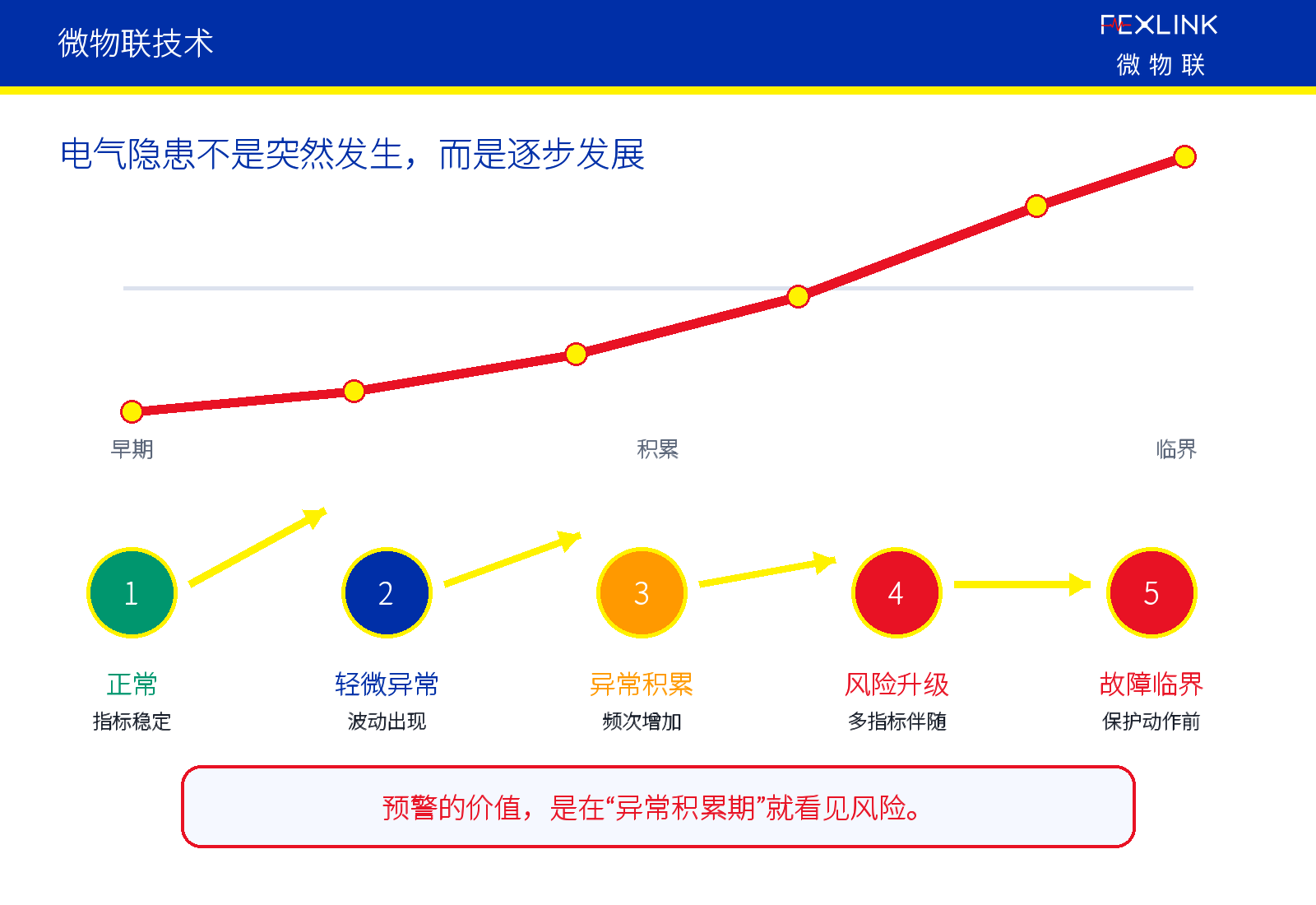
Many electrical accidents seem to happen suddenly at a certain moment: equipment burns out, circuits trip, smoke comes out of cabinets, sockets heat up, and even fires occur. However, from an engineering perspective, most risks do not appear without warning, but gradually accumulate during long-term operation.
For example, the contact points go from slightly loose to hot, the insulation goes from slightly damp to increased leakage, the load goes from occasional shocks to frequent fluctuations, and the arc goes from intermittent pulses to a continuous dangerous state. Traditional operation and maintenance often only sees the final result, but cannot see the intermediate process.
What early warning aims to solve is the invisible problems in this process.
2. Traditional protection devices solve more “last minute” problems
Protection devices such as circuit breakers, leakage protectors, and fuses are very important. They play the role of cutting off risks and protecting the safety of equipment and personnel when a fault occurs.
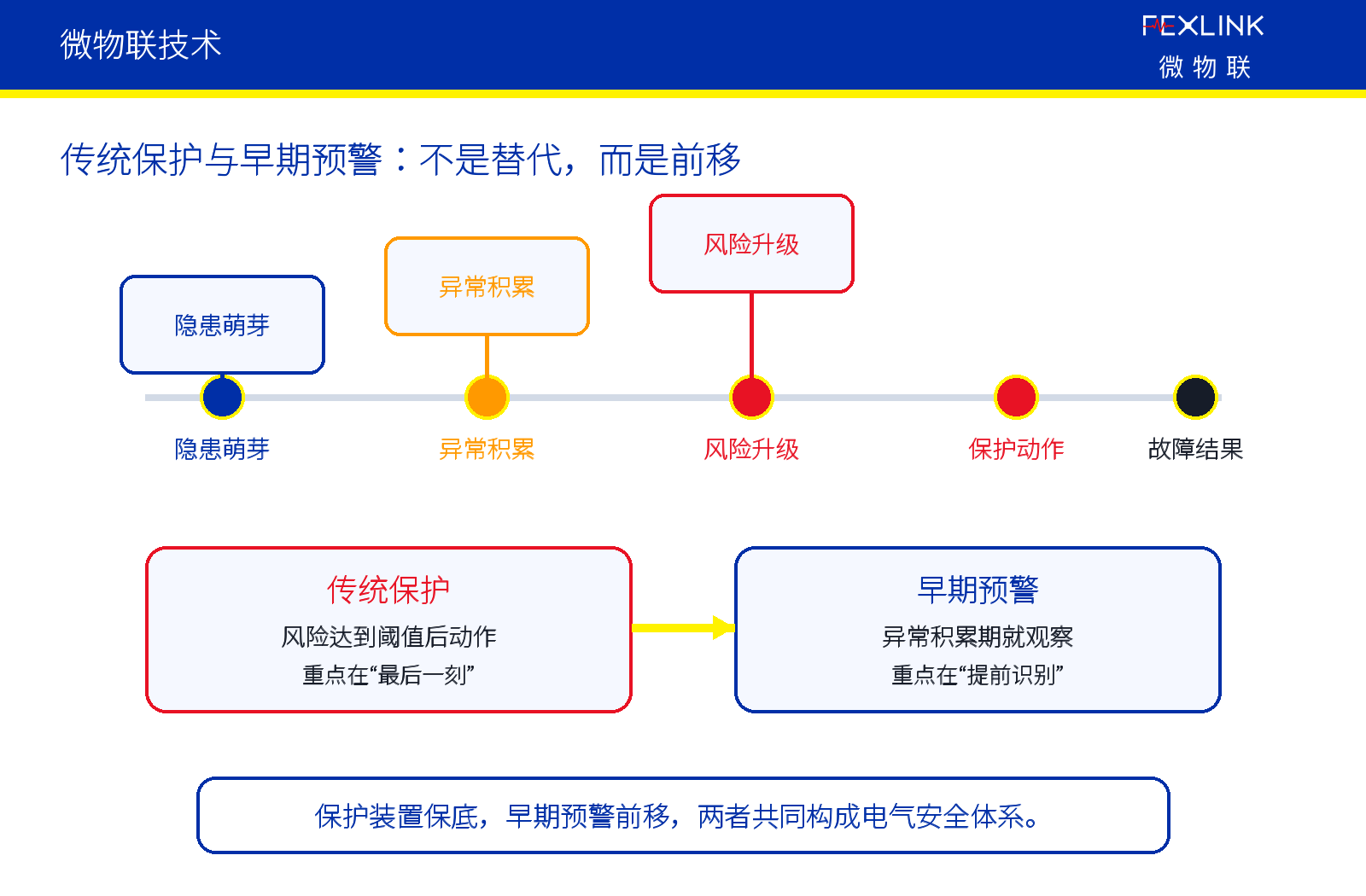
But protective action usually means that the risk has reached a certain threshold. For example, when the leakage protection operates, the leakage current has reached the operating condition; when the circuit breaker trips, the current abnormality is already obvious; when the fuse blows, the fault energy has accumulated to a certain extent.
So it’s not that traditional conservation has no value, it’s that it’s better at dealing with the last minute. Early warning needs to be supplemented by state recognition before action.
3. Early signals don’t come from just one indicator
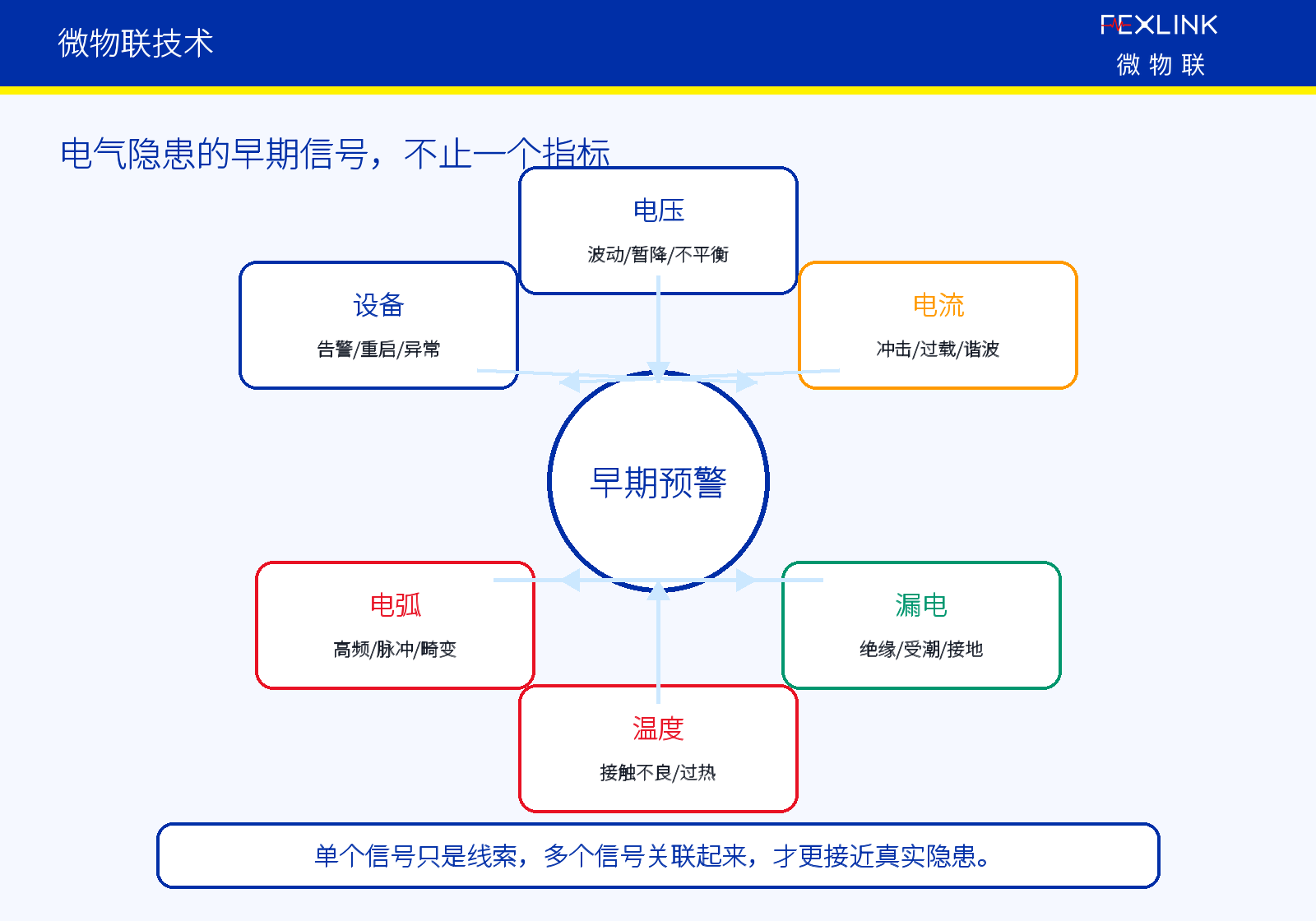
Early signs of electrical hazards can come from many directions. Voltage abnormalities may manifest as overvoltage, undervoltage, sag, and three-phase imbalance; current abnormalities may manifest as overload, impact, imbalance, and harmonic changes; leakage trends may reflect insulation degradation, moisture, or grounding abnormalities.
The temperature increase may come from poor contact, loose terminals, oxidative corrosion or abnormal load; fault arc may appear as waveform distortion, high-frequency components, intermittent pulses and half-cycle abnormalities. If you look at one of the indicators alone, it may be just an ordinary disturbance; if multiple indicators change at the same time, it will be closer to the real hidden danger.
4. Early warning cannot rely solely on a single threshold
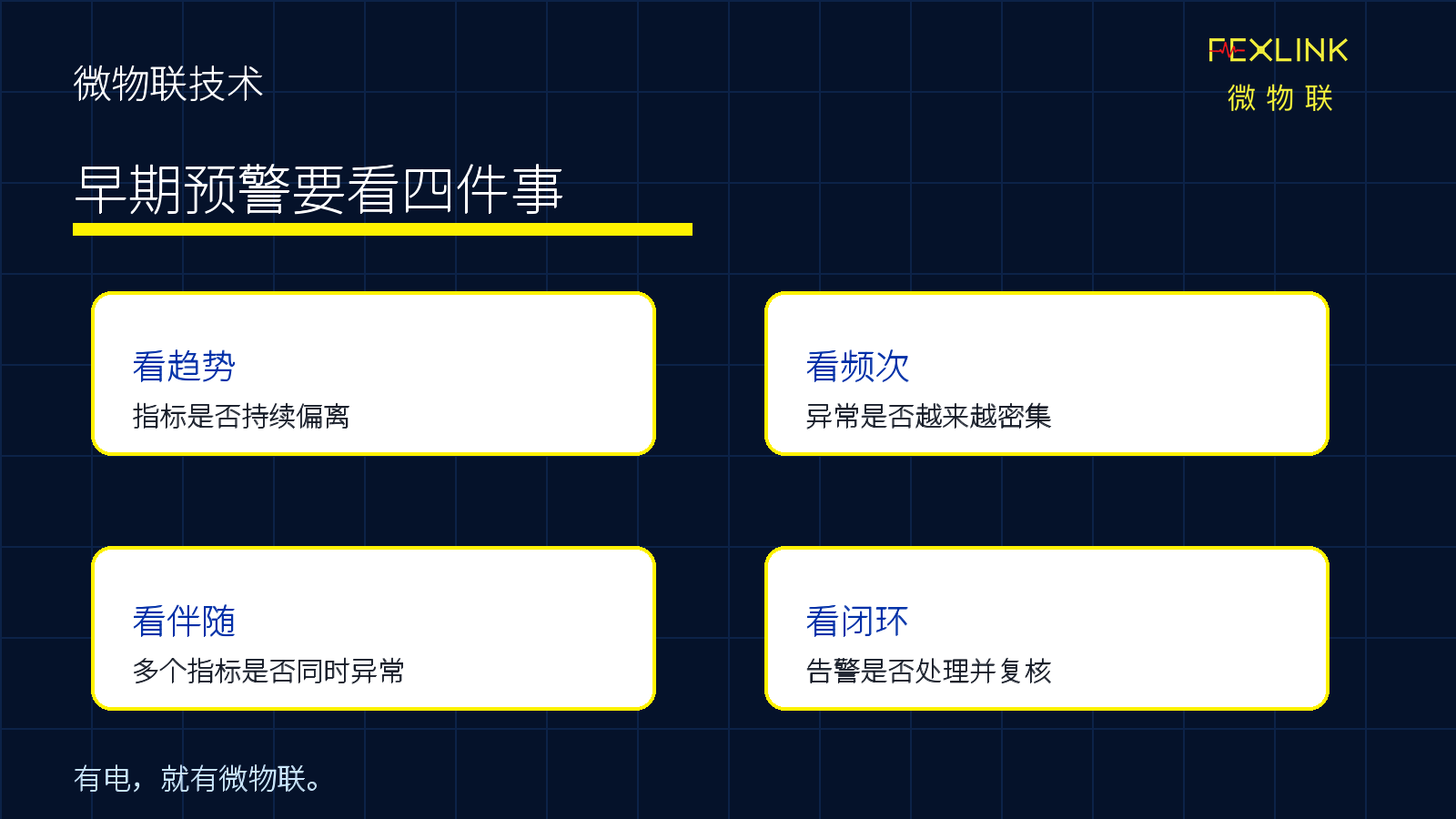
Many false positives and false negatives come from overreliance on a single threshold. Short-term voltage fluctuations are not necessarily dangerous, and short-term current surges may also be normal startups; temperature rises depend on the load and environment, and leakage changes also depend on the duration and trend.
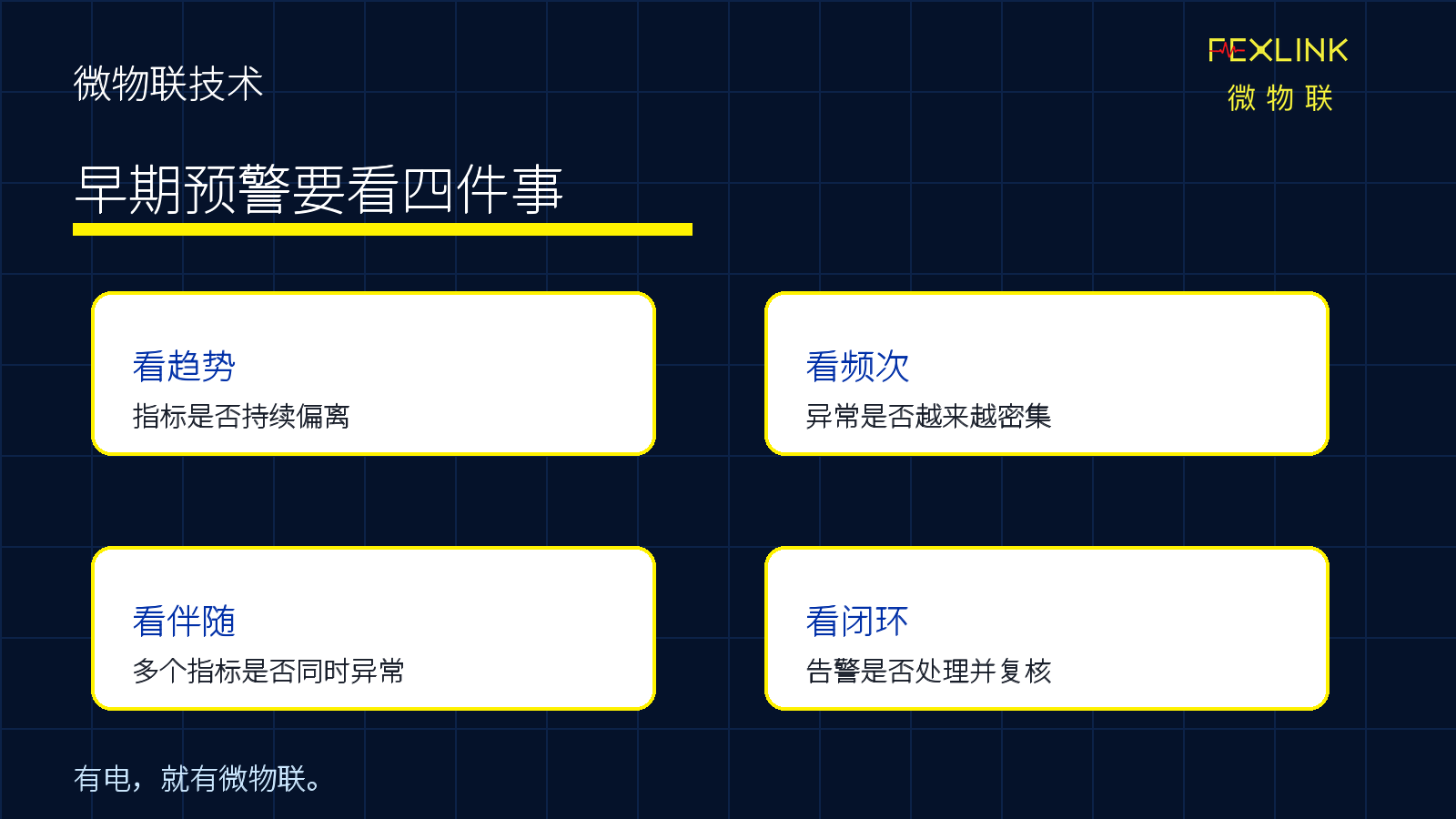
Truly valuable early warning requires looking at trends, frequency, duration and accompanying relationships. For example, if the temperature rises slowly and the current does not increase significantly, poor contact must be considered; if leakage continues to increase during the rainy season, the environment and insulation status must be considered; if high-frequency abnormalities occur in the current waveform and the frequency increases, arc risk must be considered.

5. From passive processing to active early warning
The goal of early warning for electrical safety is not to create more alarms, but to make them earlier, more accurate, and more explainable. The system should be able to explain where the risk comes from, why it needs attention, and whether the next step should be observation, review, or dispatch.
The early warning understood by FEXLINK is from single-point alarm to multi-dimensional diagnosis, from passive protection to active early warning, and from accident handling to risk management. It does not replace the protection device, but buys more judgment and processing time for operation and maintenance personnel before protection action.
Conclusion: Only with early detection can early treatment be possible
If you wait until the failure occurs, a lot of losses have already been caused; if trends and accompanying signals can be identified early in the hidden dangers, operation and maintenance will have the opportunity to deal with them in advance.
The essence of early warning for electrical safety is to turn invisible risk processes into data that can be recorded, judged, and closed-loop.
FEXLINK technology will continue to share early warning topics such as voltage, current, leakage, temperature and arc fault.
Where there is electricity, there is FEXLINK.