Abstract: "Production data" is not simply collecting data, nor is it connecting equipment to a platform. FEXLINK focuses on extracting available features from electrical signals, generating risk judgments from operating status, and precipitating management value from equipment behavior, so that data can truly serve energy efficiency and electrical safety.
Many IoT systems emphasize connection: whether the device is online, whether data is uploaded, and whether the platform is displayed. But FEXLINK is more concerned with another question: Is this data really useful? Can it explain status, identify risks, guide operation and maintenance, and optimize energy efficiency?
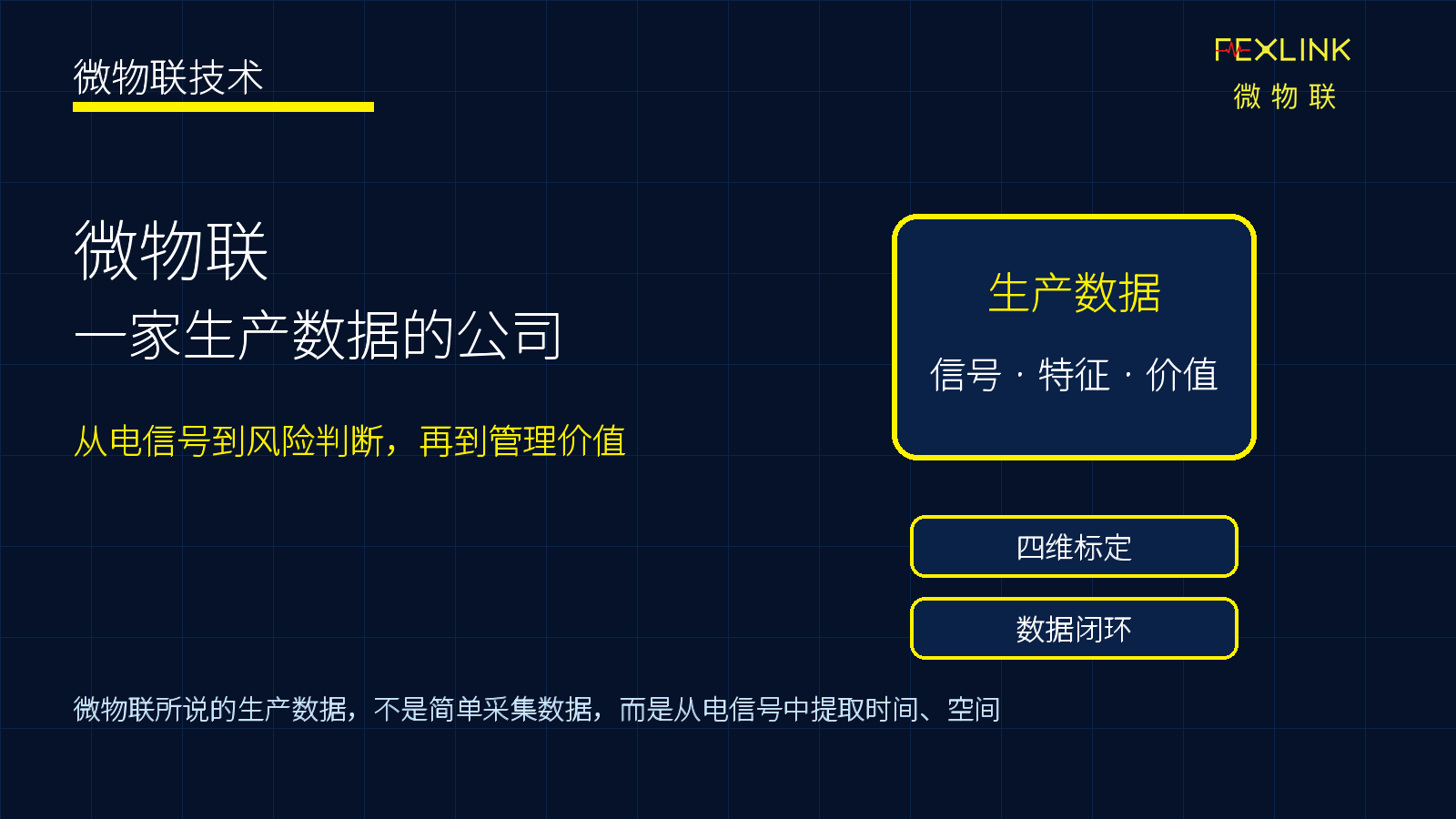
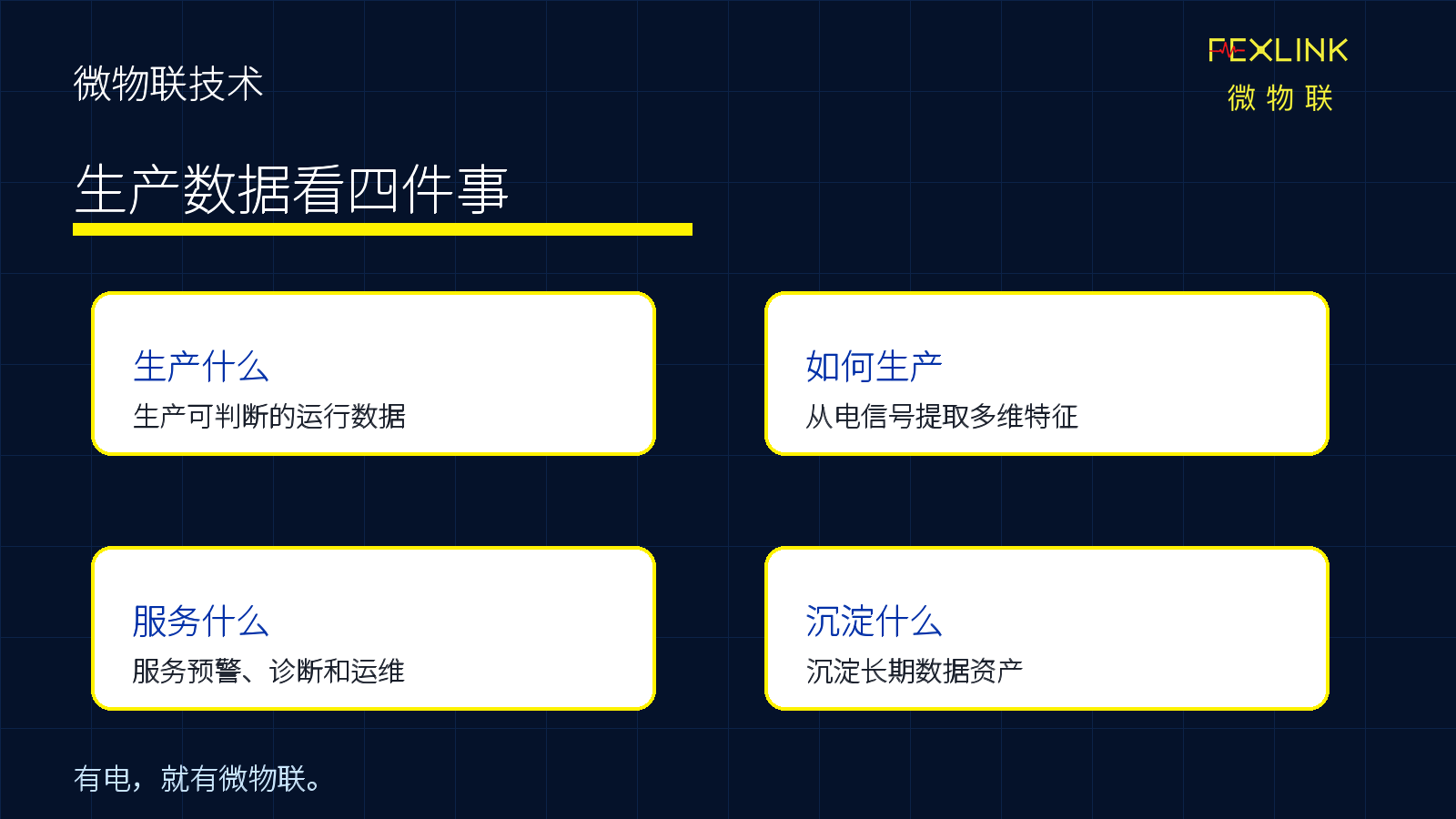
Therefore, "FEXLINK, a company that produces data" is not a slogan, but a summary of the technical route. What the FEXLINK wants to produce is not simple raw data, but data with time, space, characteristics and value.
1. Why not simply collect data?
Collecting data is only the first step. A current value, a voltage value, and a temperature value, if there is no scene, time, device object and association, the management value is very limited.
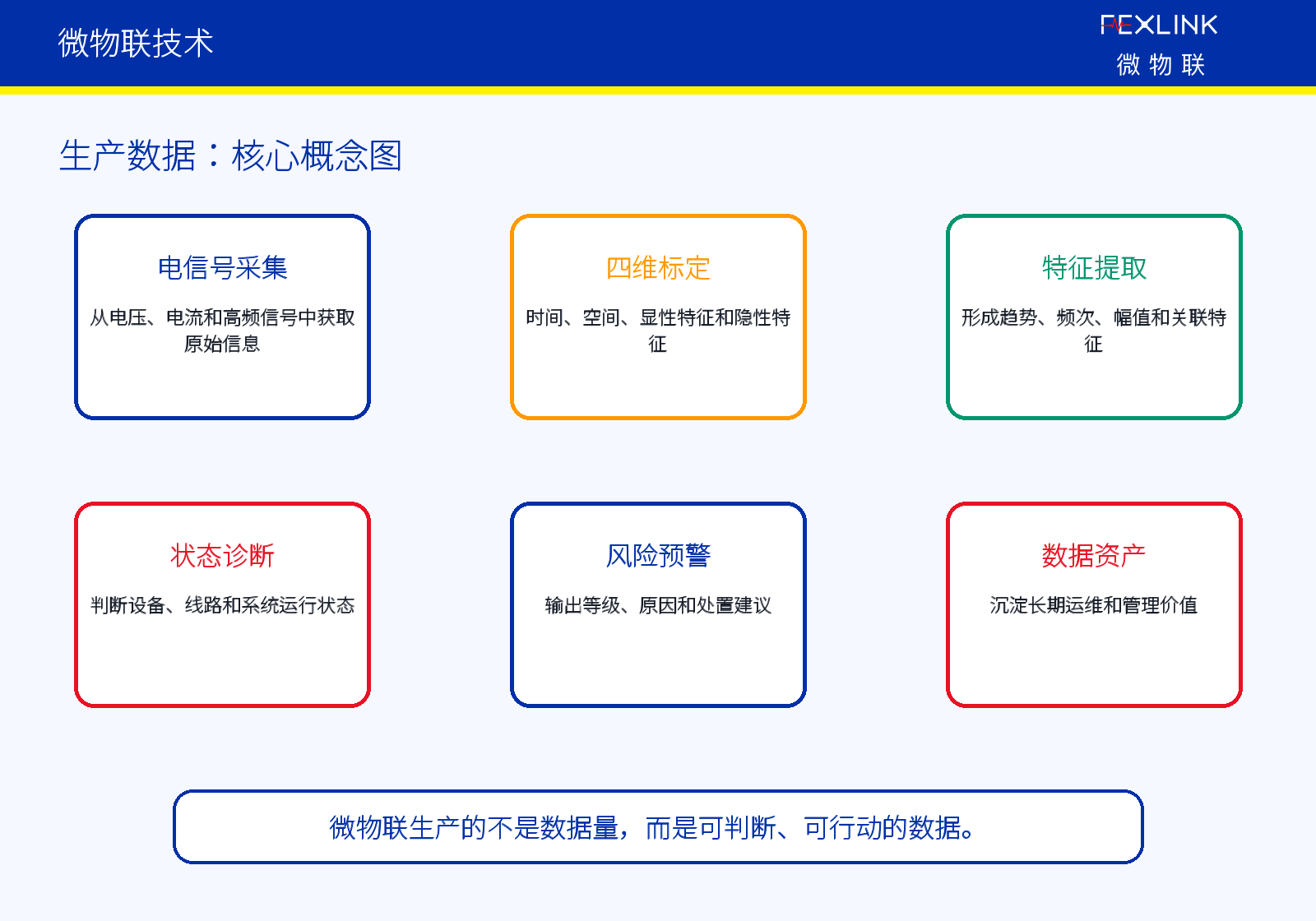
Production data means extracting effective features from raw electrical signals, determining what status these features indicate, and further forming risk levels, trend interpretations, and operation and maintenance recommendations. The more data the better, but the more data can explain the problem, the more valuable it is.
2. What kind of data does FEXLINK produce?
FEXLINK focuses on four types of calibration: time dimension, space dimension, explicit characteristics and implicit characteristics. The time dimension describes when an event occurs, the spatial dimension describes where it occurs, explicit features describe electrical parameters that can be directly observed, and latent features come from waveforms, frequencies, trends, and cross-indicator relationships.
In digital lightning protection, these data are represented by lightning strike events, SPD status, grounding trends, and operation and maintenance closed loops; in electrical safety, they are represented by multi-dimensional risk characteristics such as voltage, current, leakage, temperature, arc, etc.; in digital power distribution, they are represented by load portraits, equipment health, and energy efficiency status.
3. From electrical signals to data value
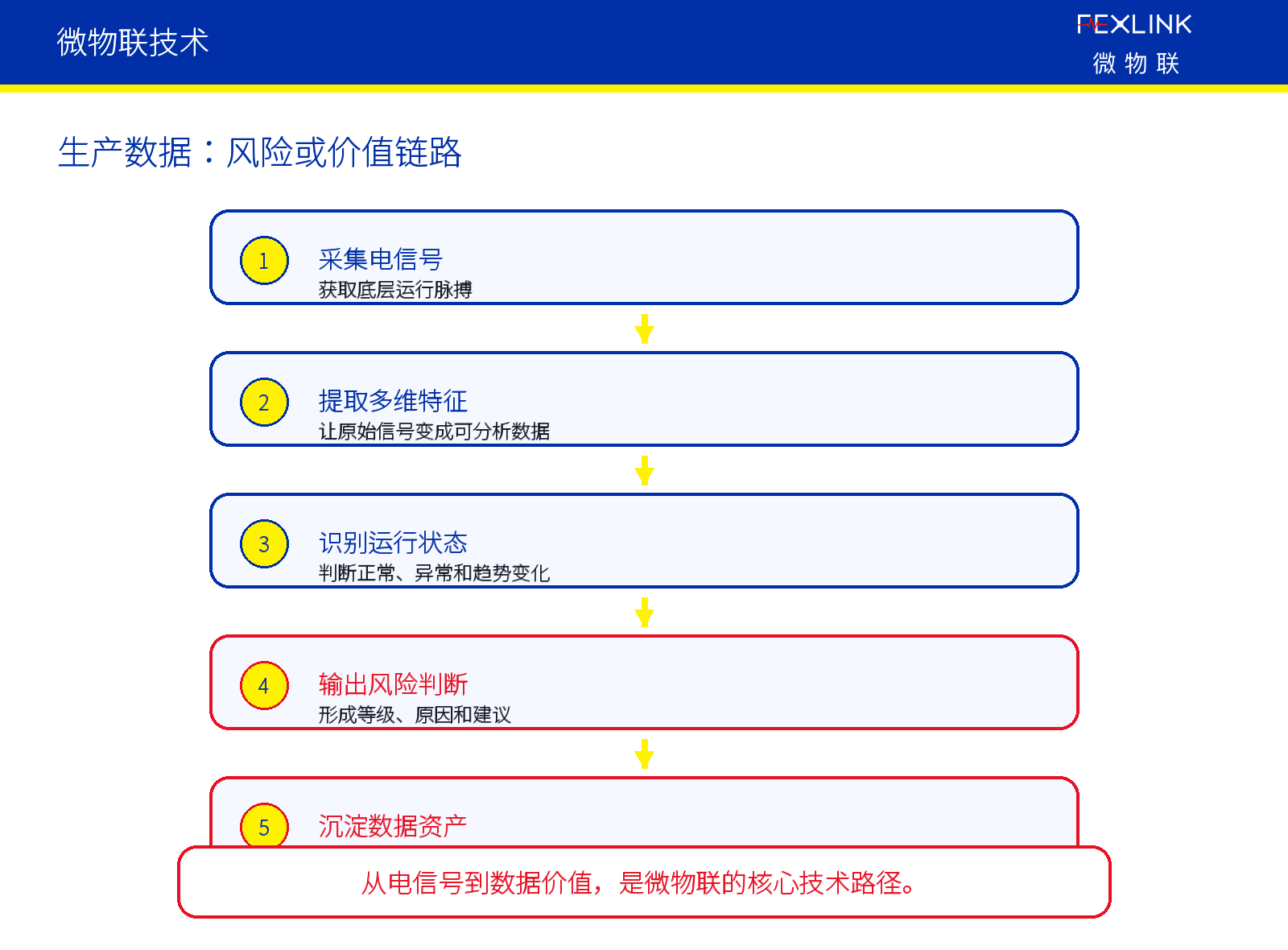
The technical path of FEXLINK starts from electrical signals and goes through high-precision collection, feature extraction, scene recognition, risk diagnosis and operation and maintenance closed loop, and finally forms data assets that can be used for decision-making.
This process does not end when the curve is drawn, but to answer: What state does this signal represent? Are risks rising? What could be the reason? Who needs to handle it? Is the status restored after processing?
4. Why this is not an ordinary Internet of Things
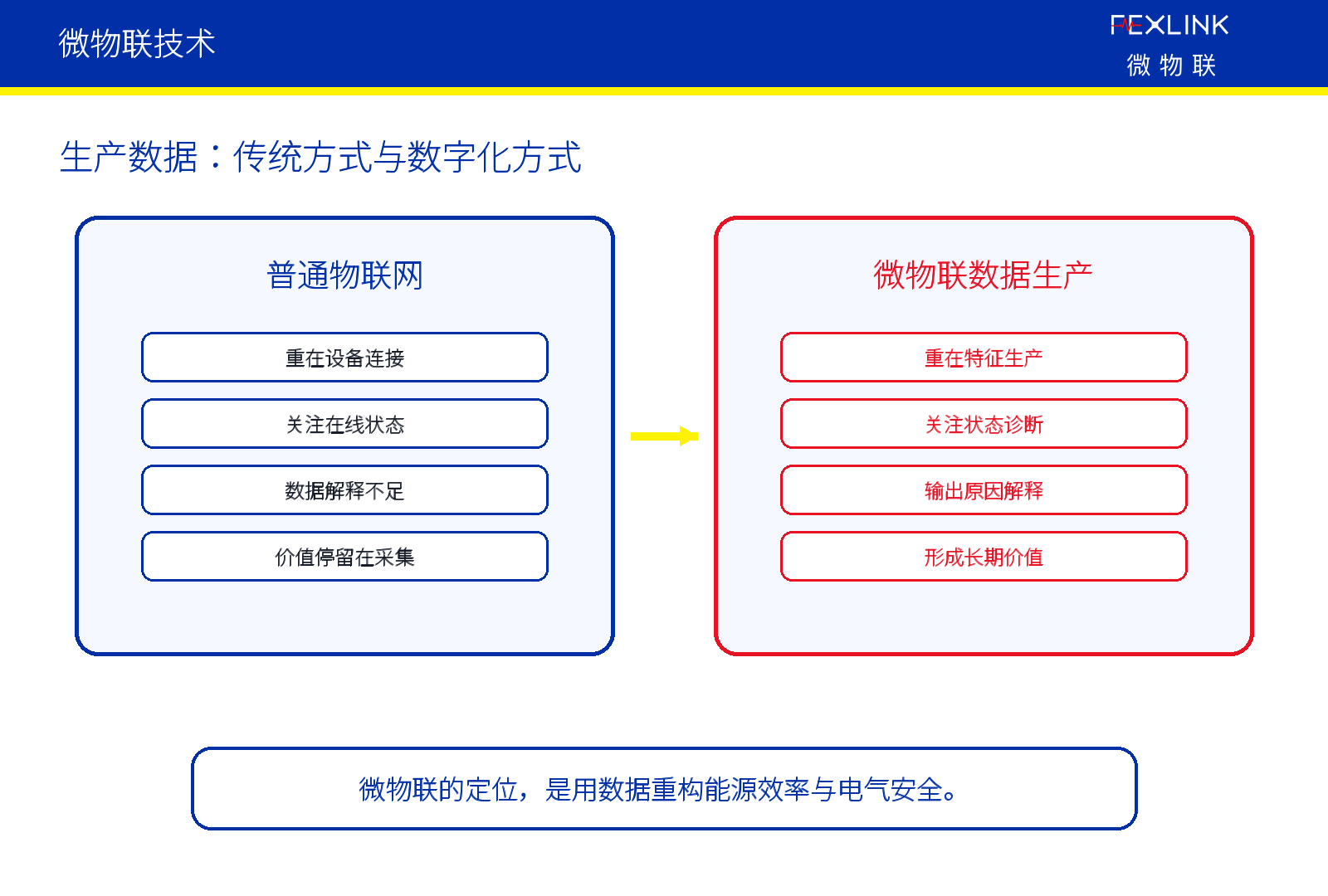
Ordinary IoT focuses on connection, while FEXLINK focuses on data production. Connection solves equipment online problems, and data production solves status interpretation problems. A system that only shows that the device is online does not mean that the device is healthy; only showing data changes does not mean that the cause of the risk is known.
FEXLINK hopes to advance electrical equipment from "online" to "diagnosable", from "having data" to "having judgment", and from "seeing abnormalities" to "forming actions".
5. How does FEXLINK understand the main line of future technology?
FEXLINK believes that intelligent lightning protection, early warning of electrical safety, digital power distribution, energy supervision, carbon efficiency and energy saving, and industrial Internet of Things are essentially inseparable from high-quality data production. Hardware terminals are data entrances, edge algorithms are data processing, and platform systems are data organization and value release.
The long-term direction of FEXLINK is to turn electrical signals into interpretable, traceable, and optimizable data assets, and use data to reconstruct energy efficiency and electrical safety.
Conclusion: Producing data is to produce judgment and value
FEXLINK is not just about device connection, nor is it just about platform display. The real goal is to allow on-site operating status to be accurately perceived, to allow hidden danger changes to be identified in advance, to allow energy efficiency to be continuously optimized, and to allow operation and maintenance actions to be based on data.
FEXLINK technology will continue to share content related to intelligent lightning protection, early warning of electrical safety, digital power distribution, energy supervision and industrial Internet of Things.
FEXLINK/FEXLINK uses data to reconstruct energy efficiency and electrical safety.
Where there is electricity, there is FEXLINK.