Abstract: GB 17681-2024 "Technical Specifications for Safety Monitoring of Major Hazardous Sources of Hazardous Chemicals" is not a simple lightning protection standard, but a mandatory national standard for the safety monitoring system of major hazardous sources of hazardous chemicals. Its inspiration for intelligent lightning protection and grounding monitoring is that in scenarios such as petroleum and petrochemical, oil and gas storage tank areas, loading and unloading areas, and major hazardous sources, lightning protection, anti-static, grounding, and surge protection cannot be regarded as independent equipment, but lightning risks, grounding status, SPD status, alarm management, work order processing, and operation and maintenance should be integrated into a unified safety monitoring system.
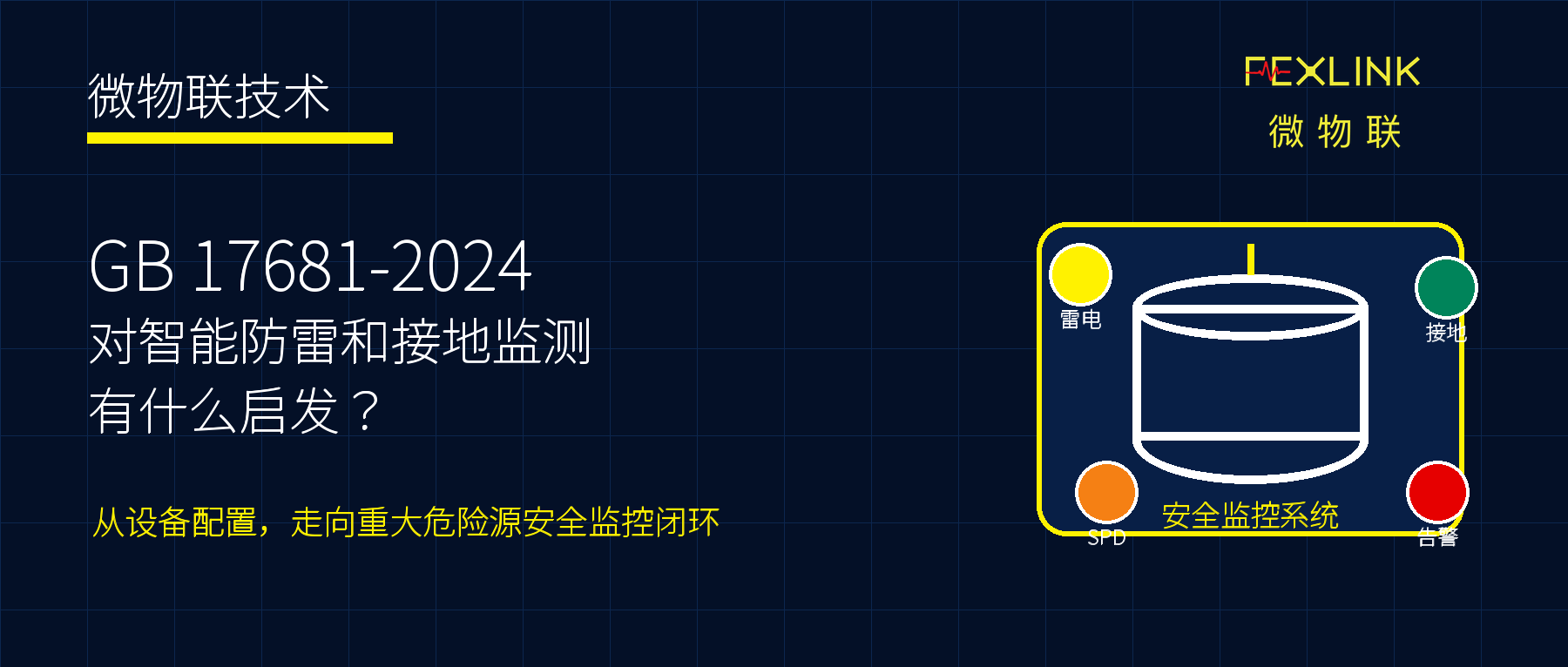
Public account cover picture: GB 17681-2024’s inspiration for intelligent lightning protection and grounding monitoring
Why should we look at smart lightning protection from GB 17681-2024?
When many people talk about intelligent lightning protection, the first thing they think of is SPD online monitoring, lightning current monitoring, grounding resistance online monitoring, lightning early warning or cloud platform alarm. However, in the major hazard source scenarios of petroleum, petrochemicals and hazardous chemicals, intelligent lightning protection cannot be understood from the perspective of a single product.
Because hazardous chemical scene management is not ordinary equipment, but high-risk media, explosion hazard areas, large storage tanks, loading and unloading operations, lightning protection and anti-static systems, grounding systems, alarm linkage, safety monitoring platforms and closed-loop operation, inspection and maintenance.
Judging from public information, the focus of GB 17681-2024 is not to "install more monitoring equipment", but to standardize the design, construction, quality acceptance, operation and maintenance, alarm management and other system capabilities of the safety monitoring system for major hazard sources of hazardous chemicals. For intelligent lightning protection, this means an important change: lightning protection, anti-static and grounding monitoring can no longer exist in isolation, but must enter the safety monitoring system for major hazard sources.
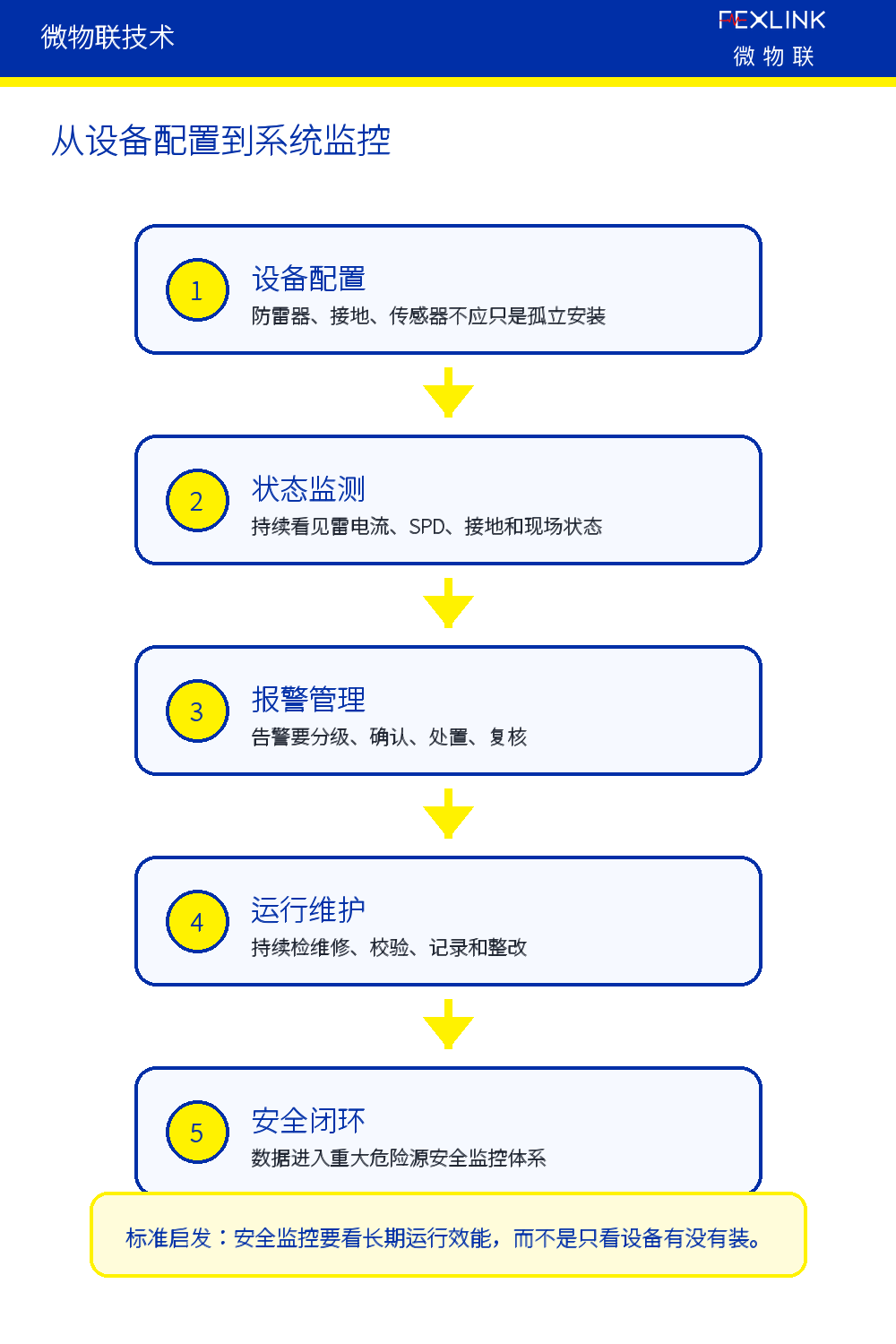
1. Changes in GB 17681-2024 indicate that safety monitoring is becoming systematic
The standard name of GB 17681-2024 is "Technical Specifications for Safety Monitoring of Major Hazardous Sources of Hazardous Chemicals". Judging from the name, it is no longer a single perspective that only focused on the acceptance of flammable and explosive tank farms in the past, but has turned to a safety monitoring system for major hazard sources of hazardous chemicals.
The inspiration for enterprises is very clear: safety monitoring is no longer just a question of "whether there is equipment, whether there are signals, whether there are alarms" during the construction phase, but whether the system can continue to operate stably and whether it can support alarm management, inspection and maintenance, review and disposal, and safety risk management and control.
Intelligent lightning protection should also be understood according to this logic. Just because a ground monitor, SPD monitor or lightning current monitor is installed in a petrochemical tank farm does not mean that the risk has been managed. What really matters is: whether the data is continuous, whether the alarms are classified, whether the exceptions are handled by someone, whether the processing results can be traced, and whether the platform can form a long-term risk file.
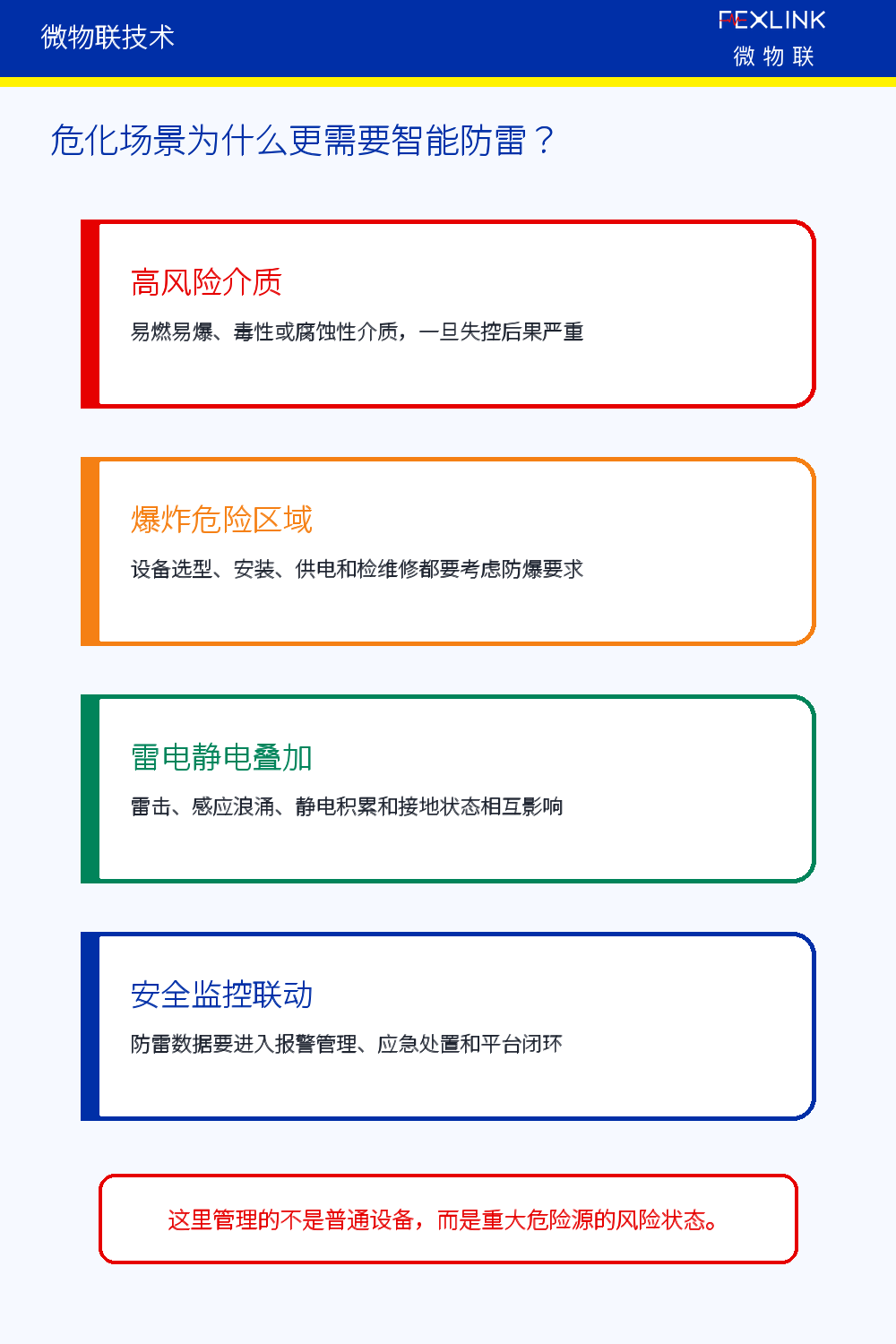
2. Why do petroleum and petrochemical scenarios have higher requirements for intelligent lightning protection and grounding monitoring?
The particularity of major hazard source scenarios in petroleum, petrochemicals and hazardous chemicals is that lightning risks, surge risks, static electricity risks and electrical safety risks often do not exist in isolation. There are close connections between storage tanks, pump rooms, loading and unloading areas, instrumentation systems, control systems, communication systems and video surveillance systems.
Grounding systems are especially critical in this type of scenario. It not only serves lightning current discharge, but also serves electrostatic discharge, equipotential bonding and electrical safety foundation. If the grounding status is not visible for a long time, or if you only rely on annual inspection reports, it will be difficult to detect risks caused by corrosion, construction disturbance, loose connections, and changes in soil conditions in a timely manner.
SPD and surge protection also cannot remain invisible for long periods of time. The security monitoring system itself relies on instruments, sensors, communication gateways and control systems, and if these systems are affected by surges, security monitoring capabilities may also be reduced. Therefore, intelligent lightning protection not only protects equipment in petroleum and petrochemical scenarios, but also protects the reliability of the security monitoring system itself.
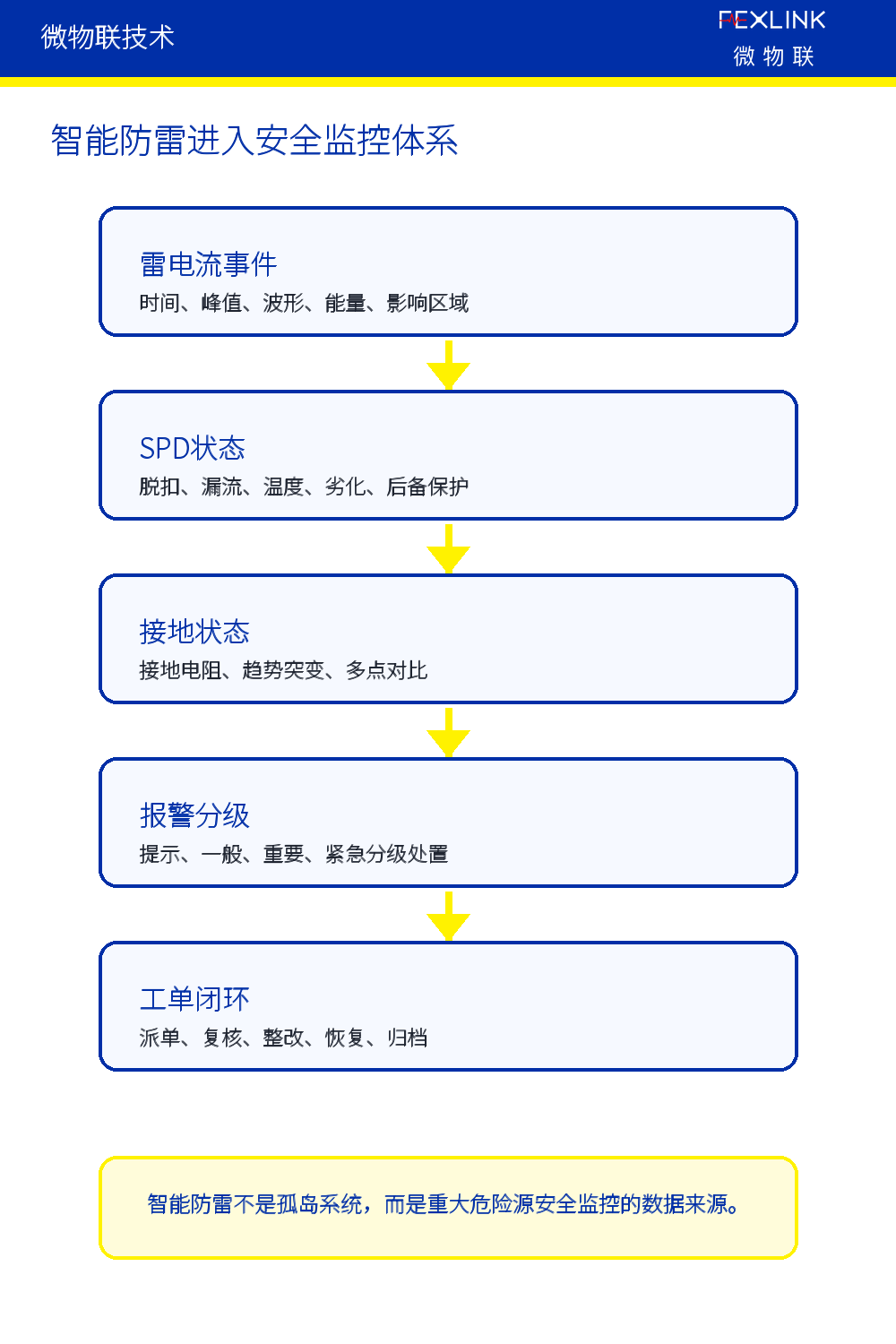
3. GB 17681-2024’s core inspiration for intelligent lightning protection
The first inspiration is that intelligent lightning protection should be integrated into the security monitoring system instead of being an isolated platform. Lightning current events, SPD status, grounding status and surge events should be able to form data relationships with safety monitoring platforms, video surveillance, gas detection, fire protection linkage and emergency response.
The second inspiration is that ground resistance monitoring should be upgraded from "primary value" to "trend status". Enterprises should not only care about whether the grounding resistance measured on a certain day is qualified, but also whether the grounding state is stable for a long time, whether there is a sudden change after a lightning strike, and whether there is a continued upward trend at the grounding points in the loading and unloading area and tank area.
The third inspiration is that alarm management cannot stop at "alarms". For major hazard source scenarios, alarms must be classified, confirmed, handled, reviewed and archived. If SPD anomalies, grounding anomalies, lightning current events, and communication anomalies are all pushed at the same level, the site will soon fall into alarm fatigue.
The fourth inspiration is that operation and maintenance are more important than an acceptance. Just because a system looks complete during the construction phase does not mean it will be effective in the long term. When equipment is offline, data is interrupted, alarms are not handled by anyone, explosion-proof equipment is not maintained in a standardized manner, and grounding anomalies are not reviewed for a long time, the intelligent lightning protection system will gradually lose its practical value.
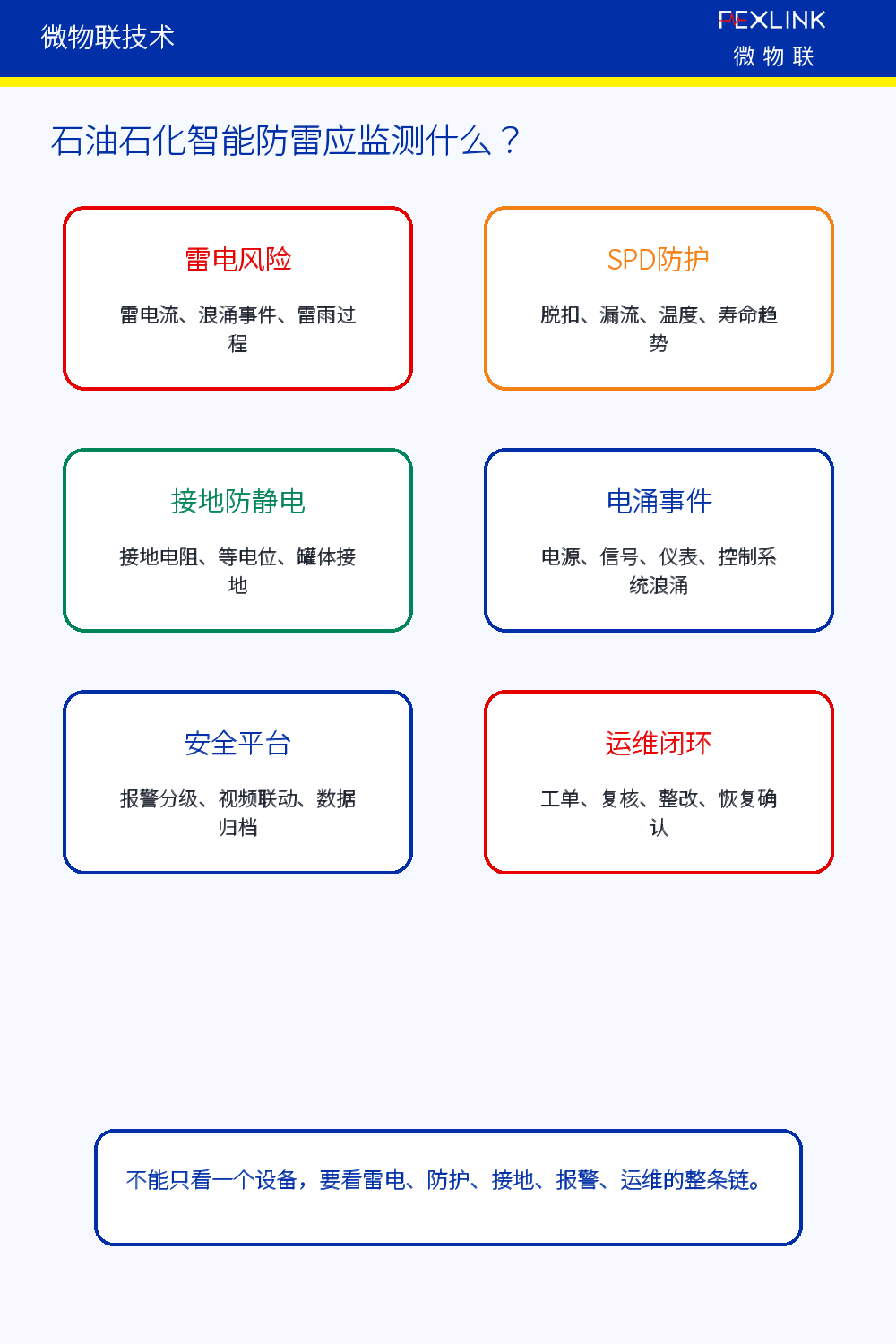
4. For petroleum and petrochemicals, what capabilities should an intelligent lightning protection system include?
The first type of capability is lightning risk perception. Including lightning current monitoring, surge event records, lightning strike time, impact intensity, affected area and event files. These data answer the question: whether the site has experienced external shocks.
The second type of capability is protection status monitoring. Including SPD tripping, degradation, leakage current, temperature, backup protection status, power supply and signal protection status. These data answer: whether the protective device is still reliable.
The third category of capabilities is grounding and anti-static status monitoring. Including grounding resistance, grounding trend, grounding sudden change, equipotential bonding, tank grounding status and loading and unloading area grounding status. What these data answer is: whether there is a reliable discharge path for charge and lightning current.
The fourth type of capability is security monitoring platform access. Intelligent lightning protection data should be able to support alarm classification, trend analysis, historical query, event files, linkage processing and report management, rather than just staying in local display.
The fifth type of capability is the closed loop of operation and maintenance. Including alarm confirmation, work order dispatch, on-site review, rectification records, recovery confirmation and statistical evaluation. Without a closed loop, no matter how good the monitoring data is, it will be difficult to turn it into actual safety management capabilities.
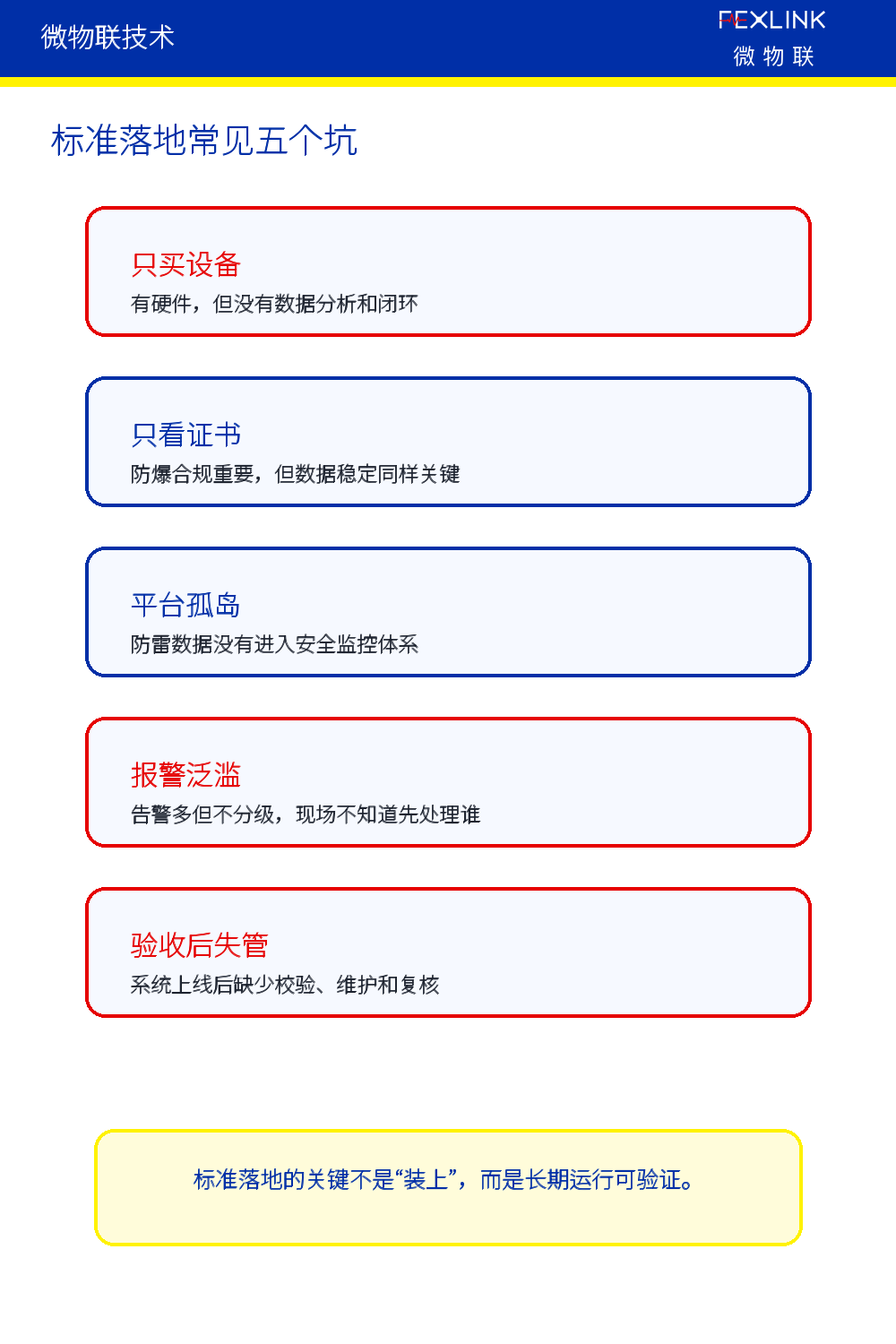
5. What are the pitfalls that companies can easily avoid when launching their business?
The first pitfall is to only buy equipment without closing the data loop. Grounding monitors, SPD monitors, and lightning current monitors are all installed, but the platform does not analyze, classify, dispatch orders, or archive. In the end, only a bunch of scattered data can be obtained.
The second pitfall is to only look at the explosion-proof certificate and not the data quality. Explosion-proof compliance is the bottom line, but measurement accuracy, communication stability, anti-interference ability, data continuity and maintenance convenience in long-term operation are equally important.
The third pitfall is that it only displays locally and does not connect to the security monitoring system. For major hazardous source scenarios, lightning protection, anti-static, grounding and surge protection cannot become an island system.
The fourth pitfall is that there are many alarms, but there is no classification. The more complex the platform is, the less likely it is that all exceptions can be pushed in the same way. Important risks must be seen first, and ordinary fluctuations should be entered into observation or trend analysis.
The fifth pitfall is that no one maintains it after acceptance. If an intelligent system lacks verification, inspection, review and maintenance mechanisms, over time it will degenerate into a device that "appears to have a platform but actually has no management".
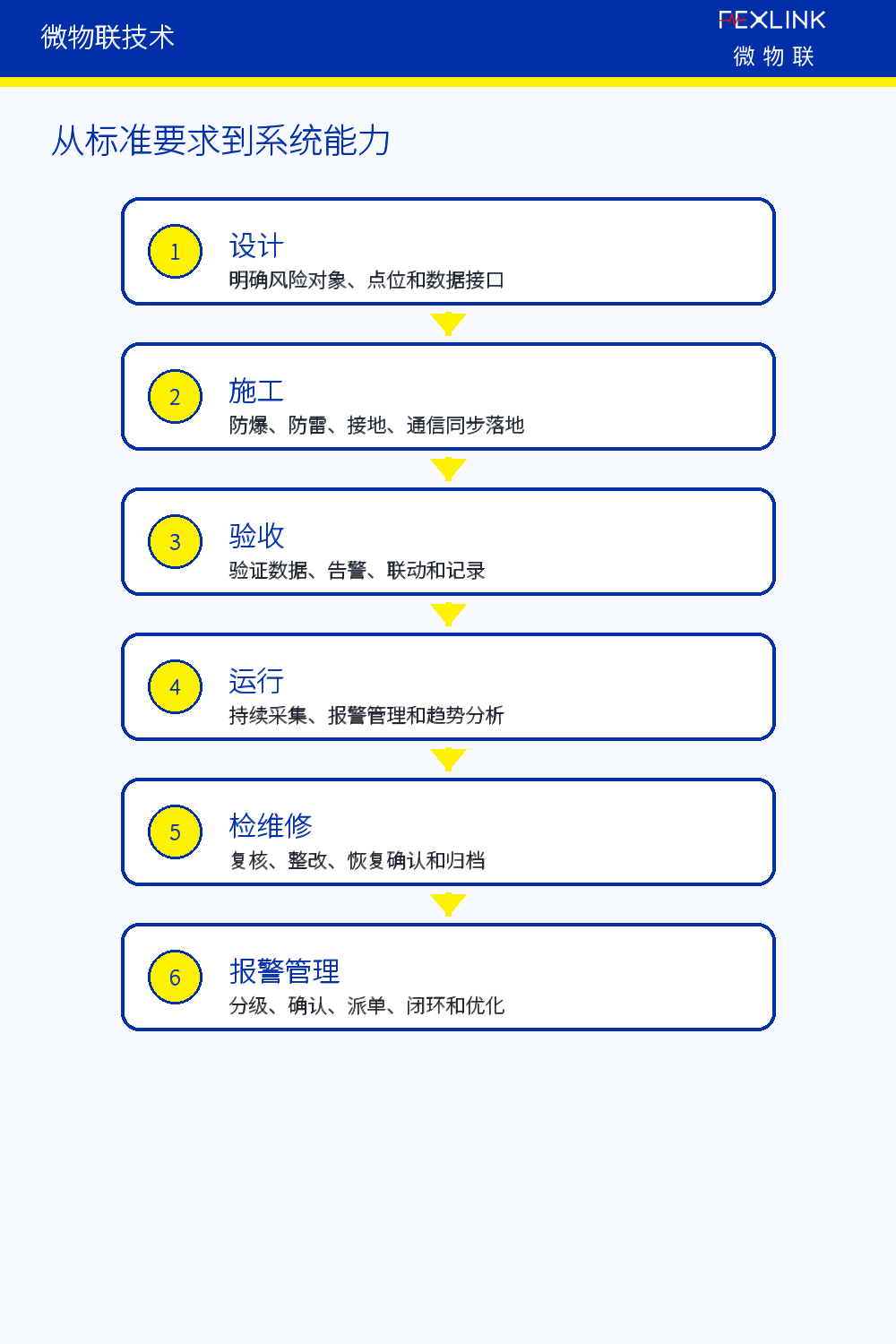
6. How does the FEXLINK understand the inspiration of GB 17681-2024 on intelligent lightning protection?
FEXLINK believes that the biggest inspiration of GB 17681-2024 for intelligent lightning protection is not to remind enterprises to add one more piece of equipment, but to remind enterprises that security monitoring in high-risk scenarios must move from single-point device configuration to system operation efficiency.
FEXLINK intelligent lightning protection system focuses on: whether lightning current events can be traced, whether SPD status can be judged, whether grounding status can be continuously monitored, whether alarms are classified, whether processing is closed loop, and whether data can enter the safety monitoring system.
There are three changes behind this: from lightning protection equipment configuration to lightning protection status monitoring; from one-time grounding detection to grounding trend management; from alarm display to closed-loop safety monitoring of major hazard sources.
For petroleum and petrochemical, storage tank areas, loading and unloading areas and hazardous chemical scenarios, the value of intelligent lightning protection is not to display several parameters alone, but to make lightning risk, protection status, grounding status and operation and maintenance disposal become effective data in the safety monitoring system.
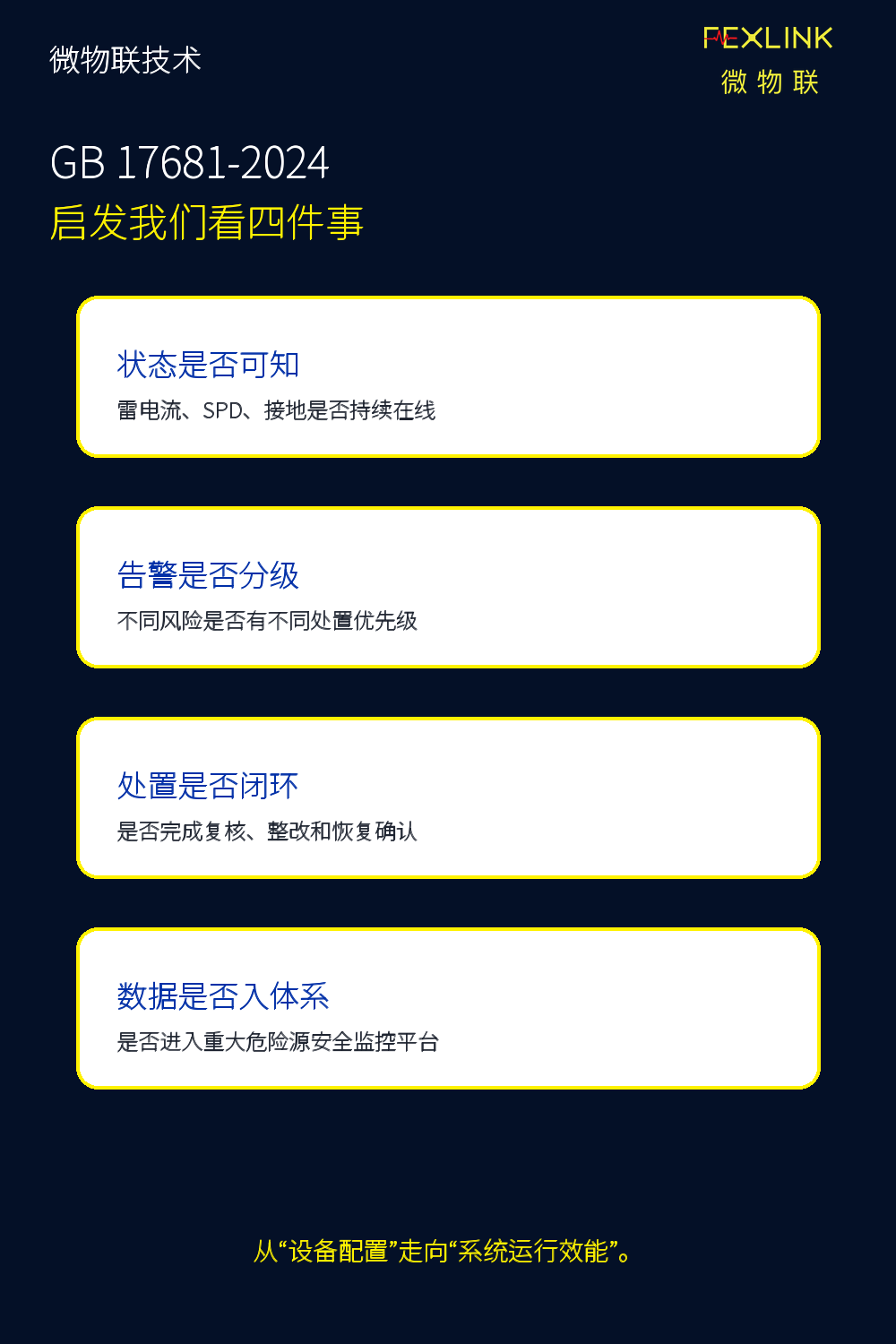
Conclusion: Standards are not a burden, but a direction for upgrading
The implementation of GB 17681-2024 means that the safety monitoring of major hazardous sources of hazardous chemicals is being upgraded to systematic, online, operational and closed-loop directions. For petroleum and petrochemicals, oil and gas storage tank farms, loading and unloading stations and hazardous chemical companies, intelligent lightning protection and grounding monitoring should not be just accessory equipment, but should become key data sources in the safety monitoring system.
Lightning risks, SPD status, grounding status, surge events and operation and maintenance disposal data can only be moved from "visible" to "manageable" if they truly enter the safety monitoring system.
FEXLINK technology will continue to share content related to intelligent lightning protection, early warning of electrical safety, digital power distribution, energy supervision and industrial Internet of Things.
FEXLINK/FEXLINK uses data to reconstruct energy efficiency and electrical safety.
Where there is electricity, there is FEXLINK.