Abstract: Ground resistance is often regarded as a value in a test report. However, in real engineering sites, the grounding system will be affected by factors such as soil moisture, seasonal changes, corrosion, construction damage, loose connections, aging of the ground network, and lightning strikes. Passing the test once only means that the test meets the requirements at the time, but it does not mean that it will always be reliable in long-term operation. The value of online grounding monitoring is to make grounding status trends, abnormal mutations, post-lightning changes and high-risk points continuously visible, and provide long-term status data for intelligent lightning protection, petroleum and petrochemical, wind power, photovoltaic, communication base stations, computer rooms and transportation infrastructure.
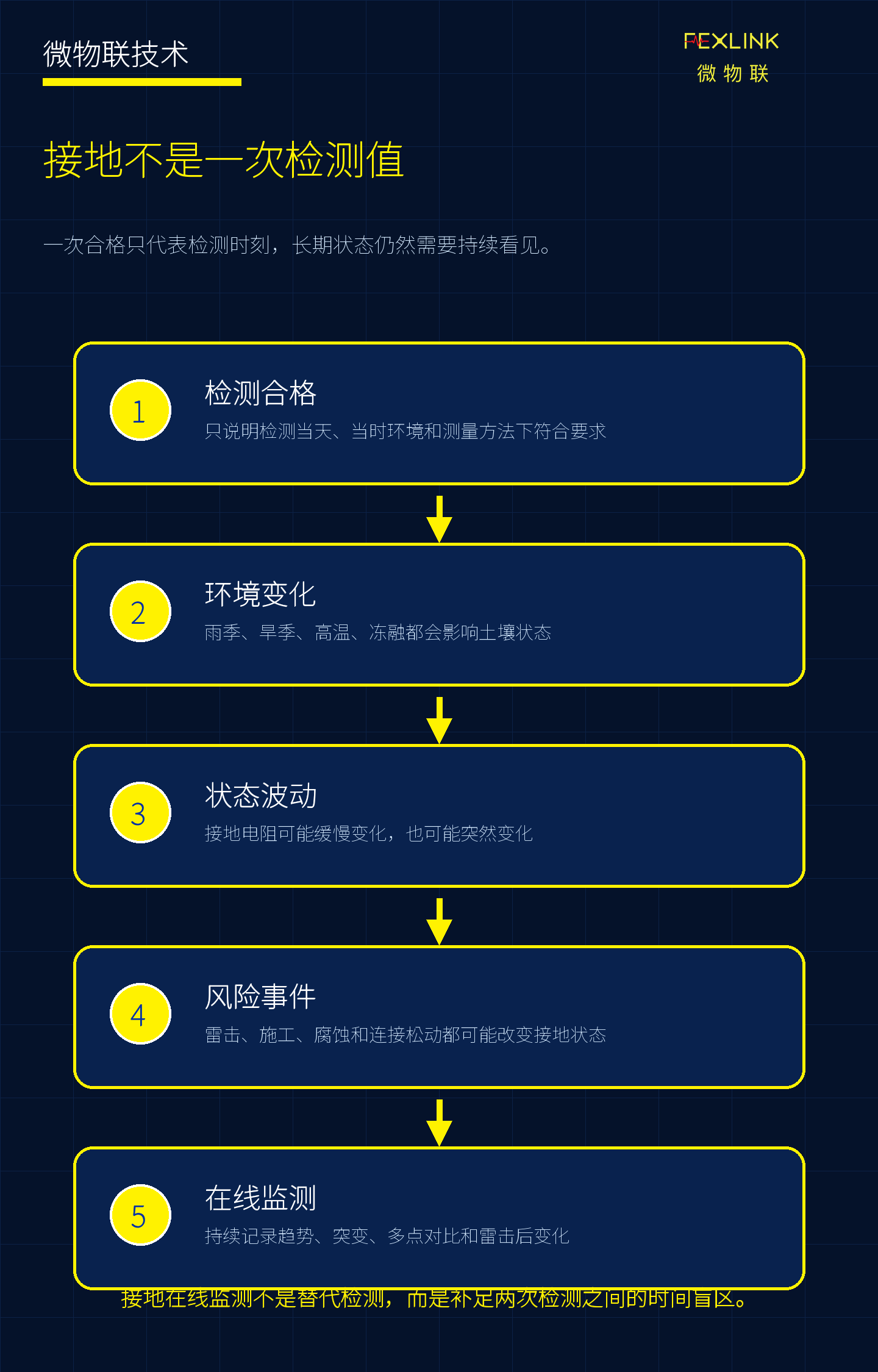
Many engineering projects will conduct ground resistance testing during acceptance. If there is a qualified value on the test report, the project will consider that there is no problem with the grounding system. However, in long-term operation, the grounding system will not always stay in the state on the day of acceptance.
Ground resistance is not a static number in a report, but an operating state that changes with the on-site environment. Online monitoring of ground resistance is not to deny traditional detection, but to answer questions that cannot be answered by traditional detection: whether the grounding status changes after detection, whether there is any abnormality in the grounding system after lightning strikes, whether the grounding connection is affected after construction, and which points need to be reviewed first.
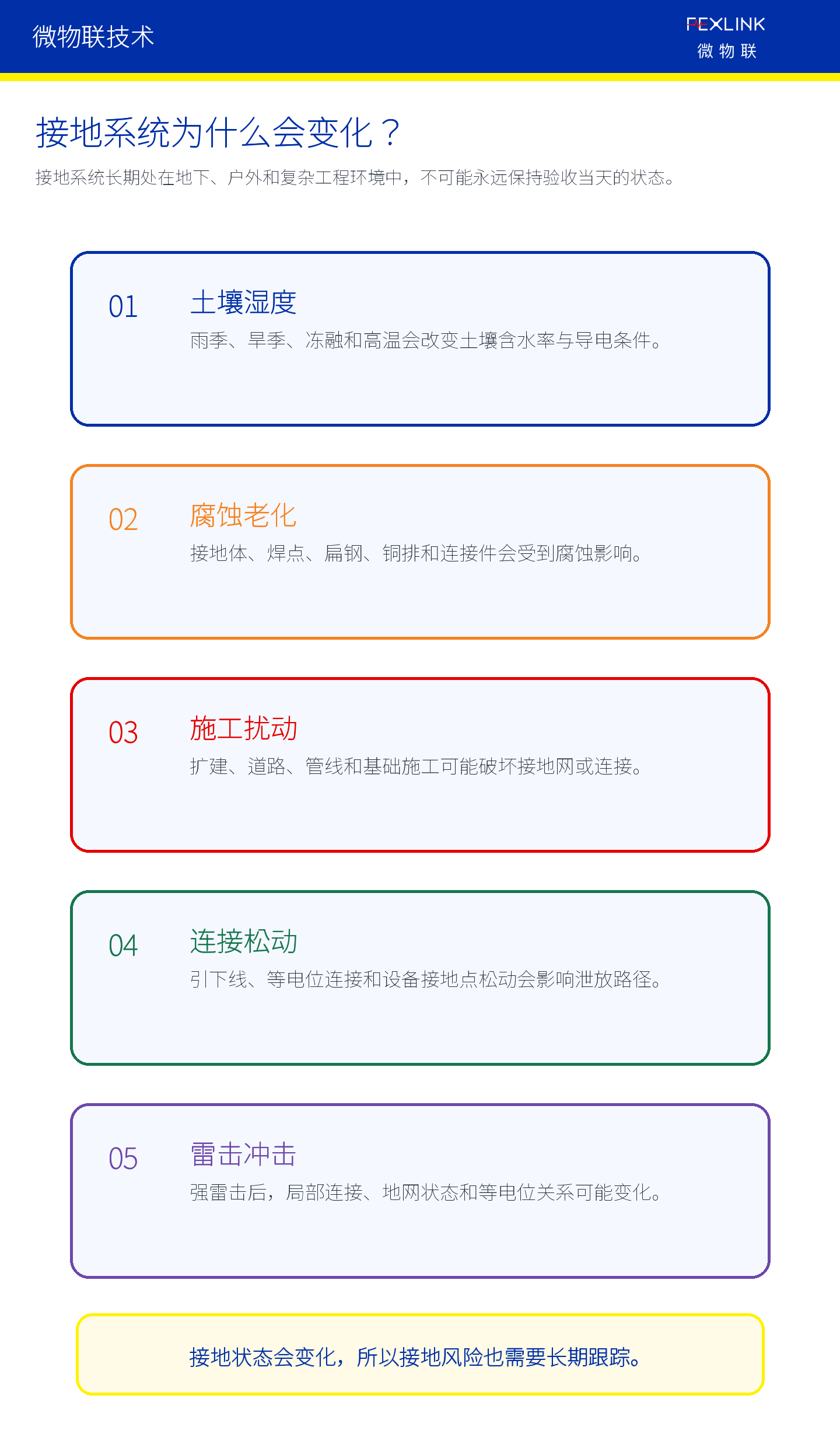
1. Why does the grounding system change?
First, soil moisture changes. The soil moisture content will affect the grounding resistance. Rainy season, dry season, long-term high temperature, freezing and thawing changes may cause the grounding state to fluctuate.
Second, the grounding body and connectors will corrode and age. Grounding bodies, connectors, solder joints, flat steel, copper bars and grounding wires have been in underground or outdoor environments for a long time and may be affected by corrosion and aging.
Third, construction disturbances will affect the grounding grid. Station expansion, road construction, pipeline construction, and foundation construction may damage the grounding network or change the grounding connection status.
Fourth, the connection points may be loose or oxidized. If the grounding down conductors, equipotential connections, power distribution cabinet grounding points, and equipment box grounding points are loose, oxidized, or have poor contact, the discharge path will be affected. Fifth, after a strong lightning strike, the local connections of the grounding system, the status of the ground grid, and the equipotential relationship may change.
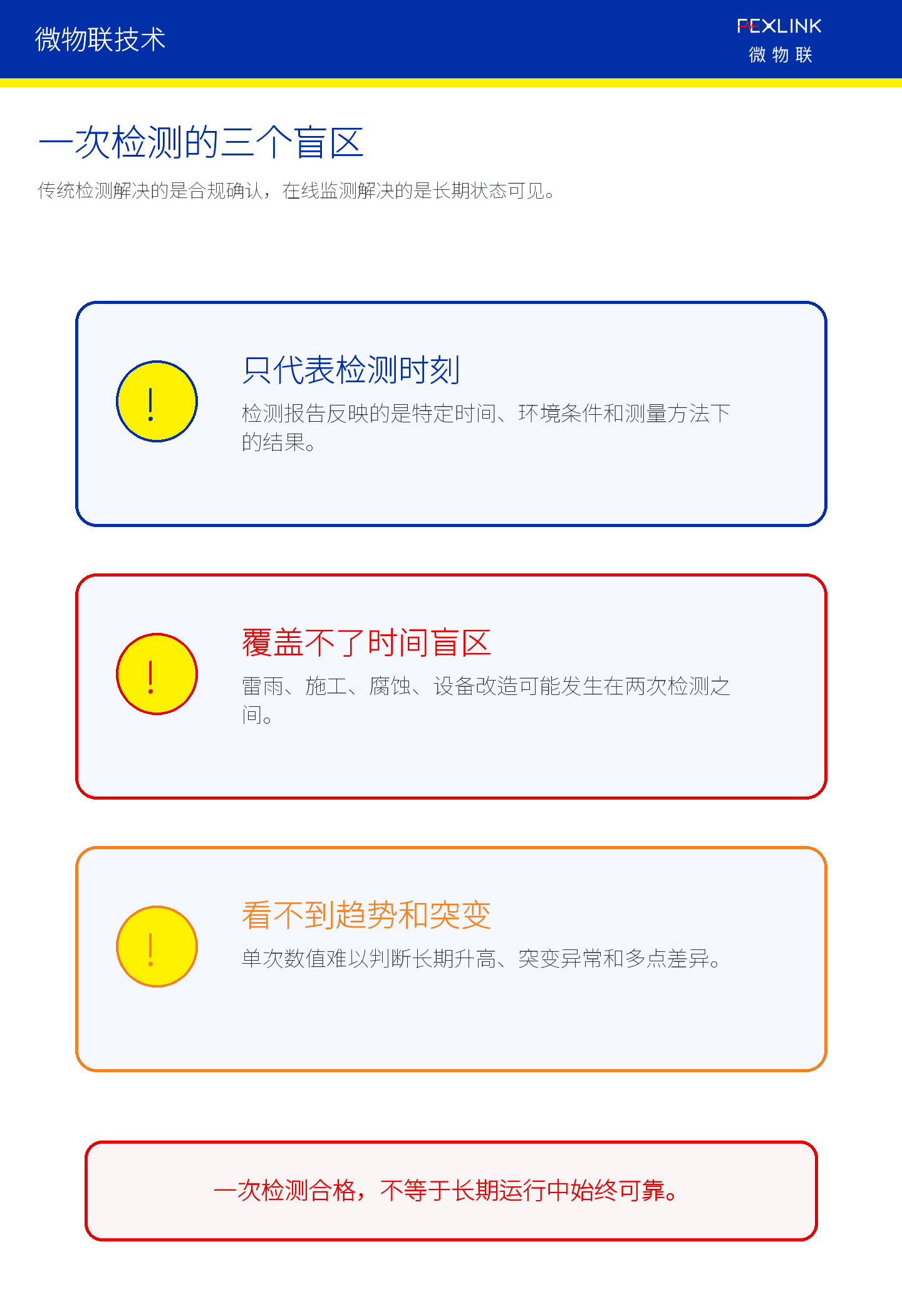
2. Why is one test not enough?
The ground resistance test report reflects the results under a certain time, a certain environmental condition, and a certain measurement method. It cannot prove that the future will not change in the long term. Many scenarios are inspected once a year, or even more frequently, but thunderstorms, construction, corrosion, and equipment modifications may all occur between inspections.
For high-risk or high-reliability scenarios such as petroleum and petrochemicals, wind power, photovoltaics, communication base stations, rail transit, highways, and data centers, grounding abnormalities may affect not only individual equipment, but also safety, power supply, communications, and operation and maintenance continuity.
Therefore, online monitoring is not a replacement test, but a supplementary test. Traditional testing solves the problem of compliance confirmation, while online monitoring solves the problem of long-term status visibility. Only by combining the two can the grounding system have both detection basis and operating data.
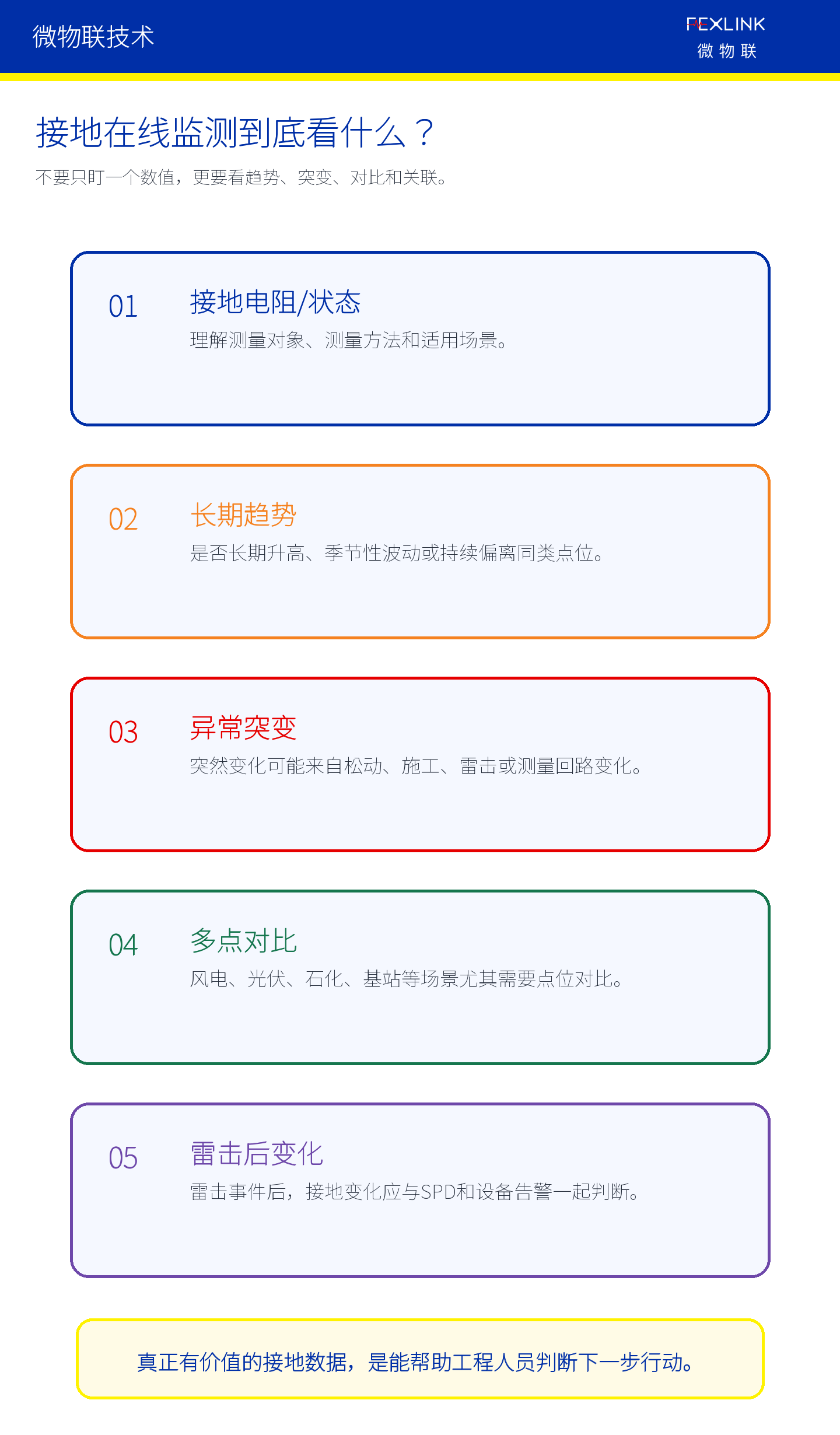
3. What exactly does online grounding monitoring monitor?
Online grounding monitoring first focuses on grounding resistance or equivalent grounding status. However, the objects measured by different systems and methods may be different. You cannot just look at an absolute value, but you must understand the measurement method and applicable scenarios.
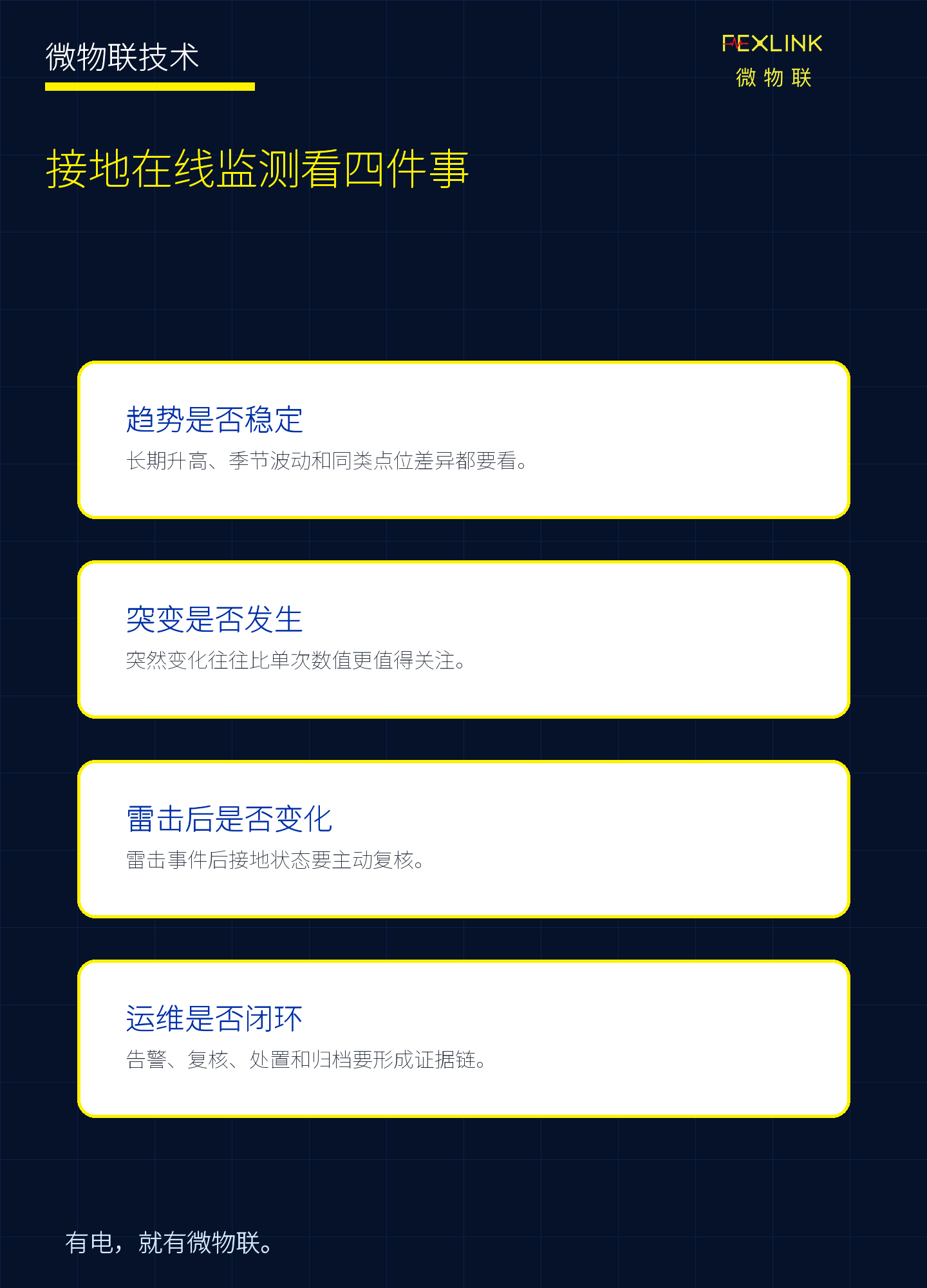
Long-term trends are more important than a single value. Engineers need to check whether the grounding status increases for a long time, whether there is a sudden change after a thunderstorm, whether it changes after construction, whether it fluctuates seasonally, and whether it is significantly different from other similar points.
Abnormal mutations are also critical. Sudden changes in grounding status are often more concerning than slow fluctuations. Abrupt changes may come from loose connections, construction damage, measurement loop changes, or state changes after a lightning strike.
Multiple comparisons are equally important. For wind farms, photovoltaic power plants, petrochemical tank farms, highways and communication base stations, comparison between multiple points is very valuable. If a certain point is high for a long time, it is often more meaningful than simply looking at whether it exceeds a fixed threshold. Grounding data should also be associated with lightning current, SPD and equipment alarms. If lightning current events, SPD actions, grounding state mutations and equipment alarms occur simultaneously after a lightning strike, risk judgment will be more reliable.
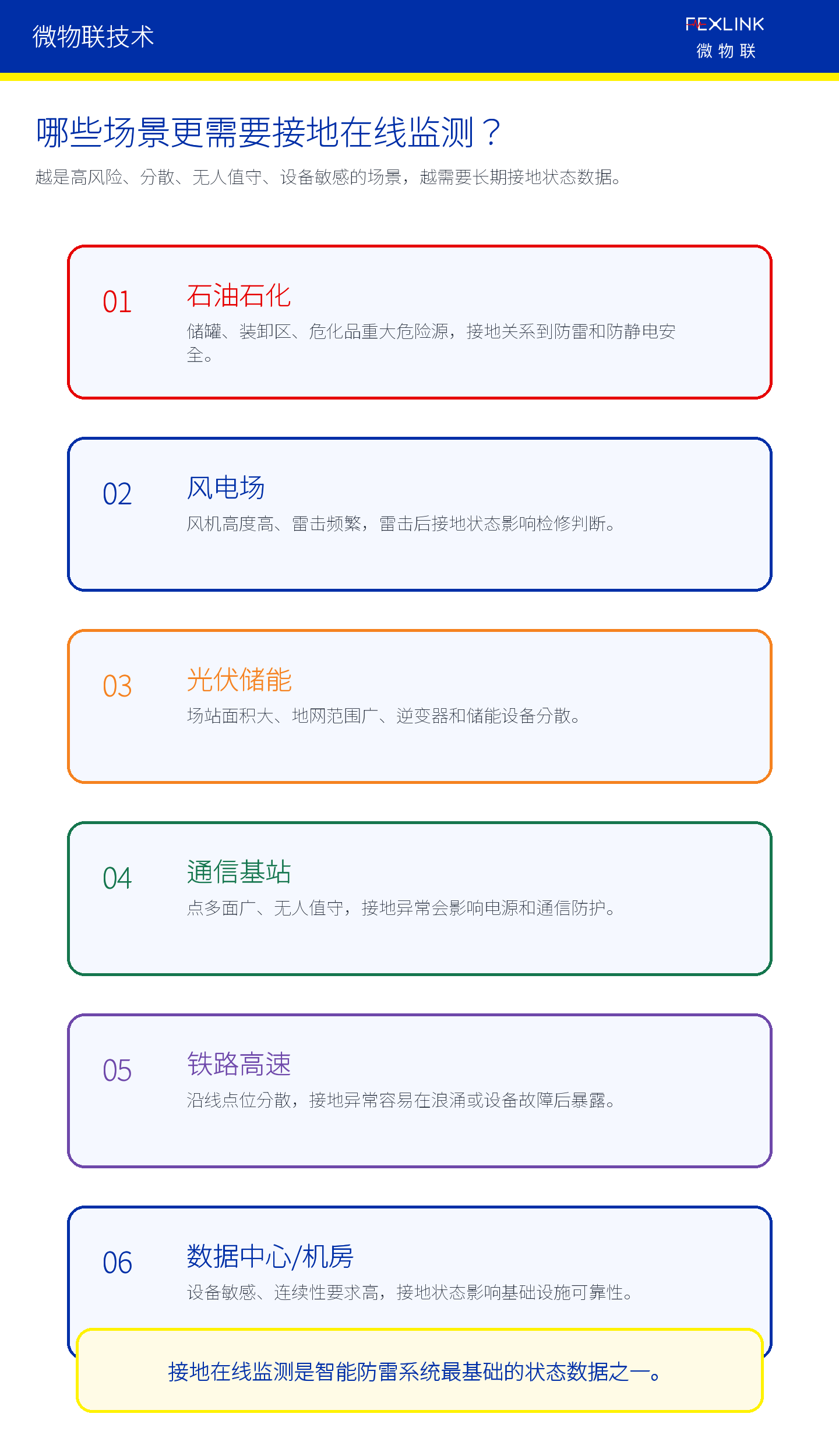
4. Which scenarios require online grounding monitoring?
Petroleum, petrochemical and storage tank areas are in great need of grounding online monitoring. Scenarios such as storage tanks, loading and unloading areas, and major sources of hazardous chemicals have high requirements for lightning protection, anti-static and grounding conditions. If the grounding status is not visible for a long time, the risk will often be exposed after thunderstorms, loading and unloading, or equipment abnormalities.
Wind farms are also needed. The height of the wind turbine is high and lightning strikes are frequent. The grounding system is an important foundation for the lightning current discharge path. Changes in grounding status after a lightning strike will directly affect subsequent maintenance decisions.
Photovoltaic and energy storage sites have large areas, wide ground grids, and dispersed equipment. Changes in grounding status may affect photovoltaic arrays, combiner boxes, inverters, box-type transformers, energy storage cabins, and booster stations. Communication base stations are multi-faceted and unattended, and the long-term invisible grounding status will bring hidden risks to power supply, communication and equipment protection. The common characteristics of computer rooms, railways and highways are scattered points, sensitive equipment, and high operation and maintenance costs. If grounding abnormalities are not discovered in time, they will often be exposed after lightning strikes, surges, or equipment failures.
5. How should the grounding online monitoring system be designed?
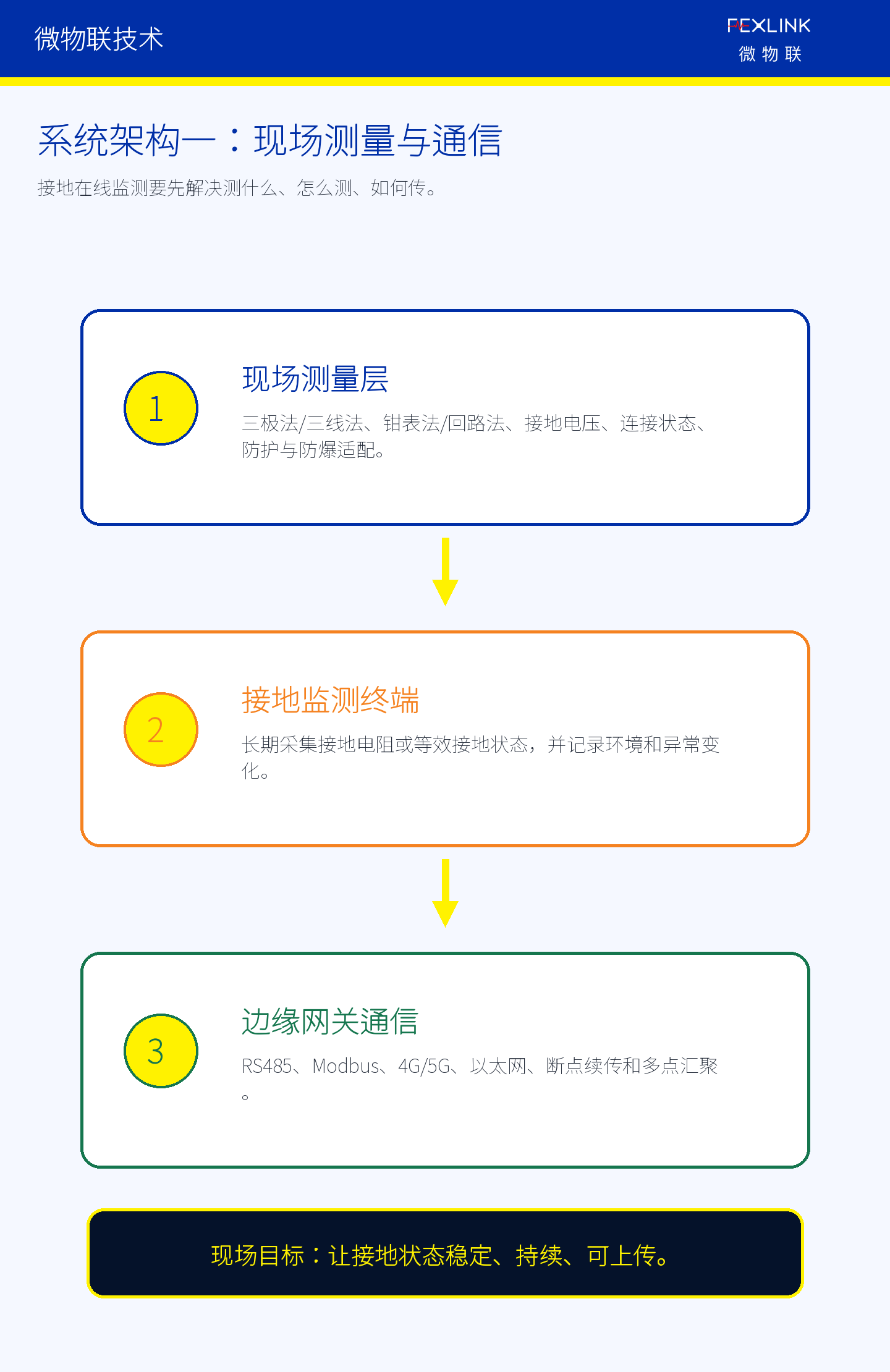
The first layer is the on-site measurement layer, including three-pole method or three-wire method measurement, clamp meter method or loop method measurement, ground voltage monitoring, ground connection status, outdoor protection and explosion-proof adaptation. Different methods have different applicable scenarios, and all measurement results cannot simply be regarded as having the same meaning.
The second layer is the edge collection and communication layer, including RS485, Modbus, 4G/5G, Ethernet, edge gateway, breakpoint resume transmission and multi-point aggregation. If online grounding monitoring is to operate for a long time, communication stability and data integrity are very critical.
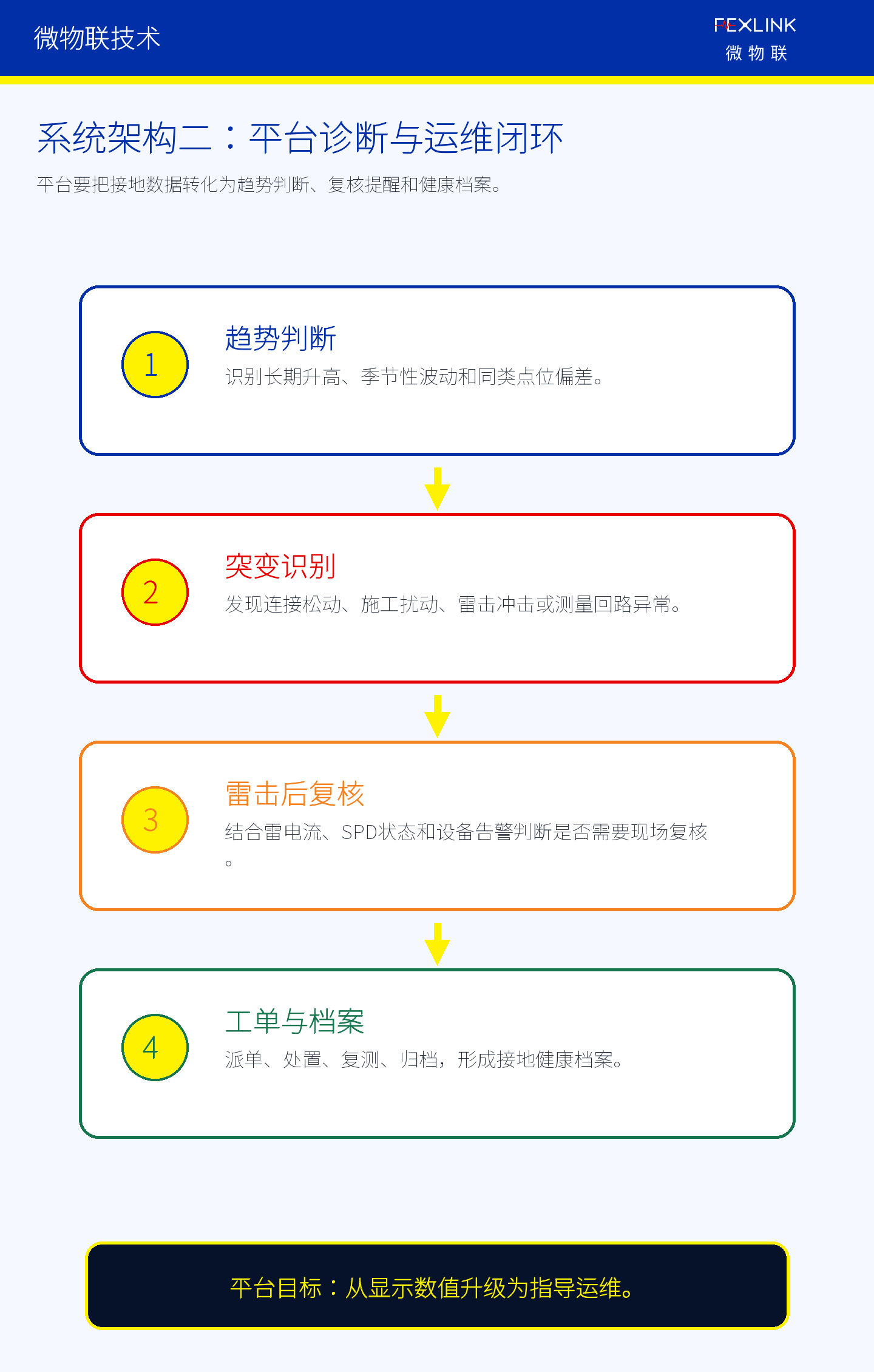
The third layer is the edge computing layer, including data cleaning, outlier filtering, trend feature extraction, grounding mutation identification, post-lightning status judgment and multi-point comparison. Many grounding anomalies are not suitable to be judged by fixed thresholds alone, but need to be combined with trends and scenarios.
The fourth layer is the cloud platform diagnostic layer, including grounding point maps, threshold alarms, trend alarms, mutation alarms, post-lightning review reminders, grounding health index, maintenance records and report archiving. A truly valuable platform does not just display an ohm value, but can tell engineers whether they should review next, where to review, and how to close the loop.
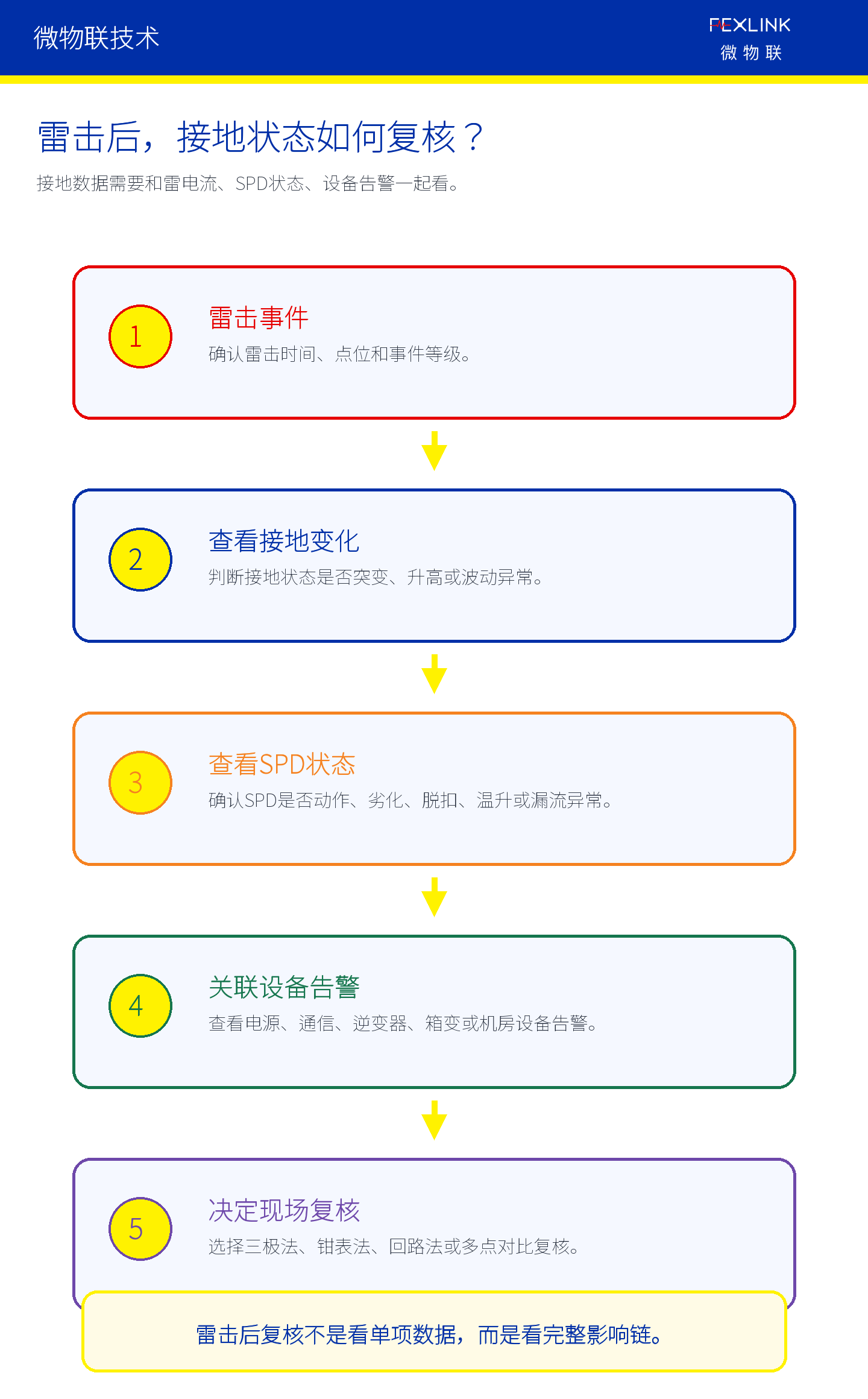
6. After a lightning strike, why should we look at grounding changes?
Whether the grounding system can still remain stable after a lightning strike is a key issue in intelligent lightning protection judgment. A strong lightning strike may cause abnormal ground connection points, local potential changes, ground network status changes, or equipment side alarms. At this time, if you only look at the number of lightning strikes or SPD status, the judgment will be incomplete.
A more reasonable way is to put lightning current events, SPD status, grounding changes and equipment alarms on the same timeline: first confirm the lightning event, then check the grounding changes, then check the SPD status and equipment alarms, and finally decide whether to review on site. For on-site review, you can choose the three-pole method, the clamp meter method, the loop method or the multi-point comparison method, which should be combined with the on-site conditions.
7. How does FEXLINK understand online monitoring of ground resistance?
FEXLINK believes that online monitoring of ground resistance is not to see a beautiful value, but to continuously judge the reliability trend of the grounding system. Ground monitoring needs to complete three transformations: from one-time detection to long-term trends; from single-point values to multi-point comparison; from manual discovery to active review after lightning strikes.
The value of FEXLINK is not only to display grounding resistance on the platform, but to put grounding data, lightning current, SPD status, equipment alarms, and operation and maintenance work orders into the same risk chain, making the grounding system a data base for intelligent lightning protection and early warning of electrical safety.
Conclusion: Online grounding monitoring is the underlying capability of intelligent lightning protection
The grounding system is the basic path for lightning protection systems, electrical safety systems and anti-static systems. Passing the test once does not mean long-term reliability. Especially in scenarios with frequent thunderstorms, dispersed equipment, complex environments and high safety levels, it is very important to continue to see the grounding status.
The value of online grounding monitoring is not to replace manual inspection, but to allow engineers to see trends, discover mutations, locate high-risk points between two inspections, and quickly determine whether review is needed after a lightning strike or equipment abnormality.
FEXLINK technology will continue to share content related to intelligent lightning protection, early warning of electrical safety, digital power distribution, energy supervision and industrial Internet of Things.
FEXLINK/FEXLINK uses data to reconstruct energy efficiency and electrical safety.
Where there is electricity, there is FEXLINK.