Abstract: Expressway electromechanical systems have many points and are widely distributed. ETC masts, monitoring poles, variable information boards, tunnel electromechanical, toll station machine rooms, service area power distribution systems and communication equipment are exposed to the outdoor environment for a long time. Traditional lightning protection is more about "whether there is a protective device", while digital lightning protection needs to further address "whether a lightning surge has occurred, whether the SPD is still effective, whether the grounding state is stable, whether equipment abnormalities are related to lightning protection events, and whether operation and maintenance form a closed loop."
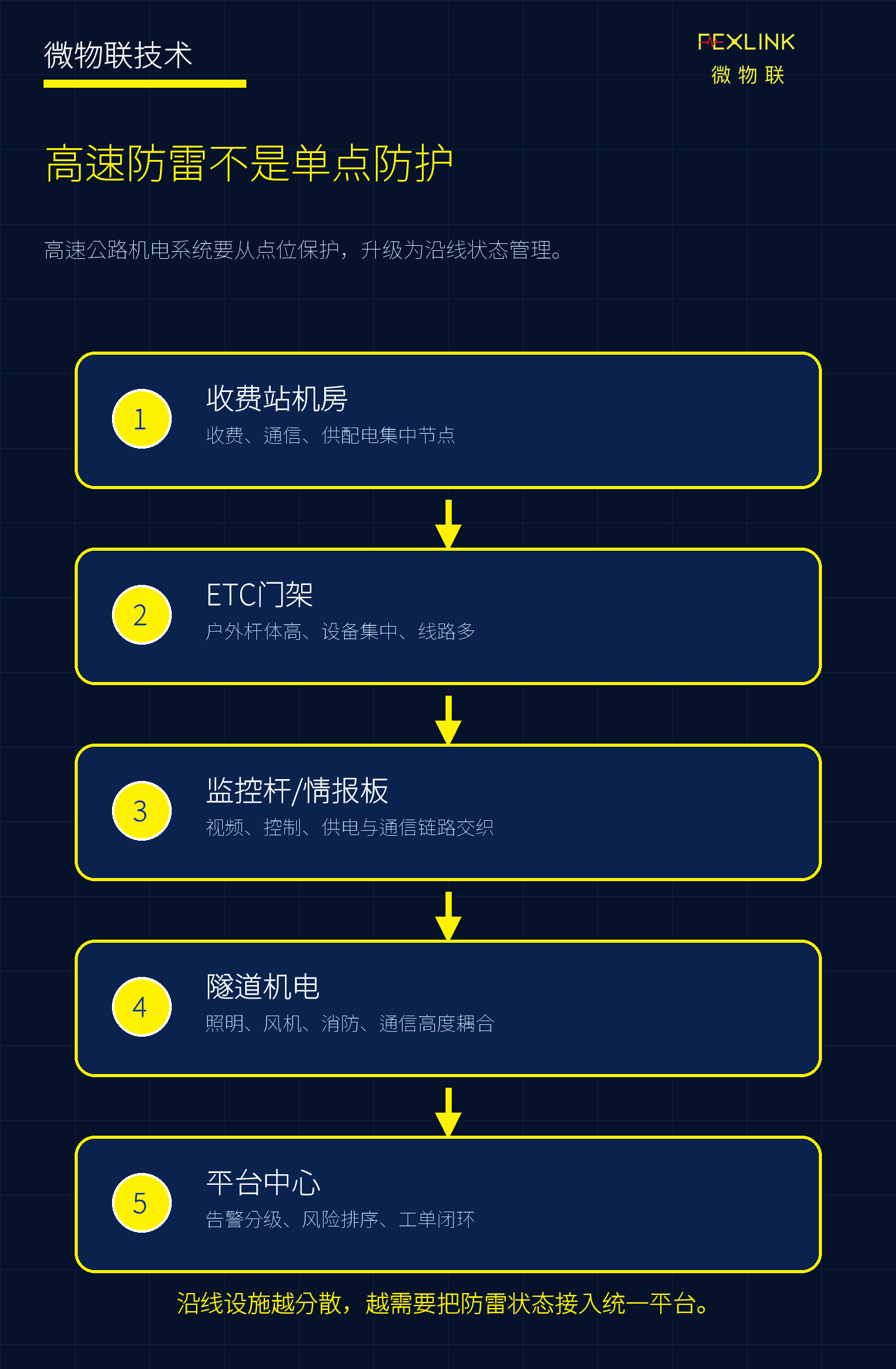
Highway lightning protection is not an isolated equipment problem. There are a large number of outdoor mechanical and electrical facilities along the line, which have been working in thunderstorm, humidity, high temperature, dust, vibration and electromagnetic interference environments for a long time. A lightning strike or induced surge may not only damage a lightning protector, but also cause cameras to go offline, ETC gantry abnormalities, information board black screens, tunnel equipment alarms, toll station communication interruptions, or power distribution equipment failures.
For highway operating units, the difficulty in lightning protection is not whether an SPD is installed at a certain point, but whether the status of hundreds or thousands of points along the line is continuously visible. The more dispersed the equipment is, the less it can rely solely on manual inspections and post-mortem inspections. What digital lightning protection needs to do is to unify lightning surge events, lightning arrester status, grounding status, equipment alarms and operation and maintenance processing into a risk data chain along the line.
1. Why are highway electromechanical systems susceptible to lightning surges?
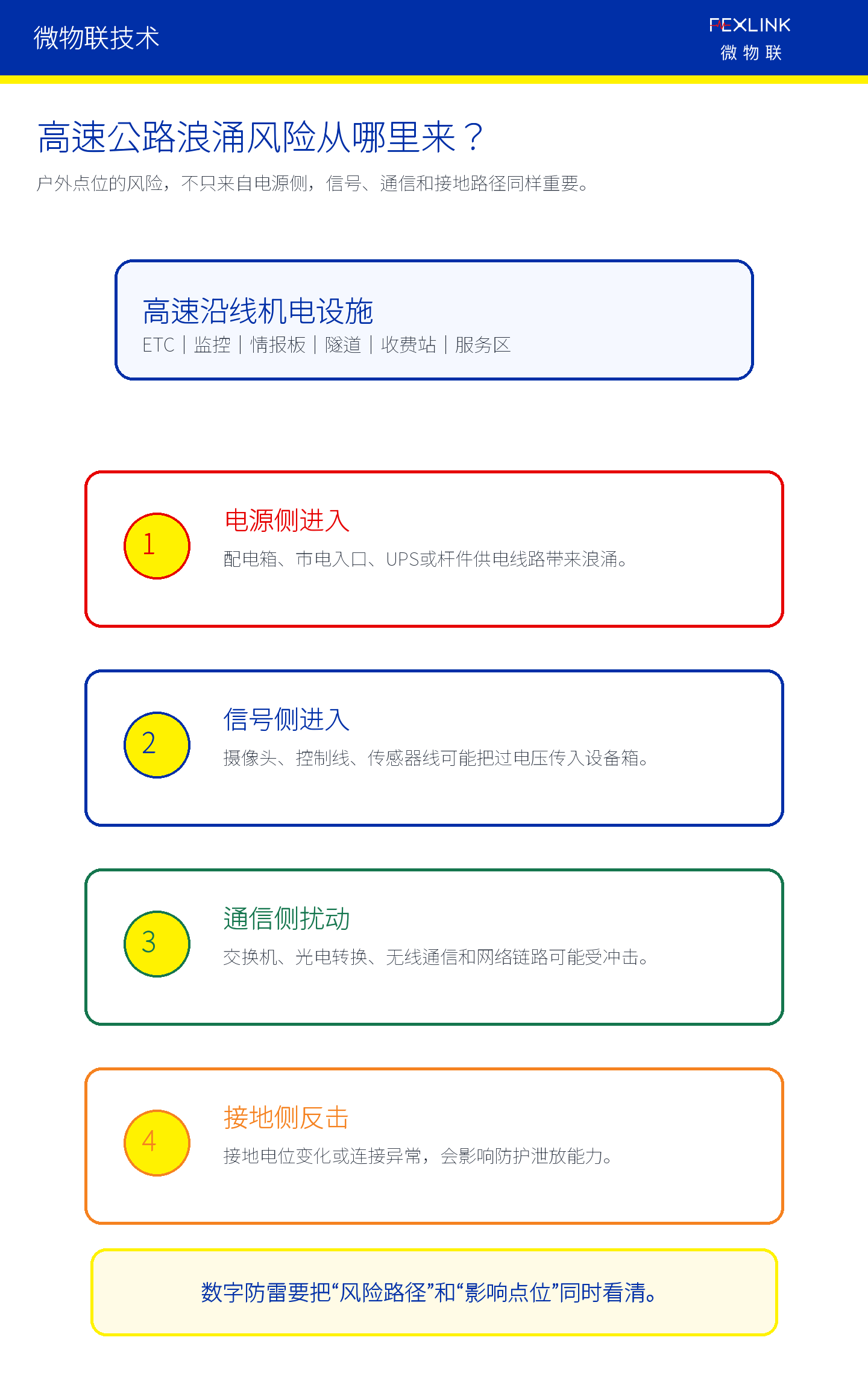
The risks of highway electromechanical systems first come from point dispersion. A highway contains toll stations, service areas, tunnels, bridges, ETC gantry, monitoring poles, weather stations, variable information boards, communication equipment and distribution boxes. Different points span long distances, and the surrounding terrain, soil conditions, power supply methods and communication conditions are also different.
The second characteristic is strong outdoor exposure. ETC masts, monitoring poles, video cameras, information boards and some meteorological monitoring equipment have been in open roads for a long time and are easily affected by thunderstorms, induction mines, ground potential counterattacks and nearby direct lightning strikes. Although SPD may have been installed in the equipment box, without status monitoring, it is difficult to continuously control whether the equipment has experienced impact and whether its protection capability has declined.
The third feature is the complexity of the lines. There are power lines, communication lines, video lines, control lines, photoelectric conversion equipment, grounding wires and metal poles in the highway electromechanical system. The surge may enter from the power side, the signal side, the communication side, or the ground side. An abnormal point may be caused by a power quality problem, surge impact, grounding change, or equipment aging.
2. What are the blind spots in traditional highway lightning protection?
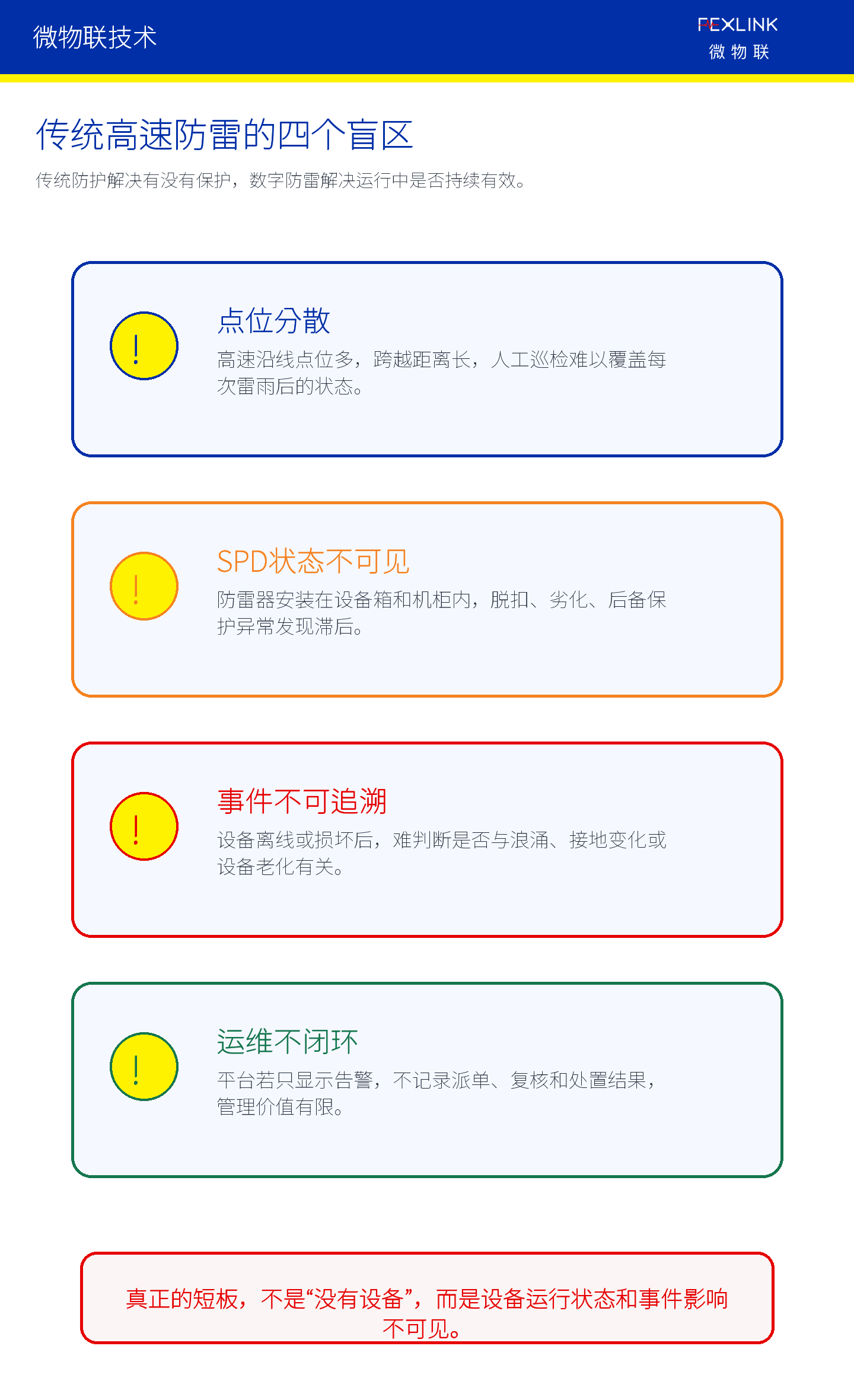
Traditional lightning protection is not without value. Power SPD, signal SPD, equipotential bonding, grounding system and standardized construction are still the basis for the safe operation of highway electromechanical systems. But the main shortcoming of the traditional method is that the running process is invisible.
The first blind spot is that the SPD status is not visible. Many lightning arresters are installed in distribution boxes, cabinets or pole equipment boxes, and tripping, deterioration, and backup protection abnormalities can only be checked on site. For points along the line, the manual inspection cycle is long, and the discovery of abnormalities is often delayed.
The second blind spot is that events cannot be traced. After the equipment is damaged, the on-site often can only say "it may be a lightning strike", "it may be a surge", "it may be a power problem", but there is a lack of data to explain when the impact occurred, which point was affected, whether the SPD acted, whether the grounding status changed, and whether the equipment alarm time matched.
The third blind spot is that the grounding state has not been paid attention to for a long time. The geological conditions along the highway are complex, and the grounding system may be affected by soil moisture, corrosion, construction disturbance, loose wiring and special terrain. Passing a test once does not mean it will be reliable for a long time to come.
The fourth blind spot is that there is no closed loop between alarms and operation and maintenance. Even if many projects have a platform, they may still be stuck at the "display alarm" level. Who processed it, when it was processed, what was processed, whether it was restored, and whether an event file was formed. If there is no closed-loop record, the value of the system will be significantly reduced.
3. What points should be monitored for digital lightning protection on highways?
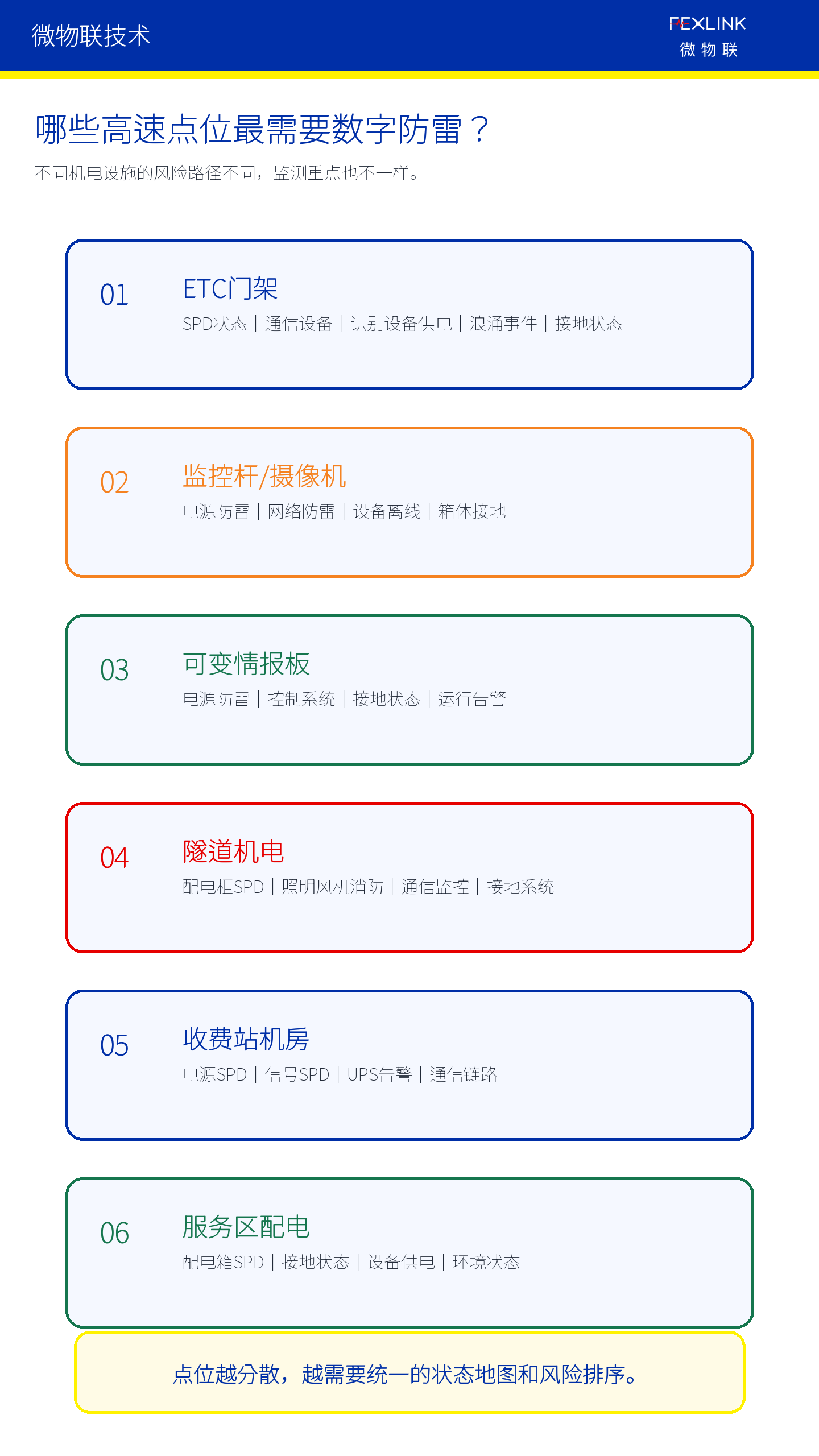
The first focus is the ETC mast. ETC masts are usually located in open road sections with high poles, concentrated equipment, and many lines. They are typical outdoor surge risk points. Digital lightning protection should focus on monitoring the SPD status of the gantry distribution box, the status of communication equipment, the power supply status of identification equipment, surge event records and grounding status.
The second key point is the video surveillance pole and camera points. Once the monitoring equipment goes offline, it will affect traffic viewing, incident identification and emergency response. Here we need to monitor the power supply SPD, but also pay attention to network lightning protection, camera power supply, box grounding and equipment offline alarms.
The third focus is the variable intelligence board. The information board is responsible for traffic guidance, safety prompts and emergency information release functions. Its lightning protection monitoring should cover power supply lightning protection, control system lightning protection, grounding status and equipment operation alarms.
The fourth focus is the tunnel electromechanical system. The lighting, fans, fire protection, monitoring, communication and power distribution systems in the tunnel are tightly coupled. Once lightning protection, power distribution or communication abnormalities occur, the scope of impact may be more complex. The tunnel scenario is suitable for unified management of power distribution cabinet SPD, grounding system and electromechanical equipment alarms.
The fifth focus is the toll station and service area equipment room. Toll stations and service areas are often electromechanical centralized nodes on a road section and are suitable for centralized monitoring, focusing on the computer room power SPD, signal SPD, UPS and power distribution alarms, grounding status and communication links.
4. How to design the highway digital lightning protection system?
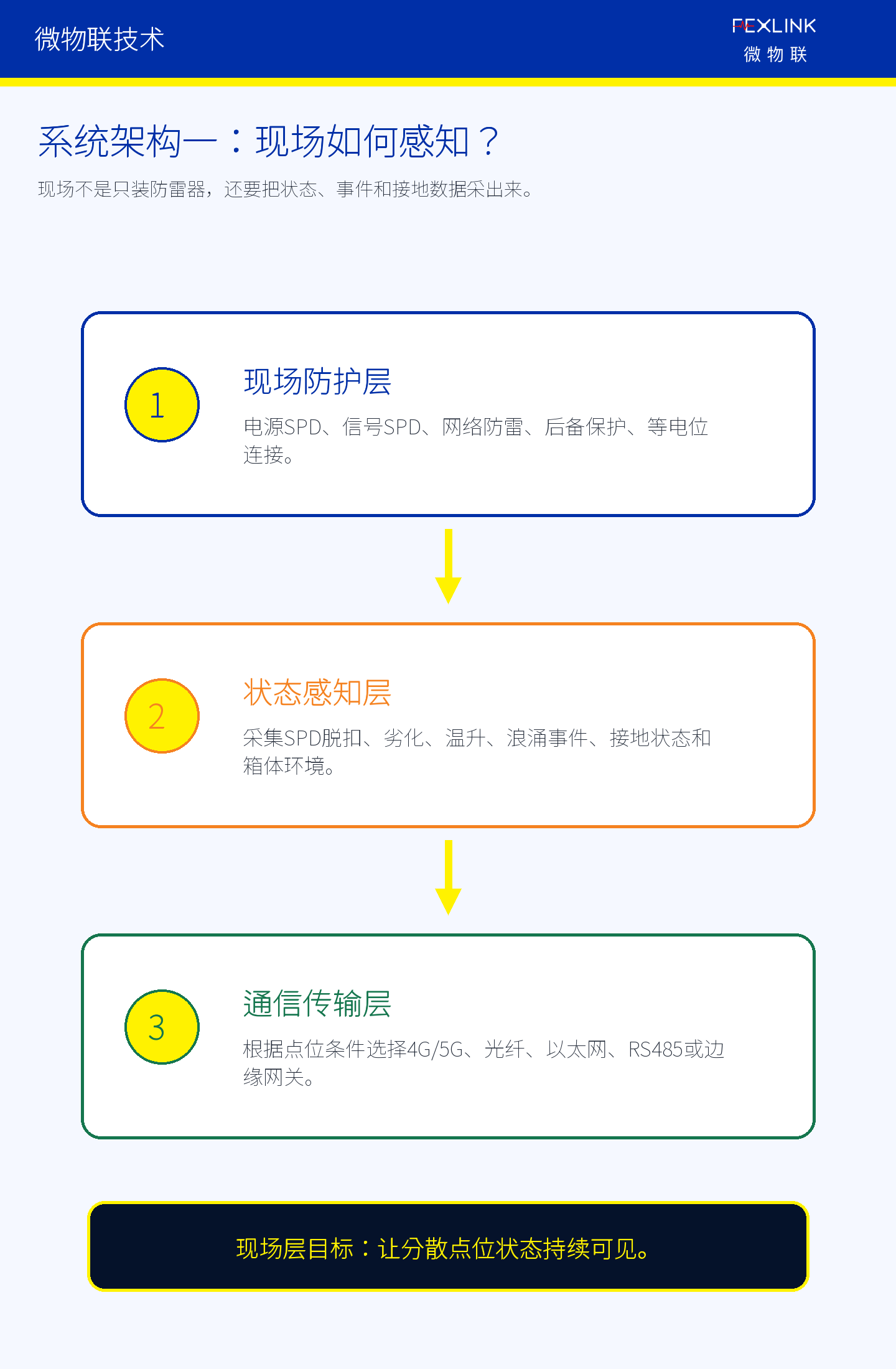
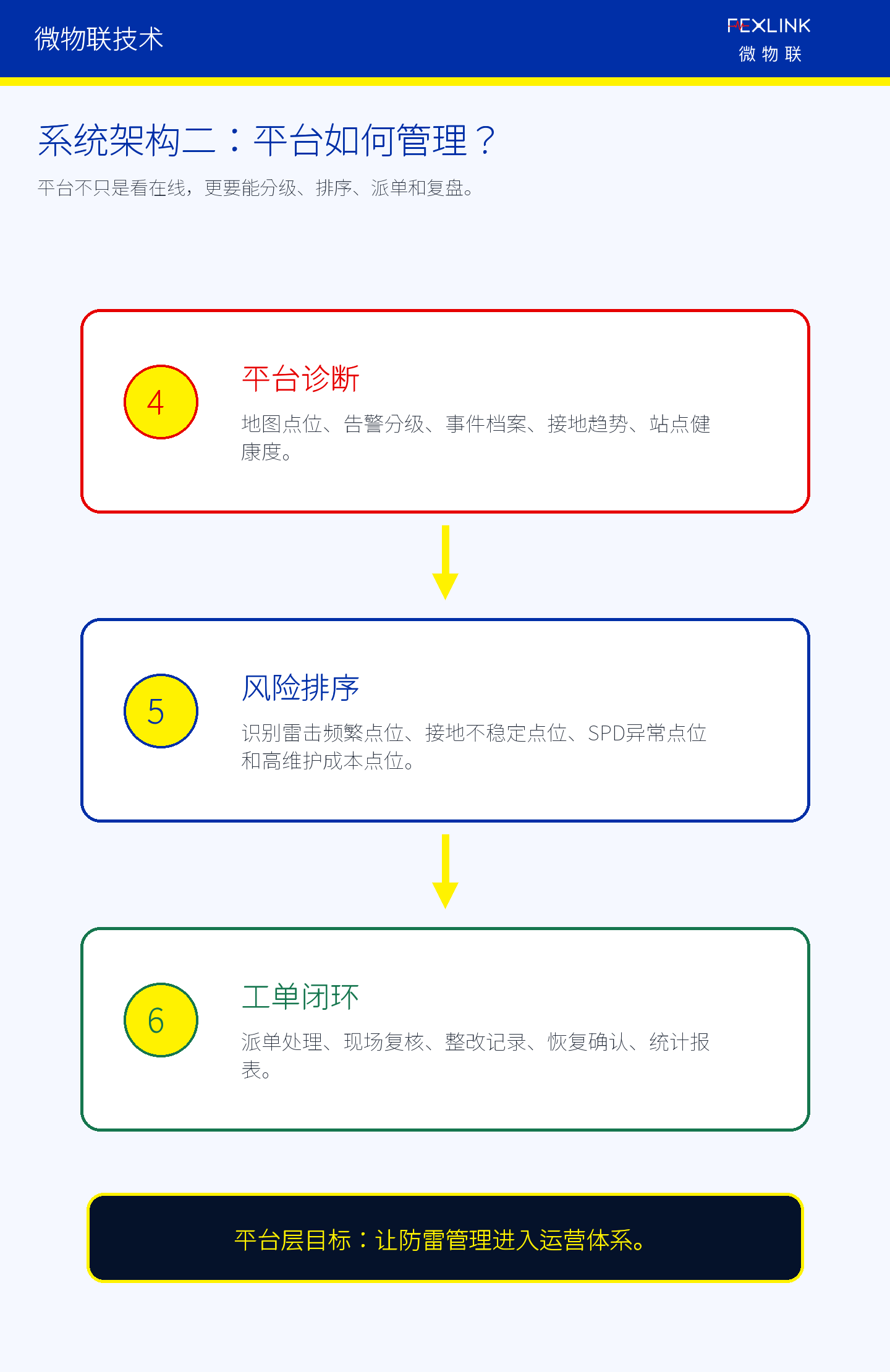
The complete highway digital lightning protection system can be divided into on-site protection layer, status awareness layer, communication transmission layer, platform diagnosis layer and operation and maintenance closed-loop layer. The on-site protective layer solves basic safety issues, including power SPD, signal SPD, network lightning protection, equipotential bonding, grounding system and backup protection.
The status awareness layer solves "visible" problems, including SPD tripping status, degradation status, backup protection status, surge events, lightning current events, grounding resistance or grounding status, box environment and equipment power supply status. For outdoor scattered points, the ability to collect and upload stably is more important than the number of function tables written.
The communication transmission layer should be selected flexibly based on site conditions. 4G/5G, Ethernet, optical fiber network, RS485, edge gateway or private network access can be used along the high-speed line. The platform diagnosis and operation and maintenance closed-loop layer must support mapped points, alarm classification, risk ranking, event files, grounding trends, site health, work order dispatch, disposal review and statistical reports.
5. What is the key value of highway digital lightning protection?
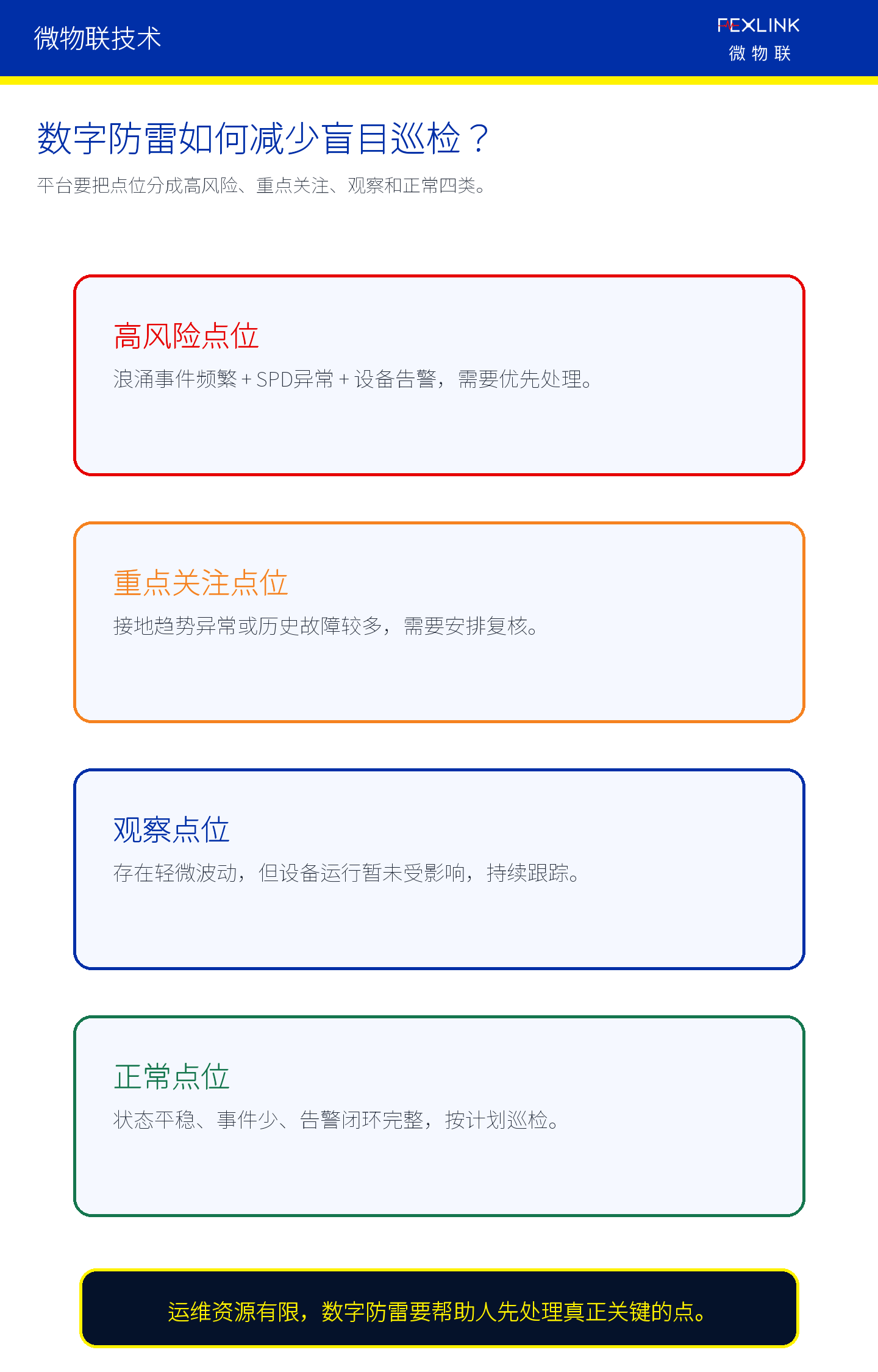
First, reduce blind inspections. Traditional inspections are easy to use evenly, but digital lightning protection can tell operation and maintenance personnel where surges have occurred, where SPDs are abnormal, where grounding trends are abnormal, and where equipment alarms may be related to lightning protection events.
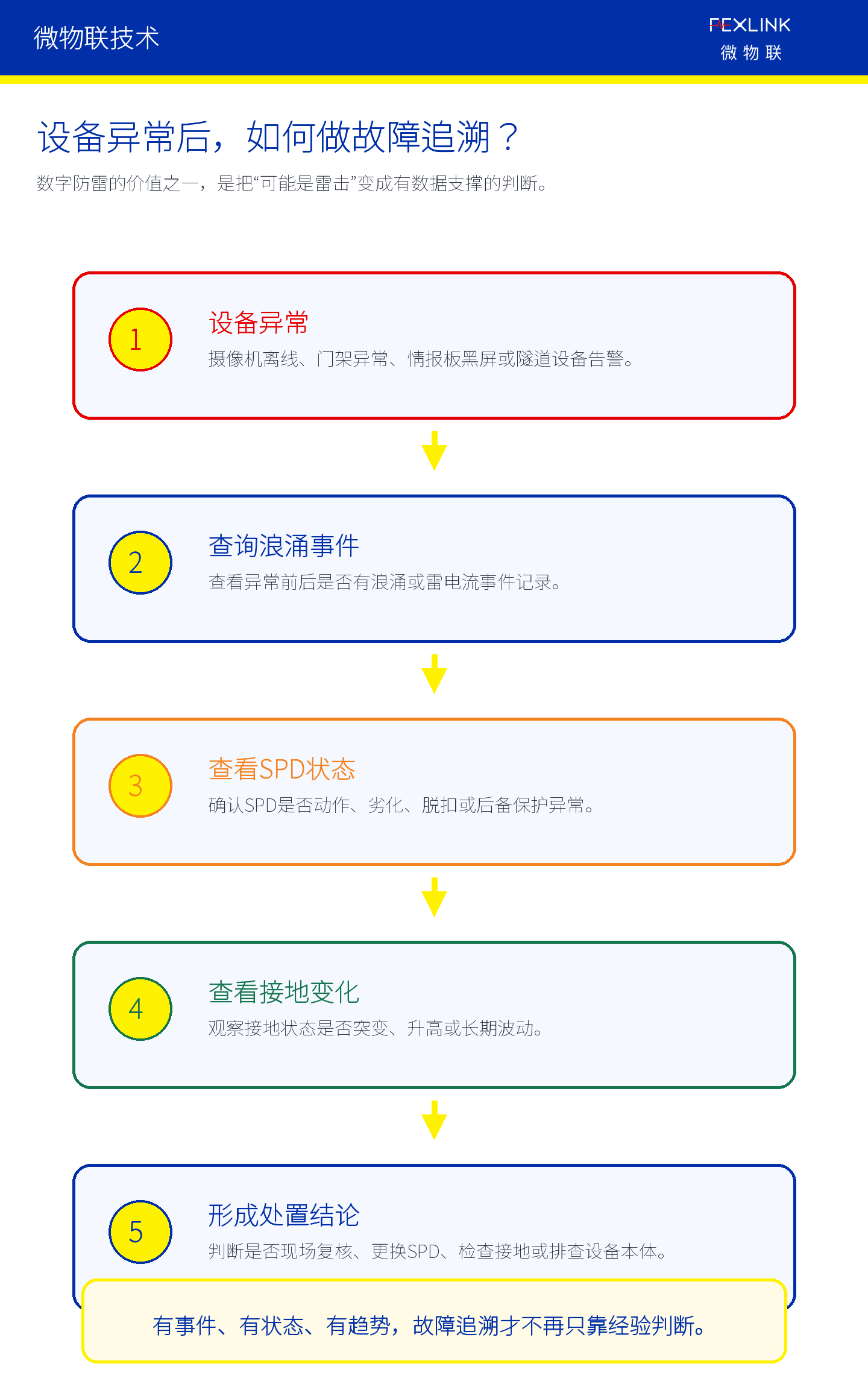
Second, improve fault traceability capabilities. When the equipment at a certain point is offline or damaged, you can review whether there is a surge event, whether the SPD operates, whether the grounding status changes, whether the communication is interrupted, and whether similar problems occur in the history. In this way, failure analysis no longer relies solely on empirical judgment.
Third, form a portrait of high-risk points. Long-term data can identify frequent lightning strike points, frequent SPD abnormal points, unstable grounding points, frequently offline equipment and high maintenance cost points. Operating units can optimize inspection routes, spare parts strategies and modification plans based on this data.
Fourth, let lightning protection enter the operation management system. Highways are not one-time construction projects but long-term operational assets. Digital lightning protection can transform the lightning protection system from "project acceptance item" to "operational status data".
6. How does FEXLINK understand highway digital lightning protection?
FEXLINK believes that the core of highway digital lightning protection is not to simply add an online module to each point, but to unify the protection status, surge events, grounding status, equipment alarms and operation and maintenance processing of electromechanical facilities along the line into a continuous data chain.
Highway digital lightning protection needs to solve three changes: from single-point installation to status management along the line; from post-fault troubleshooting to event traceability; from manual inspection to risk-graded operation and maintenance. The FEXLINK digital lightning protection system hopes to allow lightning protection equipment to continuously produce data, allow lightning protection data to serve electromechanical systems to operate reliably, and allow facilities along highways to move from "equipment online" to "status can be judged."

Conclusion: Highway lightning protection upgrade is part of the reliable operation of electromechanical systems
The lightning protection upgrade of highway electromechanical systems is not only to reduce lightning damage, but also to make the risk status of equipment along the line visible for a long time. For ETC masts, monitoring poles, information boards, tunnel electromechanical, toll stations and service area equipment rooms, lightning protection is not an isolated device, but a part of operational reliability management.
What digital lightning protection really wants to solve is to make risks visible, events detectable, status clearly judged, and disposal left in place. Only in this way can the highway lightning protection system be upgraded from equipment configuration in the construction stage to status management capabilities in the operation stage.
FEXLINK technology will continue to share content related to intelligent lightning protection, early warning of electrical safety, digital power distribution, energy supervision and industrial Internet of Things.
FEXLINK/FEXLINK uses data to reconstruct energy efficiency and electrical safety.
Where there is electricity, there is FEXLINK.