Abstract: The leakage protection action is already the result of the risk reaching certain conditions. A truly valuable leakage warning should pay attention to the long-term trend, fluctuation pattern, environmental correlation, load relationship and abnormal duration of leakage values, so as to detect risks such as insulation degradation, moisture and grounding abnormalities in advance.
Many people understand the risk of leakage as "tripping or not tripping". Of course, we should pay attention to tripping, but when the leakage protection operates, the risk has already reached the operating conditions. For early warning, what is more valuable is to see how the leakage trend changes before tripping.
Leakage is not a static problem. It will be affected by the insulation condition, ambient humidity, equipment aging, wiring quality and load characteristics, and may also rise slowly over a period of time.
1. The leakage protection action is already the result
The function of the leakage protector is to cut off the power supply when the leakage reaches the set conditions to prevent further expansion of the risk of electric shock and fire. It is an important protection device, but it solves the problem after reaching the action condition.
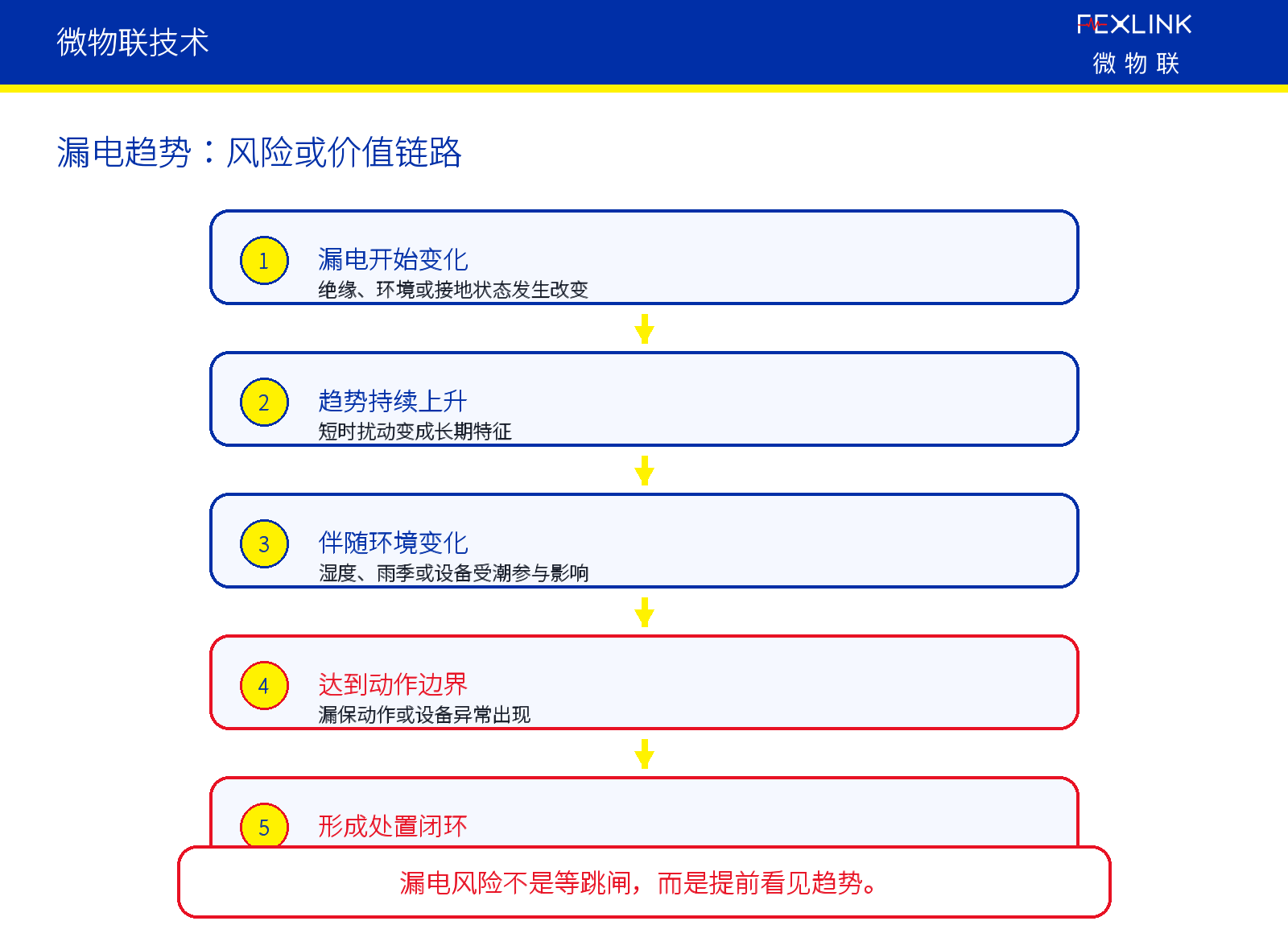
If you only focus on the tripping, it is easy to ignore the change process before the tripping. Before the actual operation of many lines, the leakage value has experienced a process from normal fluctuation to abnormal increase, from occasional disturbance to sustained high level.
2. What hidden dangers can the leakage trend reflect?
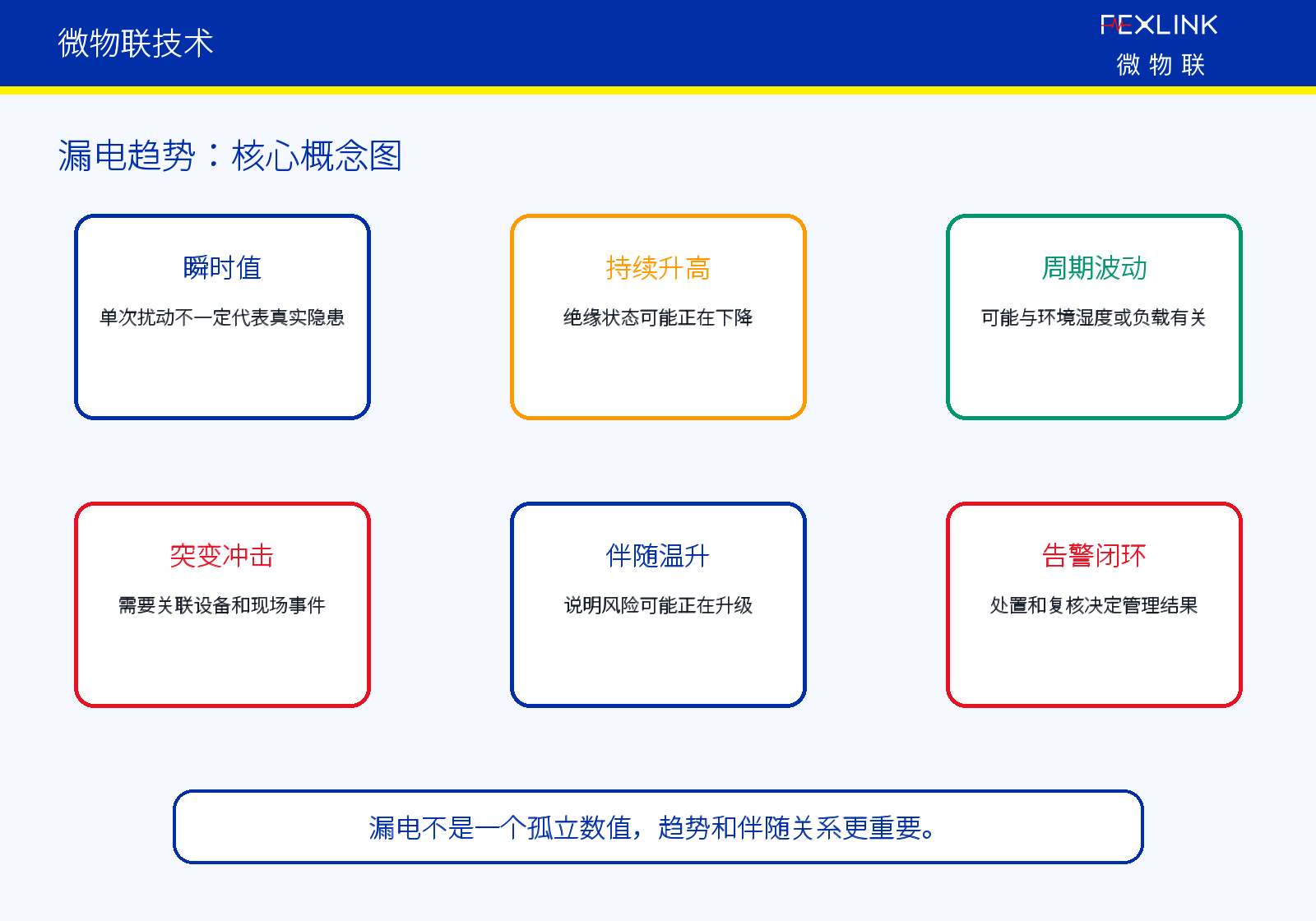
The long-term increase in leakage is often related to insulation degradation, moisture in equipment, aging circuits, abnormal grounding, irregular temporary power consumption, or environmental changes. This type of problem is more common during wet seasons, in underground spaces, charging facilities, construction sites and older lines.
Trend data can help operations and maintenance personnel differentiate between occasional disturbances and real risks. If the leakage only fluctuates for a short period of time, it may be caused by the start and stop of the equipment or environmental interference; if it continues to rise or repeatedly reaches high levels, focused investigation is required.
3. Why can’t we just look at the instantaneous value?
The instantaneous value of leakage current is easily affected by load, environment and measurement disturbances. If a single value is too high, it may not indicate long-term risks; if a single value is normal, it cannot prove that the system is free of hidden dangers.
A more reliable way to judge is to look at the direction of change, duration, frequency of occurrence and whether it is related to weather, temperature, load and equipment alarms. Trends illustrate changes in insulation status better than single points.
4. Leakage warning requires hierarchical judgment
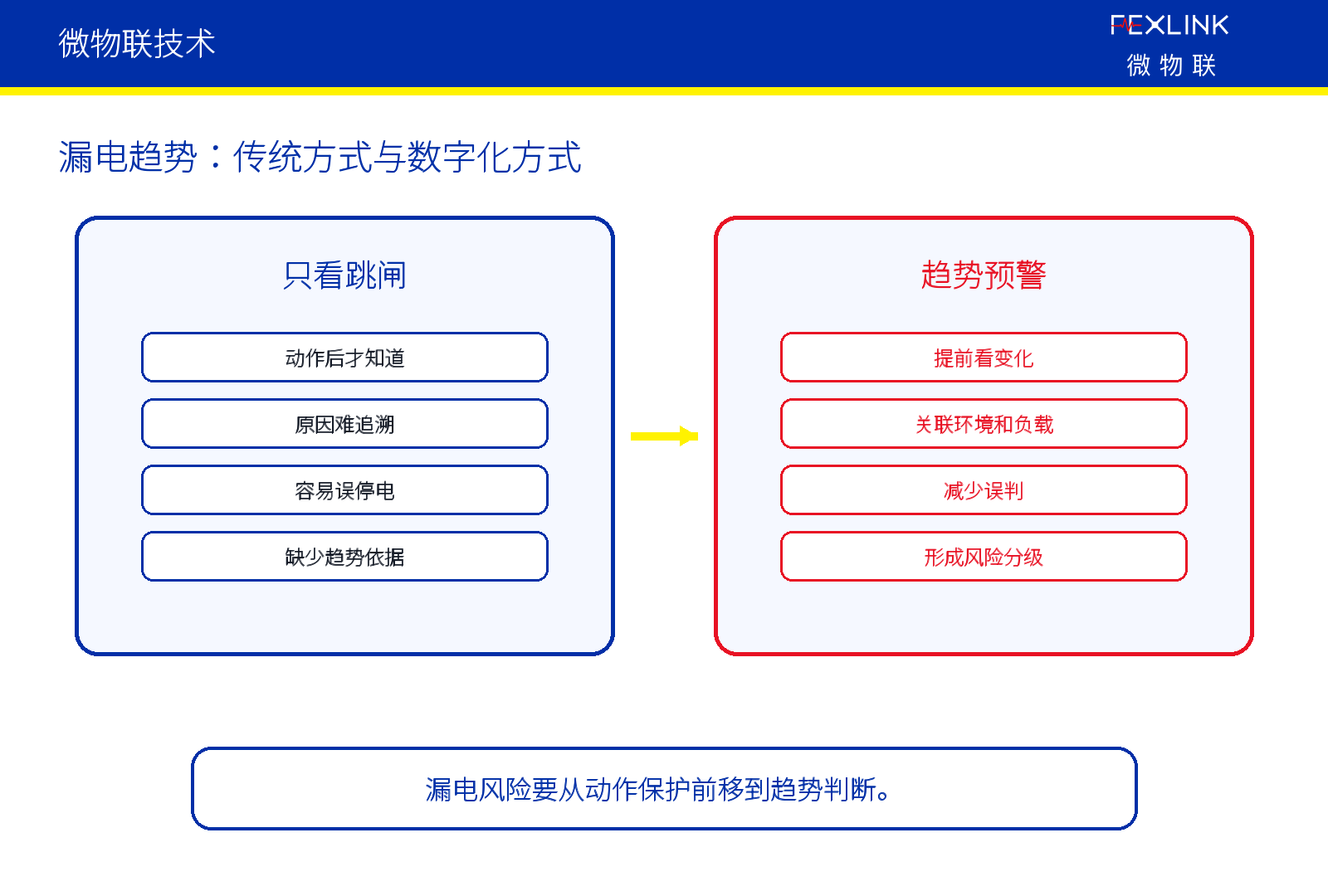
Leakage risks can be divided into normal fluctuations, abnormal rises, sustained high levels, sudden shocks and accompanying abnormalities. Normal fluctuations can be recorded and observed, and abnormal rises need to be reviewed. When the temperature remains high or is accompanied by abnormalities in temperature, current, or equipment, the processing priority should be increased.
This hierarchical approach can reduce false alarms and unintentional power outages. The system does not simply sound an alarm when the risk is high, but determines the risk level based on trends, scenarios and accompanying relationships.
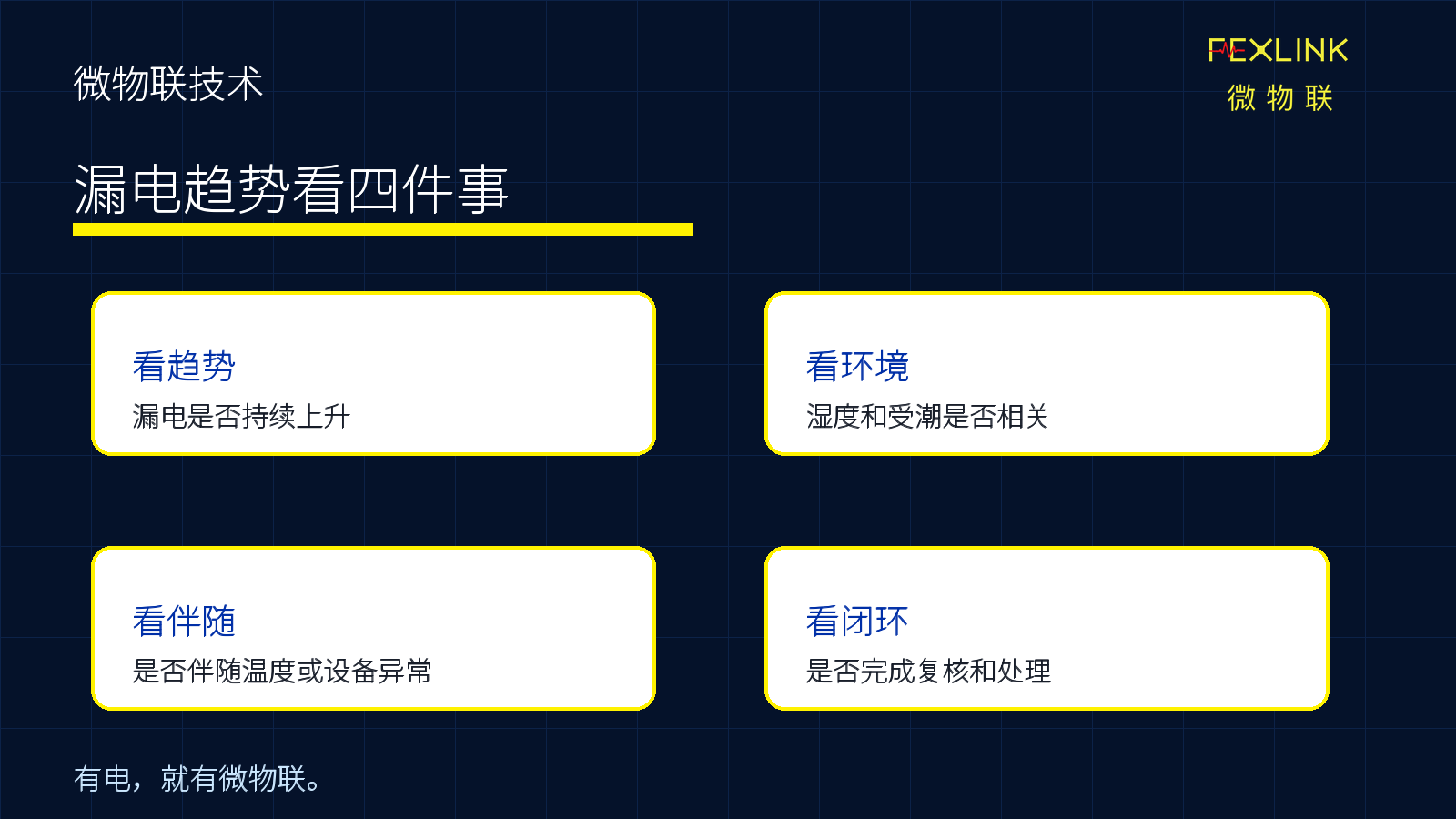
5. How does FEXLINK understand leakage trend warnings?
FEXLINK believes that leakage monitoring should not just wait for protective actions, but should identify insulation and environmental risks in advance. FEXLINK focuses on the relationship between leakage value, change rate, duration, weather environment, load status and historical alarms.
Through trend diagnosis, leakage data can be upgraded from "conditions that trigger tripping" to "early signals for discovering hidden dangers."
Conclusion: The key to early warning of leakage is to see the change process
Leakage protection action is important, but it is not the whole story of leakage risk management. Only by recording the leakage trend, explaining it clearly, and handling it in a hierarchical manner can the risk of unintentional power outages and accidents be truly reduced.
FEXLINK technology will continue to share content related to intelligent lightning protection, early warning of electrical safety, digital power distribution, energy supervision and industrial Internet of Things.
FEXLINK/FEXLINK uses data to reconstruct energy efficiency and electrical safety.
Where there is electricity, there is FEXLINK.