Abstract: If lightning current monitoring only stops at "how many lightning strikes", it can only answer whether the event occurred, but it is difficult to answer how strong the lightning strike was, what the waveform process was, which points were affected, whether it caused SPD degradation, whether the grounding status changed, whether the equipment alarm is relevant, and whether subsequent on-site review is needed. Really valuable lightning current monitoring should organize peak value, polarity, rise time, duration, charge amount, energy, timestamp and point information into complete event data, and link it with SPD status, grounding status, equipment alarm and work order closed loop.
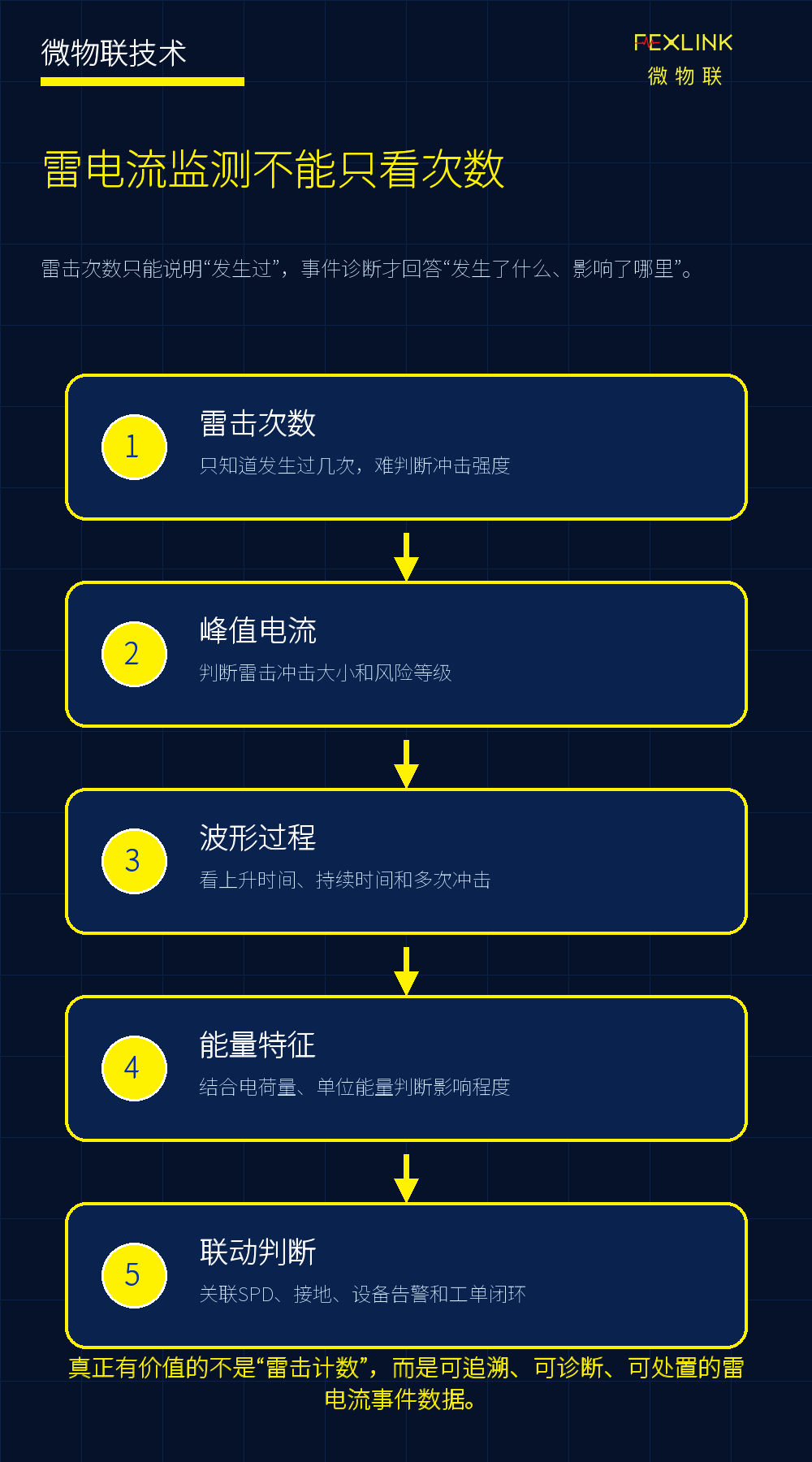
Many sites use lightning strike counters to know whether a lightning strike has occurred in a certain area, a certain piece of equipment, or a certain downdraft. This information is certainly valuable, but it only answers the most basic question: how many times did it happen. For intelligent lightning protection systems, frequency alone is far from enough. For the full argument, see why lightning strike counters alone are not enough.
After a lightning strike, what engineers really care about is: how strong the lightning strike is, how fast the impact process is, how long it lasts, whether there are multiple impacts, whether it affects the SPD, whether the grounding status has changed, whether equipment alarms appear simultaneously, and whether on-site review is needed. In other words, the core of lightning current monitoring is not to turn lightning strikes into a number, but to turn lightning strikes into events that can be analyzed, traced and dealt with.
1. Why is it not enough to only look at the number of lightning strikes?
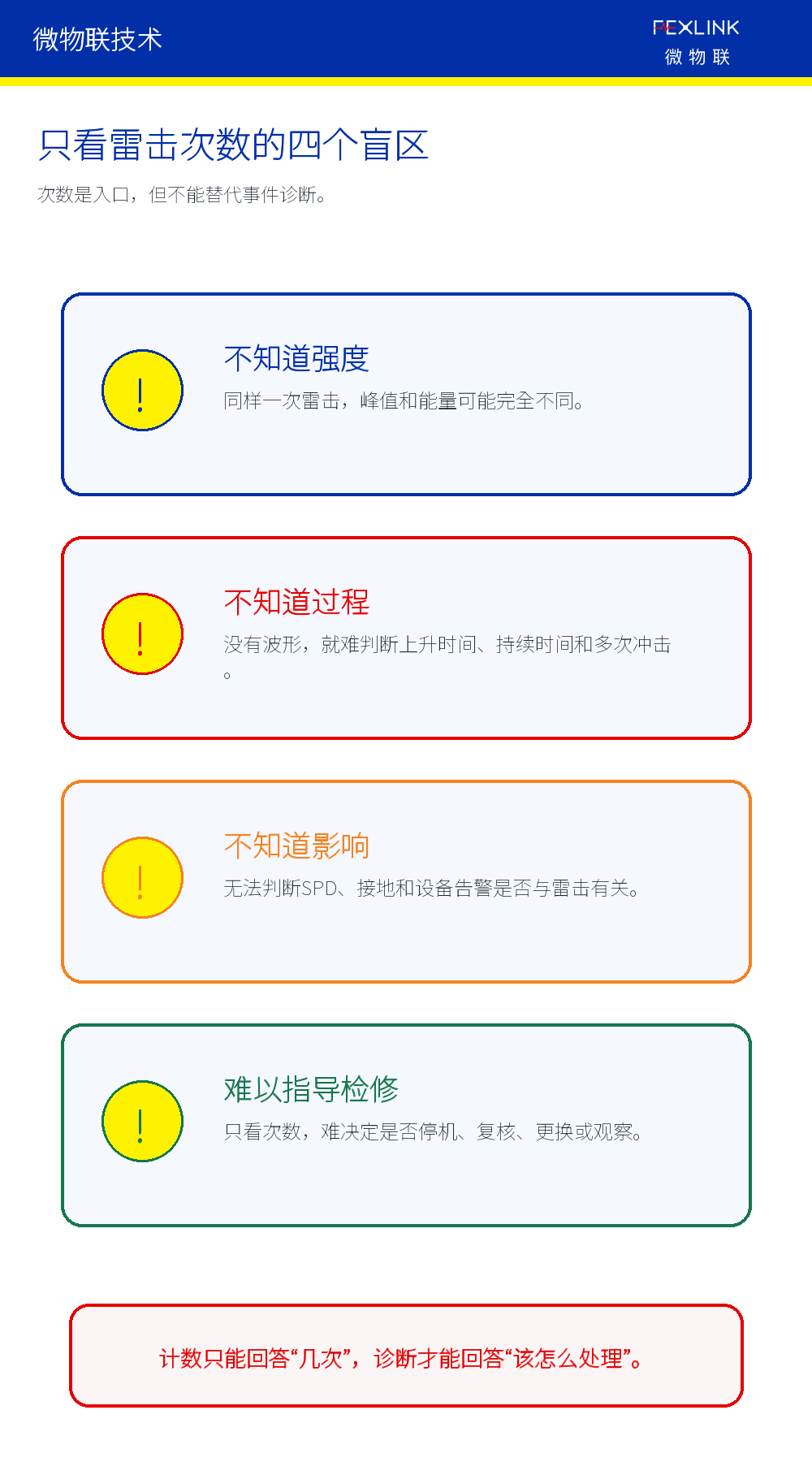
First, the intensity of the same lightning strike may be completely different. A small impact and a high peak lightning current cannot have the same impact on SPD, grounding systems and equipment. If you only look at the number of times, events with different risk levels will be regarded as the same type of events.
Second, you cannot see the waveform process by just looking at the number of times. Lightning current is not a static number, but a rapidly changing impact process. The shorter the rise time, the greater the transient pressure the equipment may bear; the duration, tail process and multiple impacts will also affect subsequent judgments.
Third, it is impossible to judge the scope of impact just by looking at the number of times. Whether the lightning strike event causes the SPD to operate, whether it causes a sudden change in the grounding state, whether it is related to alarms in communications, power supply, inverter, box transformer, computer room or control equipment, all require more event parameters and linkage data.
2. What dimensions should lightning current event data contain?
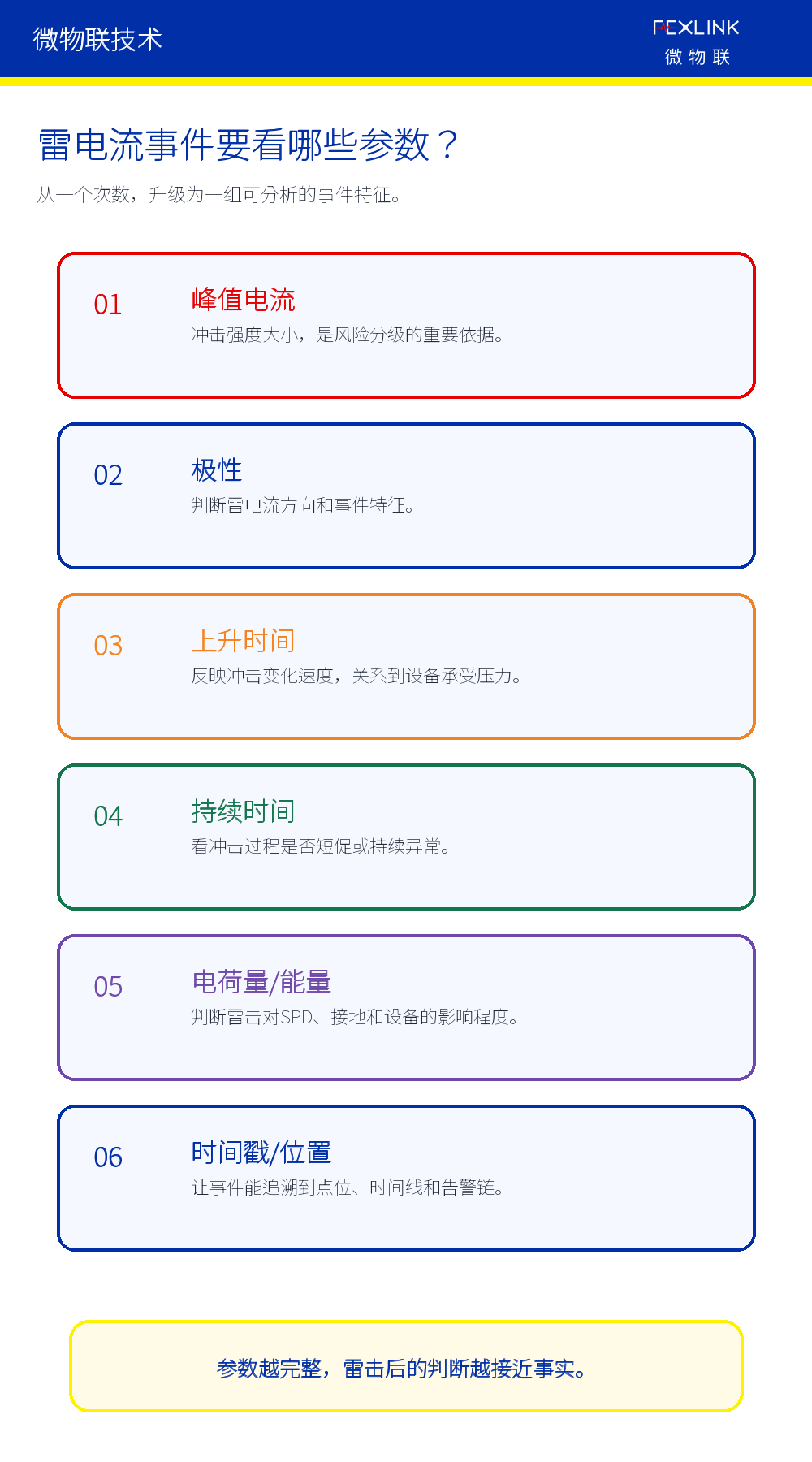
Lightning current events must first look at the peak current. The peak value can reflect the impact intensity and is an important basis for judging the event level, impact scope and review priority. Secondly, we need to look at the polarity. Polarity helps to understand the direction of lightning current and event characteristics.
Also depends on rise time and duration. The rise time reflects the impact change speed, and the duration reflects the energy release process. For precision equipment, communication systems, wind turbines, photovoltaic inverters, energy storage PCS, computer room power supplies and transportation facilities, these process quantities have more diagnostic value than simple times.
The amount of charge and unit energy are also important. They can help determine the impact of lightning strikes on SPD life, ground discharge paths, and equipment insulation status. Finally, the timestamp and point information determine whether the event can be traced back. Without accurate time and location, it is difficult to put lightning current events, SPD status, grounding changes, and equipment alarms on the same timeline.
3. How to determine the scope of impact after a lightning strike?
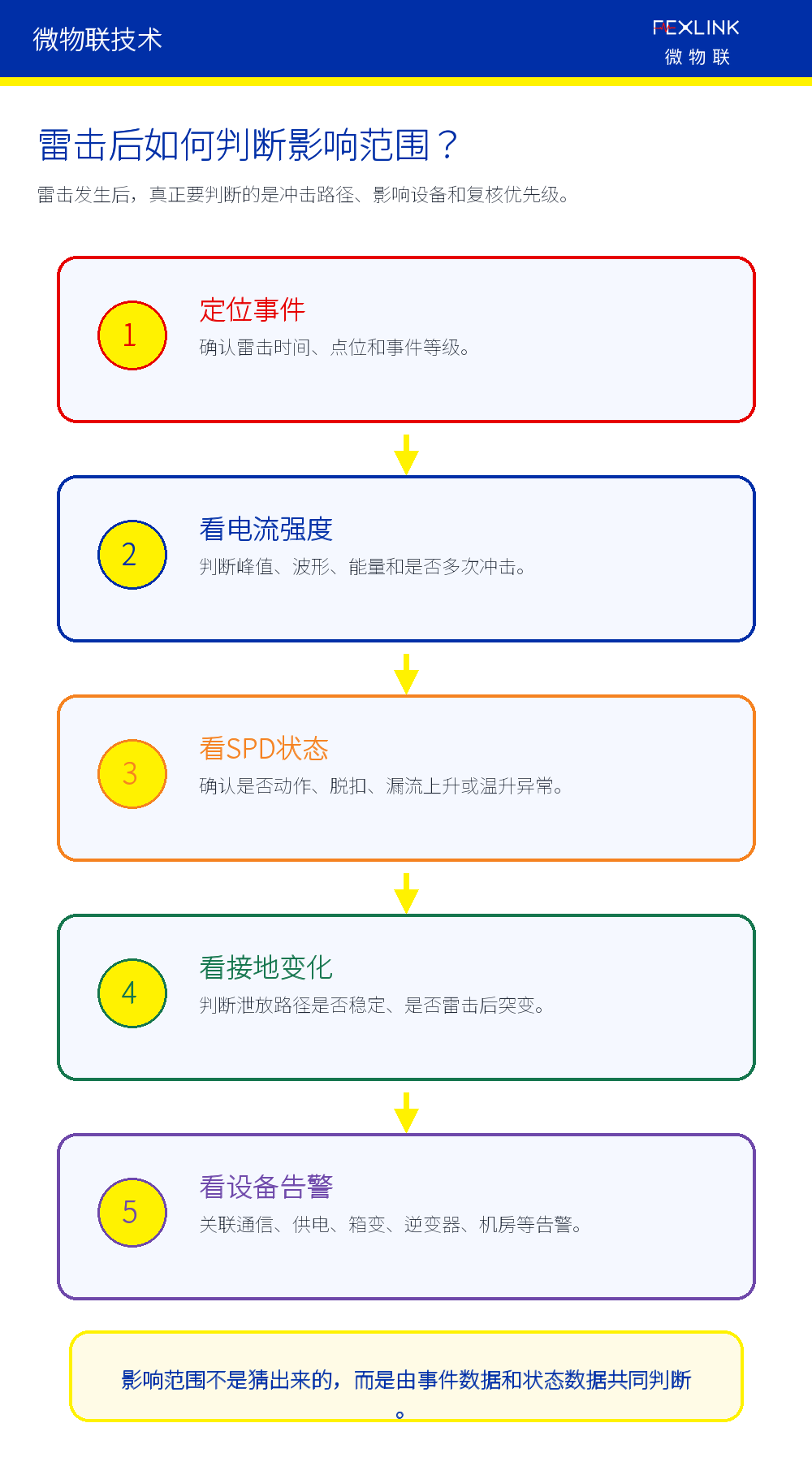
After a lightning strike occurs, the time, location and level of the event must first be confirmed. For wind farms, photovoltaic sites, petroleum and petrochemical storage tank farms, communication base stations, highways, railways and data centers, where lightning strikes occur is more important than simply how many times it occurs.
The second step is to look at the lightning current intensity and waveform. Events with high peak values, fast rises, large energy, or multiple impacts in a short period of time should enter the review queue with a higher priority. The third step is to check the SPD status, including whether it operates, whether it trips, whether the leakage current increases, whether the temperature is abnormal, and whether the life trend decreases.
The fourth step is to check the grounding status. Grounding is the basic path for lightning current discharge. If the grounding state changes suddenly or the long-term trend worsens after a lightning strike, it means that further review is needed on site. The fifth step is to check the equipment alarms and correlate the lightning current events with the alarms of power supply, communication, inverter, box transformer, control system and computer room equipment to form a complete judgment.
4. How should the lightning current monitoring system be designed?
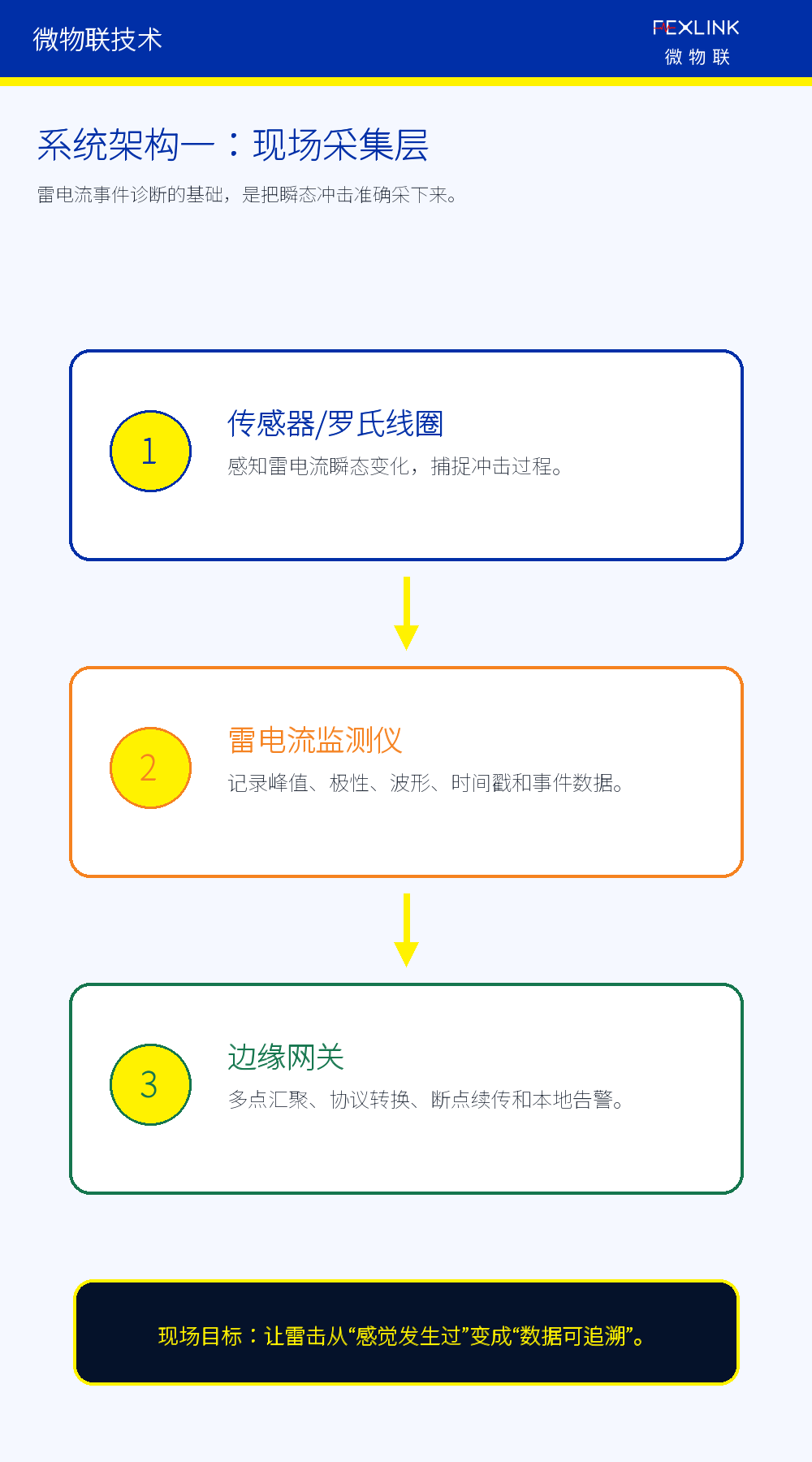
The first layer is the field collection layer, including sensors, Rogowski coils, lightning current monitors and field installation structures. The key to on-site collection is the ability to stably capture the transient impact process, rather than just recording a single number of times.
The second layer is the monitoring terminal layer, which should record peak value, polarity, waveform, timestamp, event number and point information. For complex scenarios, local storage, data integrity, anti-interference capabilities and long-term operation reliability also need to be considered.
The third layer is the edge gateway and communication layer, including RS485, Modbus, 4G/5G, Ethernet, optical fiber or private network access. The edge side must support multi-point aggregation, protocol conversion, breakpoint resumption, local alarms and preliminary identification of abnormal events.
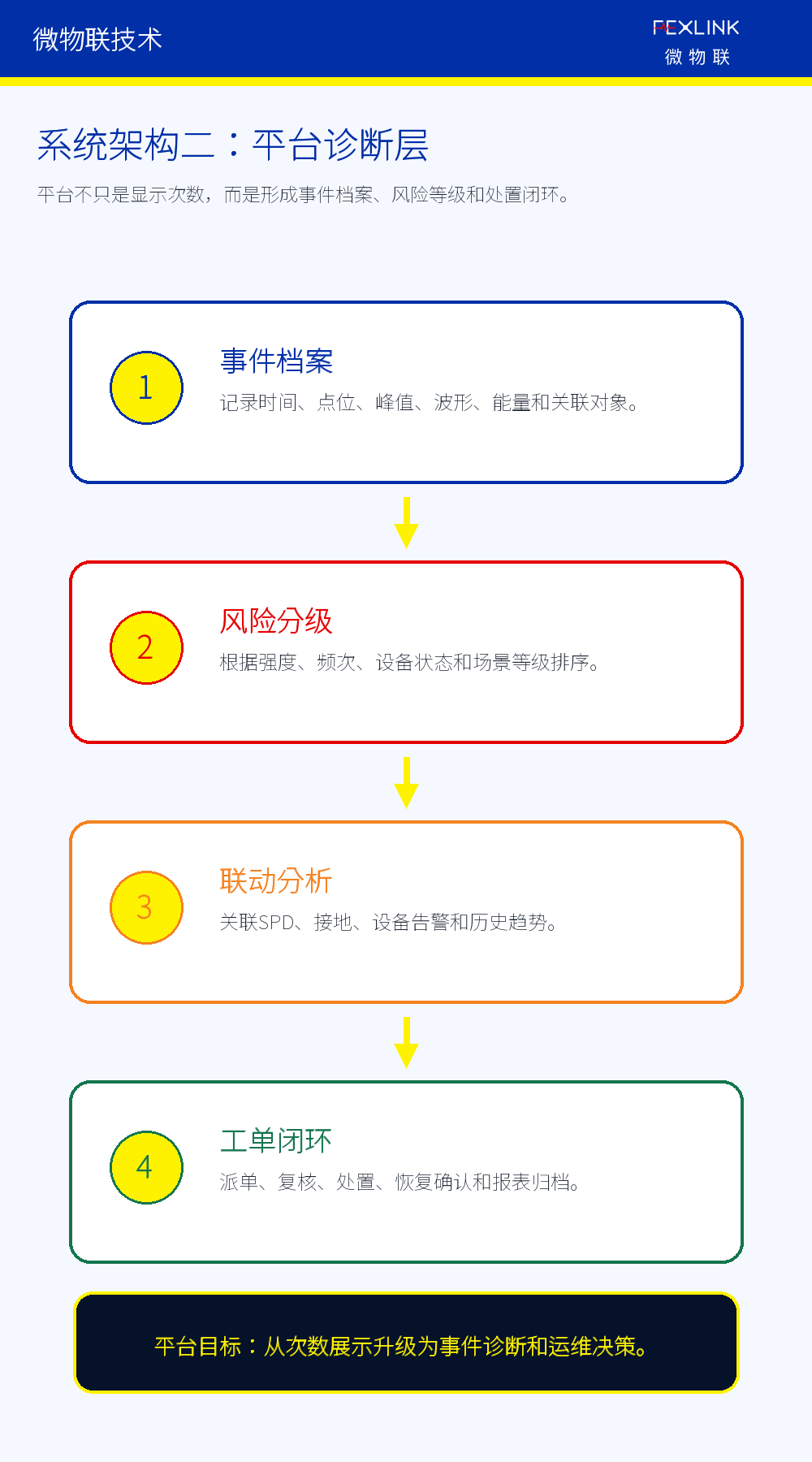
The fourth layer is the platform diagnostic layer. The platform should not only display the number of times, but should form a closed loop of event files, risk levels, trend statistics, equipment associations, review suggestions, and work orders. Only in this way can lightning current data be transformed from a record into a basis for operation and maintenance decisions.
5. How is lightning current linked to SPD, grounding, and equipment alarms?
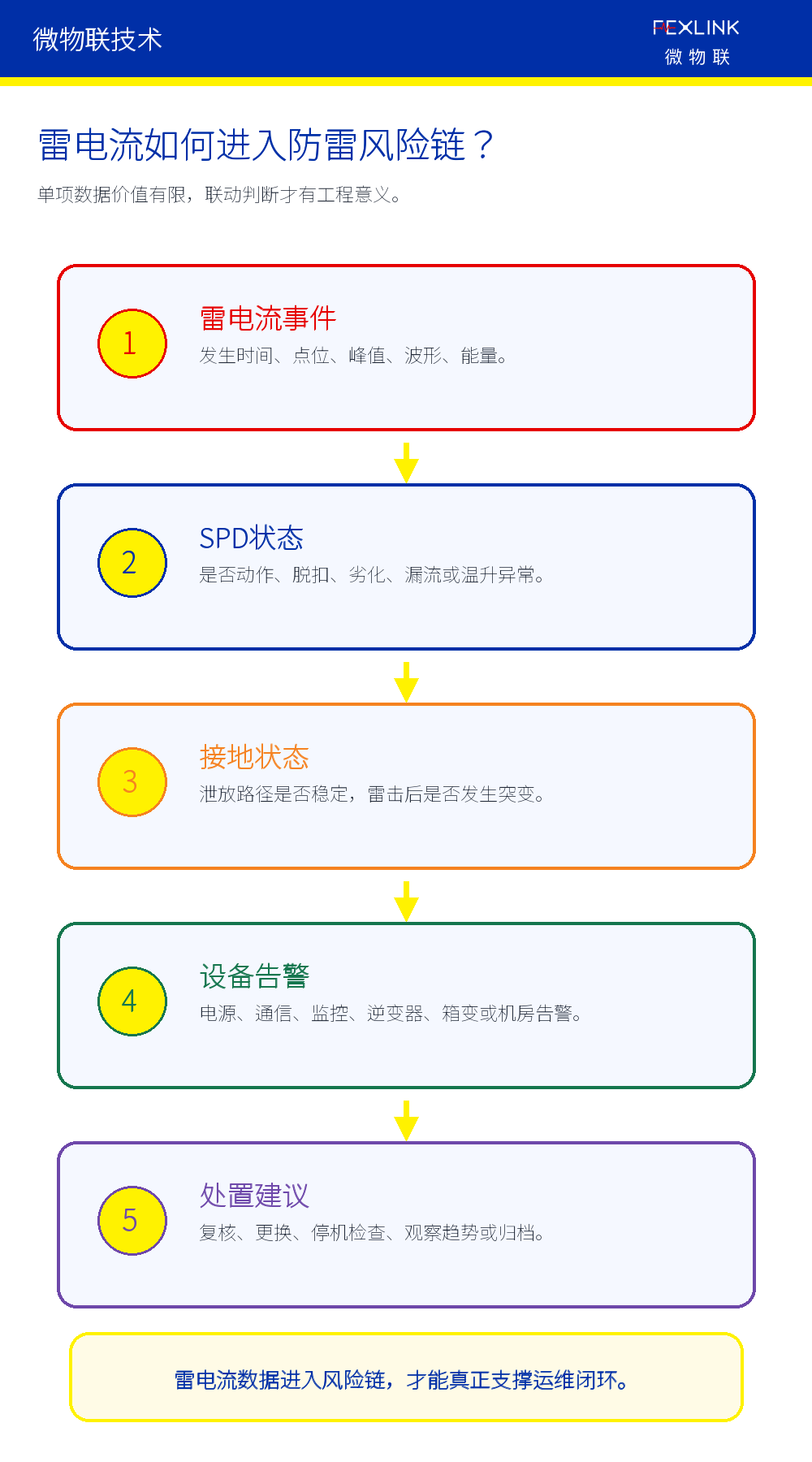
The lightning current event itself is the starting point of a risk chain. After a lightning current event occurs, you need to continue to observe whether the SPD status changes, whether the grounding status changes, and whether the equipment alarms. By looking at the lightning current alone, we can only know that an impact has occurred; by looking at the lightning current, SPD, grounding and equipment alarms in conjunction, we can determine whether the impact has caused actual impact.
For example, if the lightning current peak value is high and the SPD leakage current increases, it may indicate that the protective device has withstood a large impact and needs to pay attention to the degradation trend. If the grounding status changes suddenly after a lightning current event, the discharge path may need to be reviewed. If lightning current events, SPD trips, and equipment alarms occur on the same timeline, a higher priority on-site inspection should be scheduled.
6. Which scenarios require lightning current event diagnosis most?
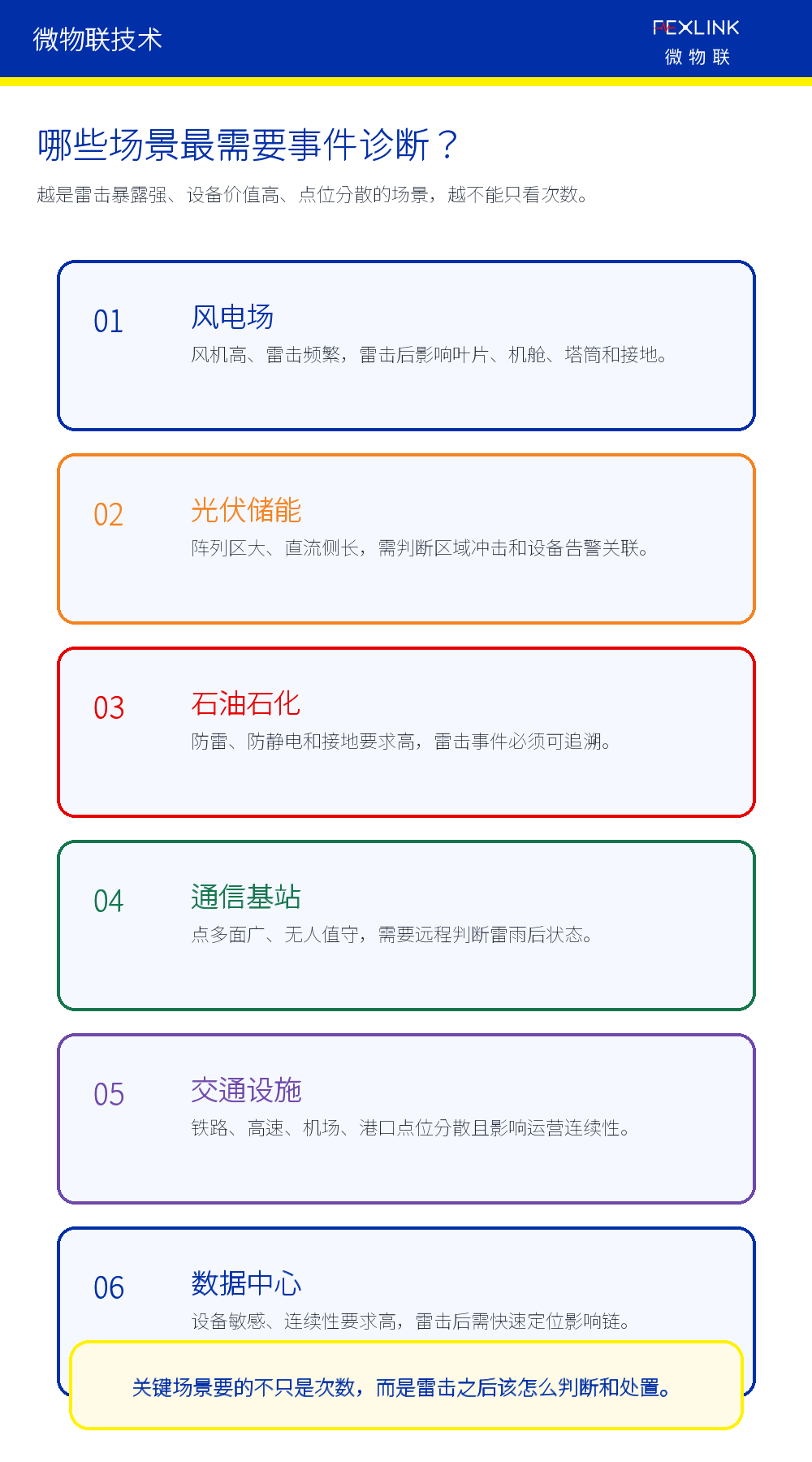
Wind farms are a typical scenario. The height of the wind turbine is high and the blades are strongly exposed. Lightning strikes may not only affect the blades and downdrafts, but also the nacelle, tower, box transformer and grounding system. What is needed here is not just the number of times, but the lightning current intensity, waveform and subsequent maintenance judgment.
Photovoltaic and energy storage sites are also required. The array area is large, the DC side lines are long, and the inverters and energy storage equipment are of high value. If lightning surge events cannot be located and traced, it will be difficult to determine the scope of the impact later. Petroleum and petrochemicals, communication base stations, railway expressways, airports, ports and data centers also need to incorporate lightning current events into online monitoring platforms.
7. How does FEXLINK understand the diagnosis of lightning current events?
FEXLINK believes that lightning current monitoring is not simply about recording the number of lightning strikes, but turning lightning strikes into a set of data that can be analyzed, traced, correlated, and guided for operation and maintenance. Lightning current data should be placed in the same risk chain as SPD status, grounding status, equipment alarms, and work order handling.
The FEXLINK system emphasizes not single-point data display, but the transformation of electrical signals into data, data into intelligence, and intelligence into value. The value of lightning current event diagnosis lies in converting an uncontrollable lightning strike process into explainable risk evidence to help engineers determine whether to review, where to review, whether to replace the SPD, whether to check grounding, and whether it is related to equipment failure.
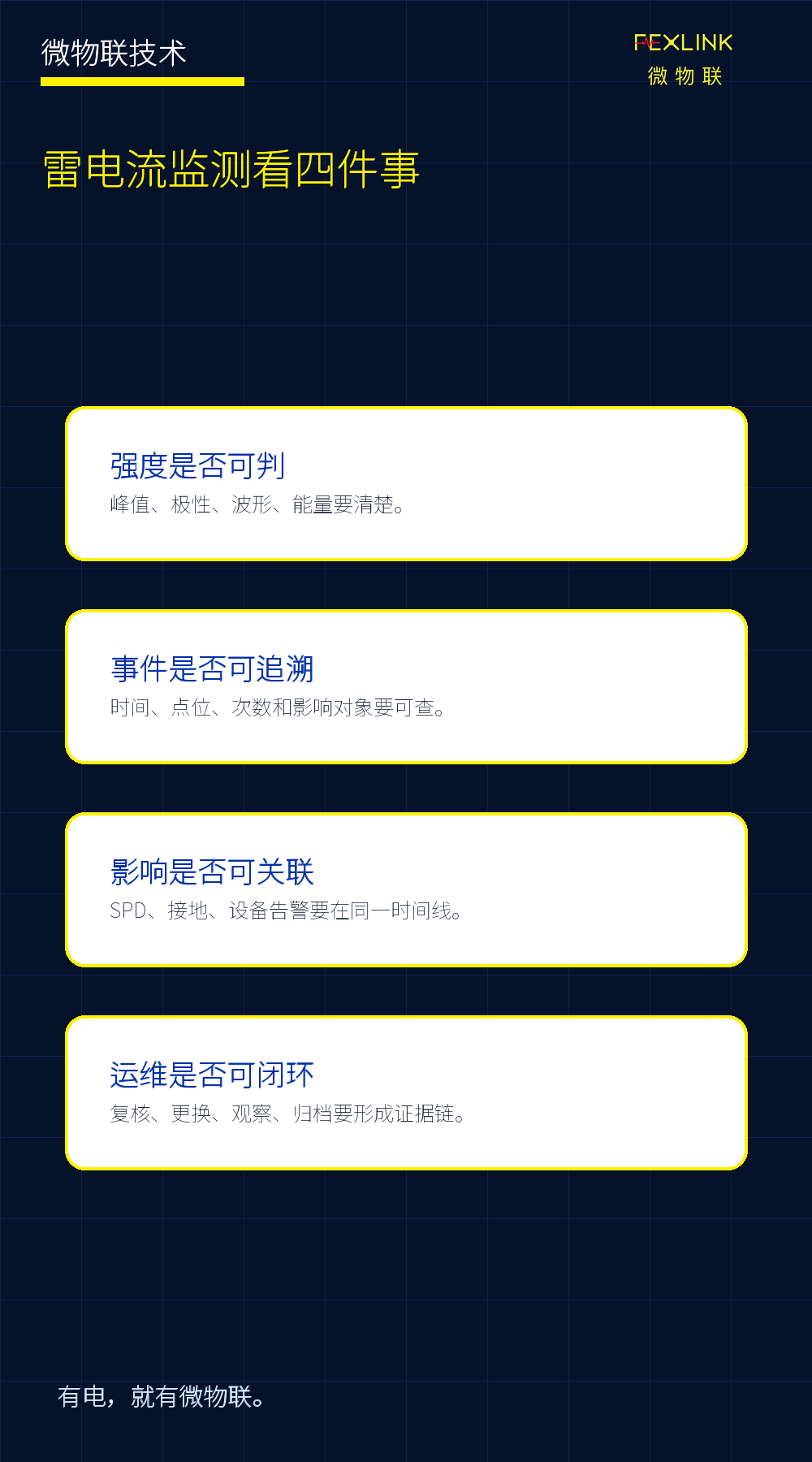
Conclusion: From counting to diagnosis, it is an important watershed in intelligent lightning protection
Lightning strike counting is the starting point of lightning current monitoring, but it is not the end point. Only knowing how many times lightning has struck cannot support risk judgment and operation and maintenance decisions in complex scenarios. Really valuable lightning current monitoring should unify peak value, waveform, energy, time, point position, SPD status, grounding changes and equipment alarms.
From lightning strike counting to lightning current event diagnosis, it means that the lightning protection system has been upgraded from "recording what happened" to "judging what was affected and how to deal with it." This is a key step for digital lightning protection to move from equipment configuration to data-driven operation and maintenance.
FEXLINK technology will continue to share content related to intelligent lightning protection, early warning of electrical safety, digital power distribution, energy supervision and industrial Internet of Things.
FEXLINK/FEXLINK uses data to reconstruct energy efficiency and electrical safety.
Where there is electricity, there is FEXLINK.