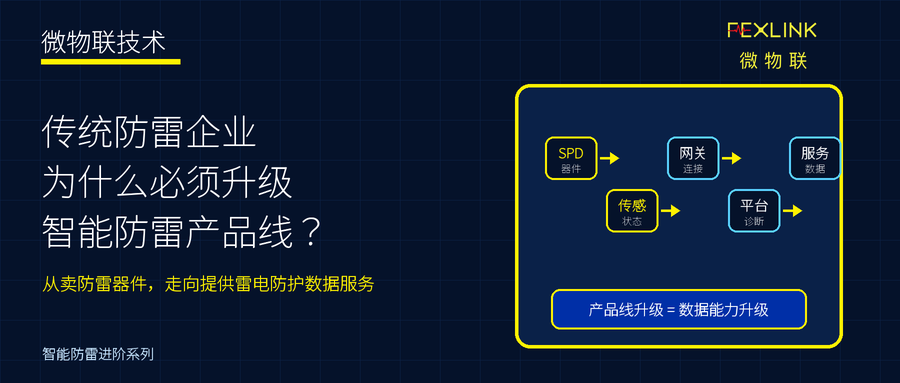
Cover image of public account: Why do traditional lightning protection companies must upgrade their intelligent lightning protection product lines?
Abstract: In the past, traditional lightning protection companies mainly relied on SPD, lightning protection boxes, lightning protection projects, annual inspections and project acceptance to form a closed business loop. However, as customers' requirements for operational safety, online monitoring, remote operation and maintenance, compliance traces and risk warnings increase, it has become difficult to establish long-term value by simply selling lightning protection devices. The upgrade of the intelligent lightning protection product line is not to simply connect SPD to the communication module, but to establish complete data capabilities around lightning current, SPD status, grounding status, anti-static, surge events, platform alarms and closed-loop operation and maintenance. The competition among lightning protection companies in the future will not only be about product price competition, but also about lightning protection data quality, system solution capabilities and continuous service capabilities.
The business logic of many lightning protection companies in the past was very clear: selling SPDs, matching lightning protection boxes, completing engineering installations, cooperating with inspection and acceptance, and repairing or replacing them if problems arise later. This model was established during the traditional construction phase, but in the context of increasing requirements for digitalization, security monitoring, and operation and maintenance management, customers are raising new questions.
Are lightning protectors still effective? Has there ever been a lightning strike? Has the grounding status changed? Are the equipment abnormalities related to surges? Can the system provide remote alarms? Are there any records of subsequent maintenance? Can a risk report be formed? These questions cannot be answered by an ordinary lightning protector, but require the joint support of intelligent terminals, edge collection, platform analysis and closed-loop operation and maintenance.
Therefore, the transformation of lightning protection companies is not from ordinary SPD to "SPD with communication", but from selling lightning protection devices to providing sustainable operation of lightning protection data capabilities.
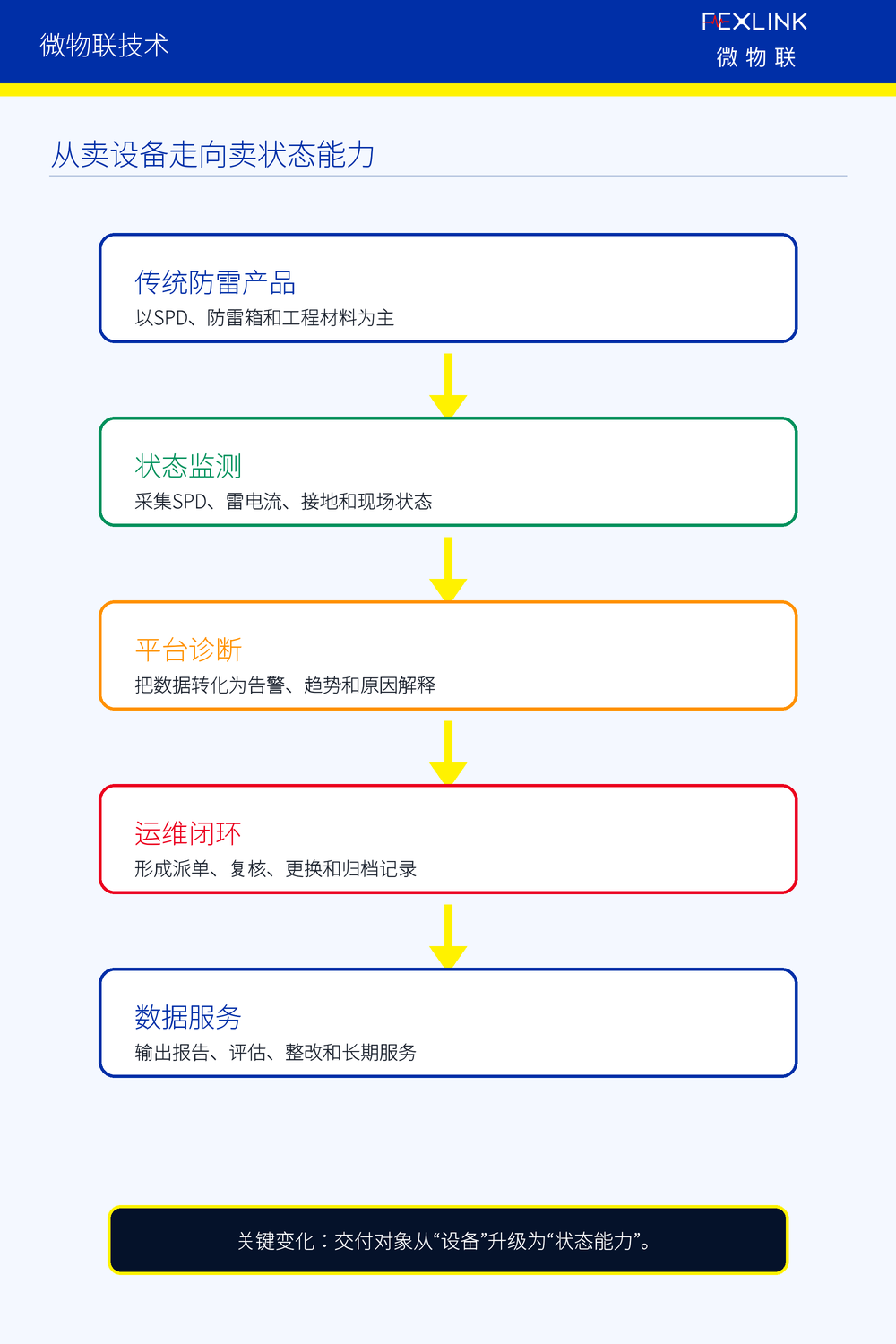
1. Why is it becoming more and more difficult for traditional lightning protection companies?
The first pressure faced by traditional lightning protection companies is product homogeneity. SPD, lightning protection boxes, lightning protection modules and engineering materials are getting closer and closer in appearance, parameters and functions. When technical differences are invisible to customers, purchasing decisions can easily turn into price comparisons.
The second pressure is the one-time nature of the service. After the project acceptance of many lightning protection products, the connection between enterprises and customers becomes weaker. However, the stage when the lightning protection system really faces risks is precisely in the long-term operation process: after lightning strikes, after surges, after SPD degradation, after grounding changes, and after on-site modifications.
The third pressure is that customer needs are changing. In the past, customers were concerned about "whether there is SPD, whether there is grounding, whether the test is qualified, and whether the data is complete." Now more and more customers are concerned about "whether the protection status is visible, whether abnormalities can be detected remotely, whether alarms can be classified, whether maintenance can be closed-loop, and whether data can support safety management."
If lightning protection companies still compete only around device sales and low prices, they will easily fall into a situation of becoming thinner and thinner. The real solution is not to simply reduce prices, but to establish more reliable data, more stable hardware, a more complete platform, more professional solutions and longer-term operation and maintenance service capabilities.
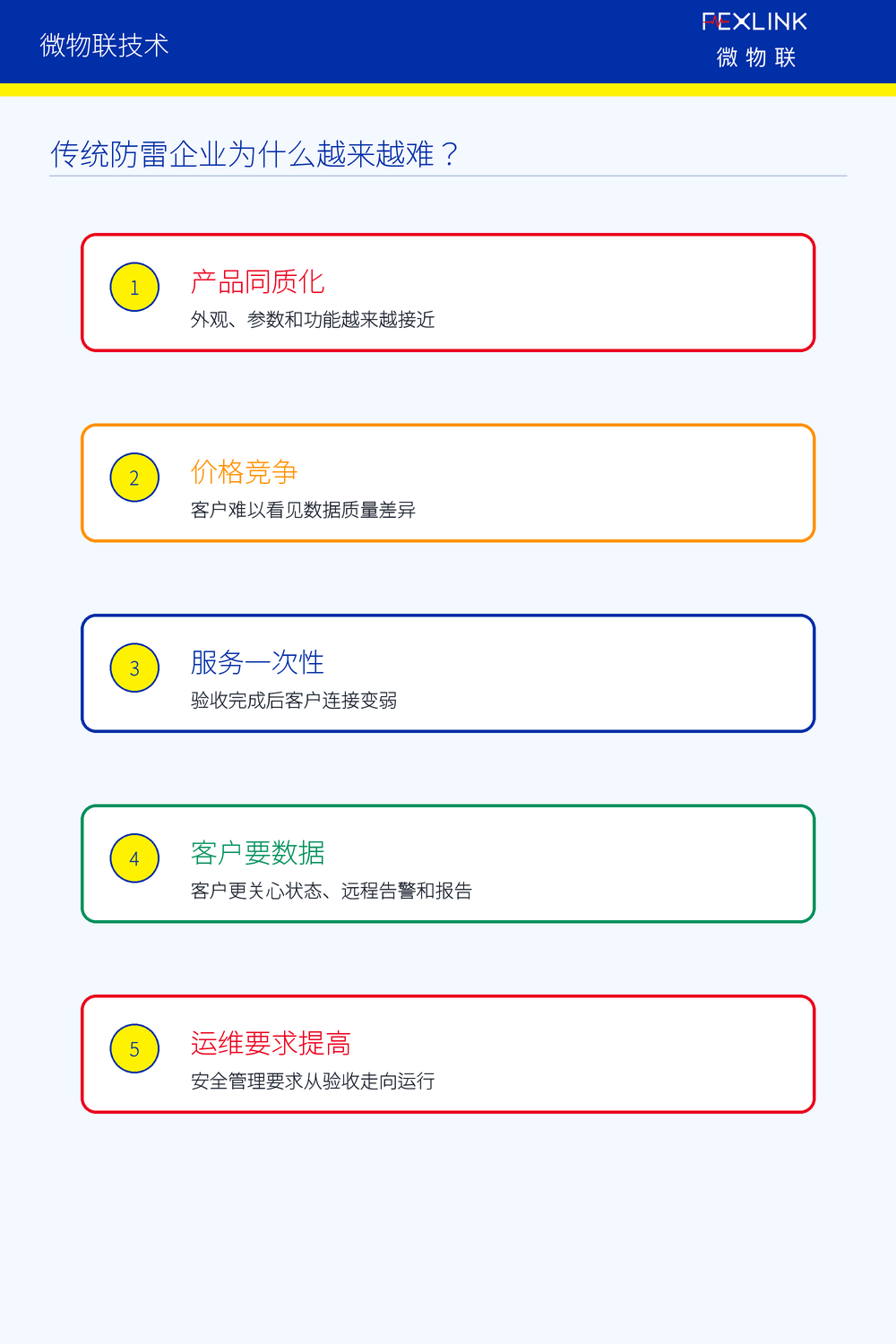
2. What exactly does the intelligent lightning protection product line include?
Many companies understand intelligent lightning protection as "SPD plus communication". This is a very common misunderstanding. A truly intelligent lightning protection product line should at least cover protection device status, lightning strike events, grounding status, anti-static status, on-site connection and platform management.
The first category is intelligent SPD and SPD monitoring. It not only pays attention to the tripping status, but also pays attention to changes in leakage current, abnormal temperature rise, deterioration trends, number of lightning strikes, backup protection status and life expectancy to answer "whether the lightning arrester is still effective."
The second category is lightning current monitoring. It records lightning strike time, peak current, polarity, waveform, duration, charge amount, unit energy and event location, answering "what exactly happened in a lightning strike or surge event?"
The third category is online monitoring of ground resistance. It focuses on grounding state trends, abnormal mutations, multi-point comparisons, changes after lightning strikes and seasonal fluctuations to answer "whether the discharge path is reliable."
The fourth category is anti-static and equipotential status monitoring, which is especially suitable for scenarios such as petroleum and petrochemicals, hazardous chemicals, loading and unloading areas, and tank areas. It focuses on loading and unloading grounding confirmation, electrostatic clamp status, equipotential connection, operation linkage and abnormal disconnection alarms.
The fifth category is intelligent gateways and cloud platforms. Lightning protection companies cannot just sell sensors, but also need to stably upload on-site data and complete alarm classification, event files, trend analysis, health assessment, work order dispatch, disposal review and statistical reports through the platform.
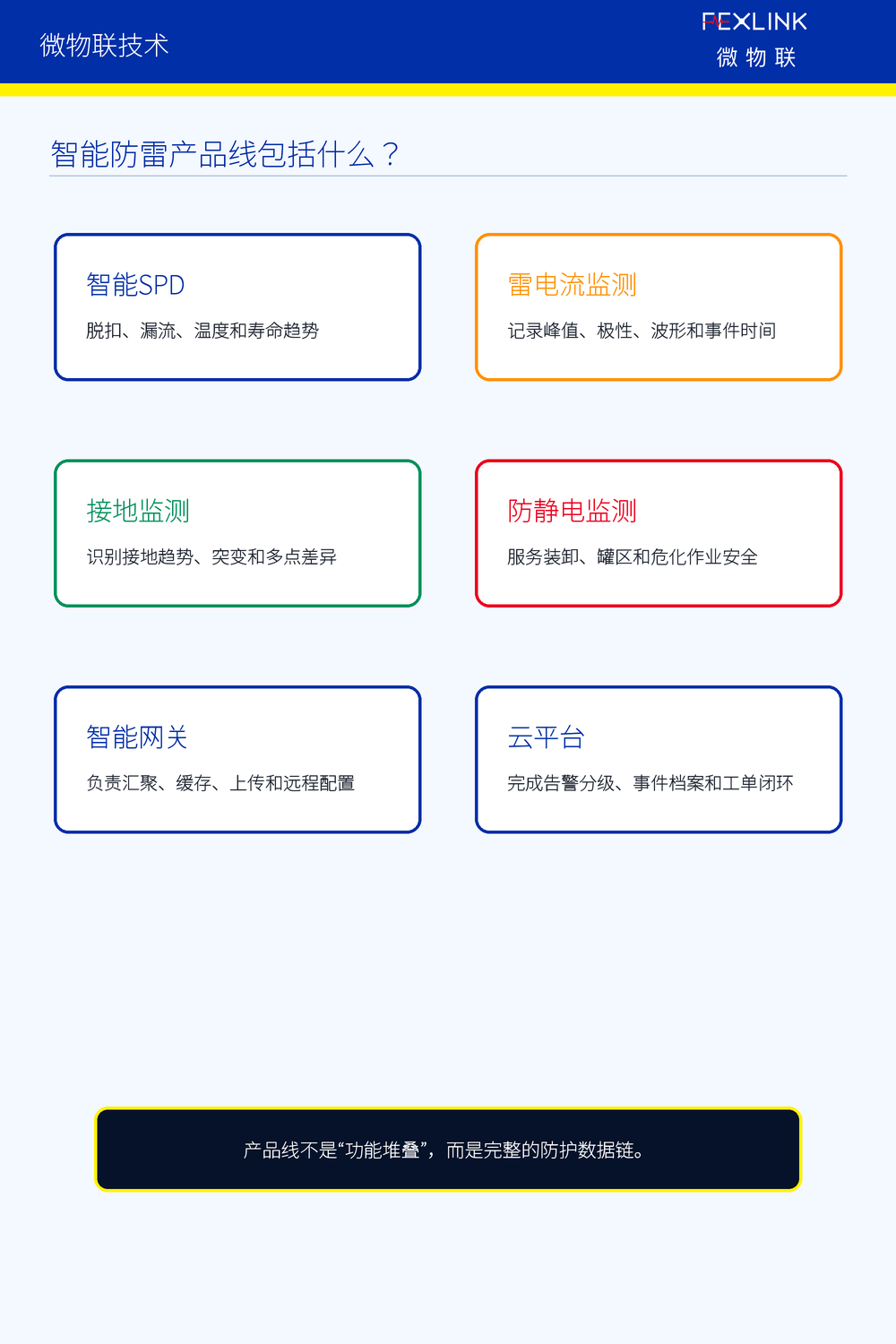
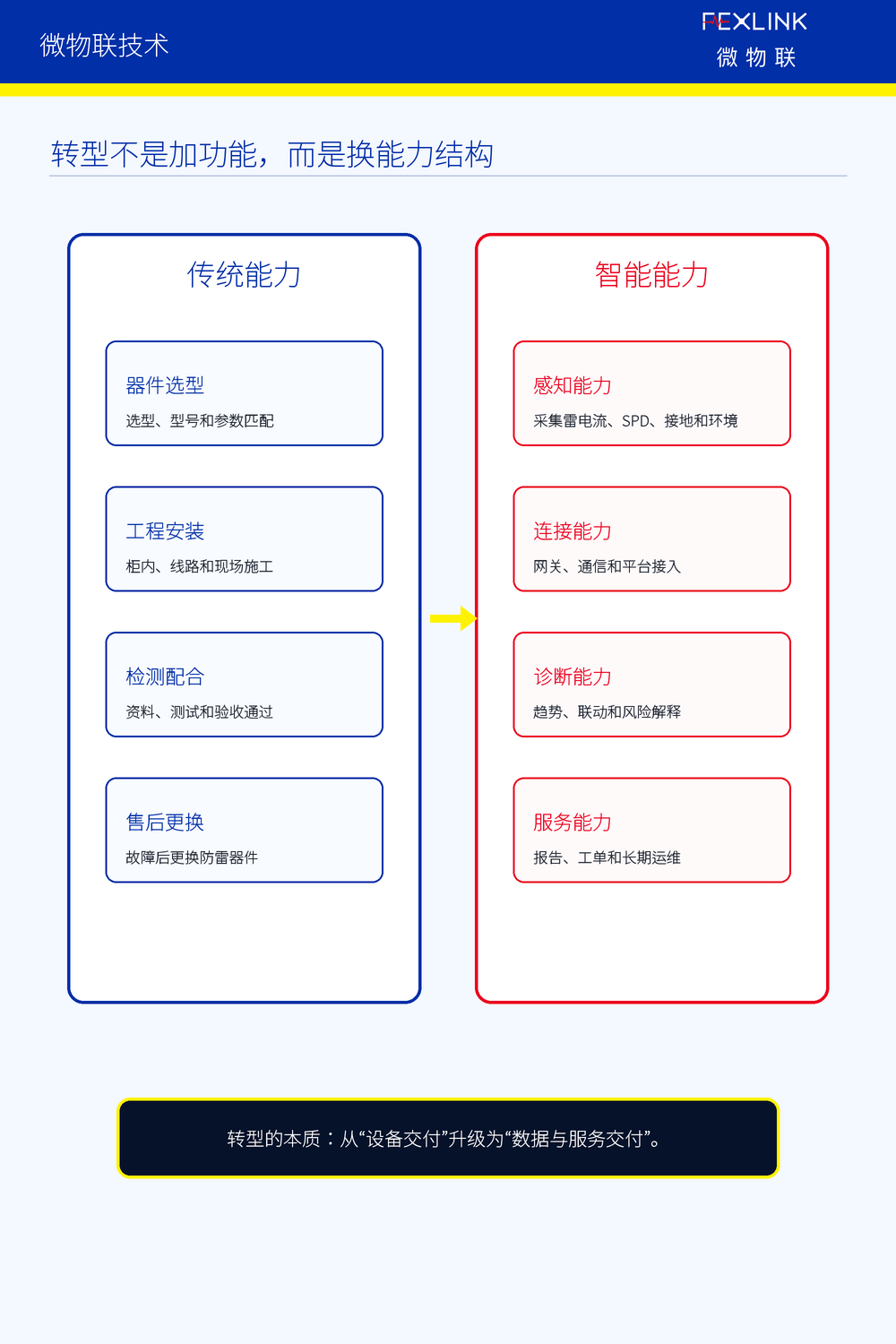
3. The transformation of lightning protection enterprises is not about “adding functions” but “changing the capability structure”
The capability structure of traditional lightning protection companies usually focuses on device selection, engineering installation, detection cooperation and after-sales replacement. Intelligent lightning protection companies need to increase sensing capabilities, communication capabilities, edge computing capabilities, platform software capabilities, data diagnosis capabilities, industry solution capabilities and continuous operation and maintenance service capabilities.
The first transition is from product delivery to data delivery. In the past, equipment was delivered, but in the future, lightning event data, SPD status data, grounding trend data, alarm handling data and risk assessment reports will be delivered.
The second transition is from project acceptance to continuous operation and maintenance. In the past, the relationship weakened after the project was completed. In the future, monthly reports, special review suggestions after thunderstorms, SPD life assessment, grounding anomaly analysis and rectification suggestions can be continuously output through the platform.
The third transformation is from single point products to system solutions. What customers really need is not a single intelligent SPD, but scenario research, risk identification, point design, equipment configuration, communication networking, platform access, acceptance testing and operation and maintenance closed loop.
4. What pitfalls are most likely to be encountered in the transformation of lightning protection enterprises?
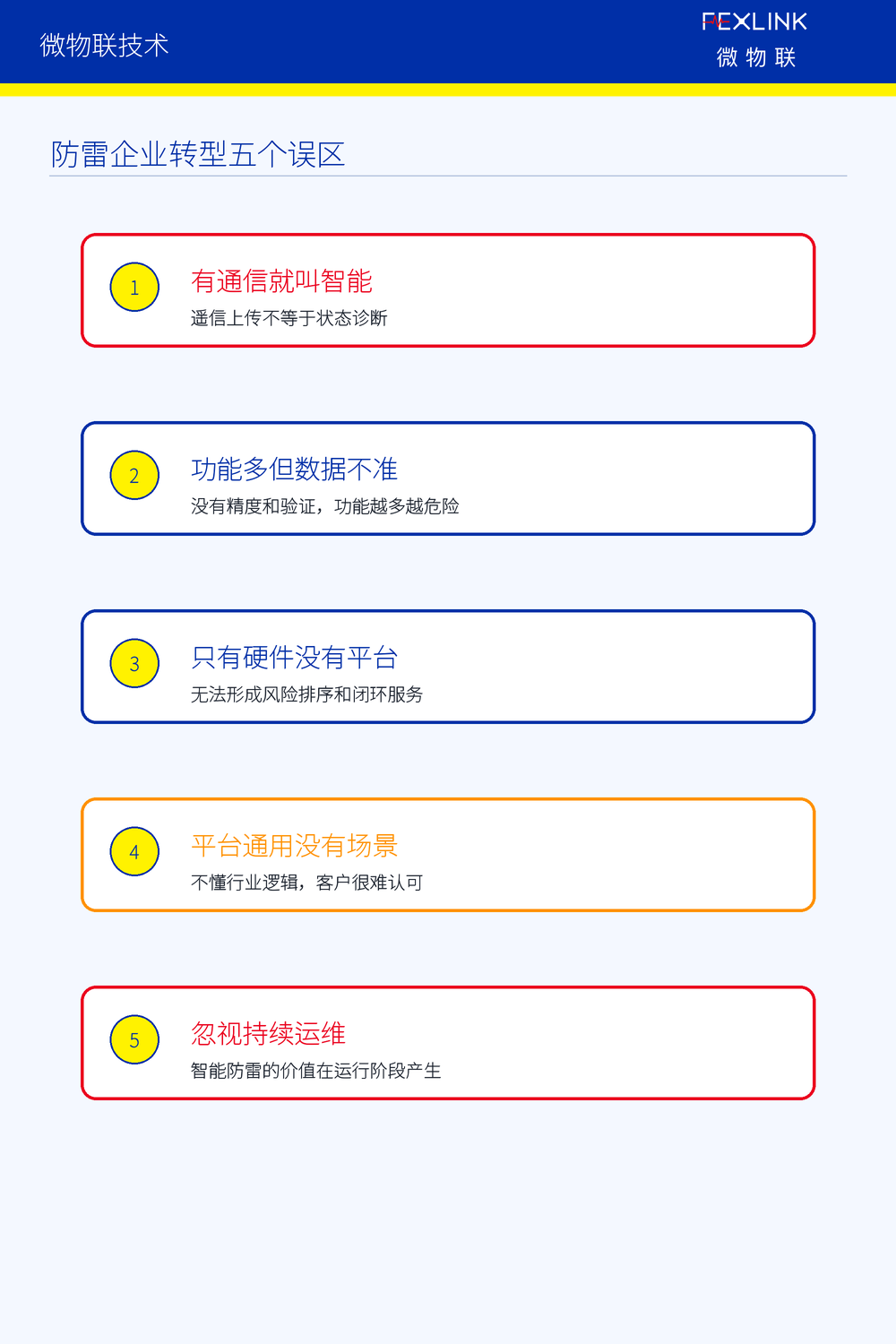
The first misunderstanding is that "having communication" means intelligence. Many products only upload remote signaling status to the platform, and are still simple switching quantities in essence. Real intelligence depends on whether there are trends, diagnoses, events, linkages, and closed loops.
The second misunderstanding is that the product has too many functions, but the data is not trustworthy. Customers see a rich function list: lightning current, leakage current, temperature, grounding, counting, communication, and platform. But the key is the accuracy, real-time performance, anti-interference, long-term stability, and test verification. Without credible data, the more functions you have, the easier it is to mislead customers.
The third misunderstanding is that we only make hardware and not platforms. Without a platform, there would be no risk ranking, alarm classification, event files, operation and maintenance closed loop, customer stickiness and continuous service.
The fourth misunderstanding is that we have built a platform but have no industry plan. Computer rooms, railways, highways, wind power, photovoltaics, petrochemicals, and communication base stations, the focus of each scenario is different. If the platform is just a general interface without industry-specific logic, it will be difficult for customers to feel professional.
The fifth misunderstanding is to ignore operation and maintenance services. The greatest value of intelligent lightning protection projects lies in the operation phase. If a company only sells equipment without providing follow-up services, it will still return to the one-time sales model.
5. How should traditional lightning protection companies upgrade?
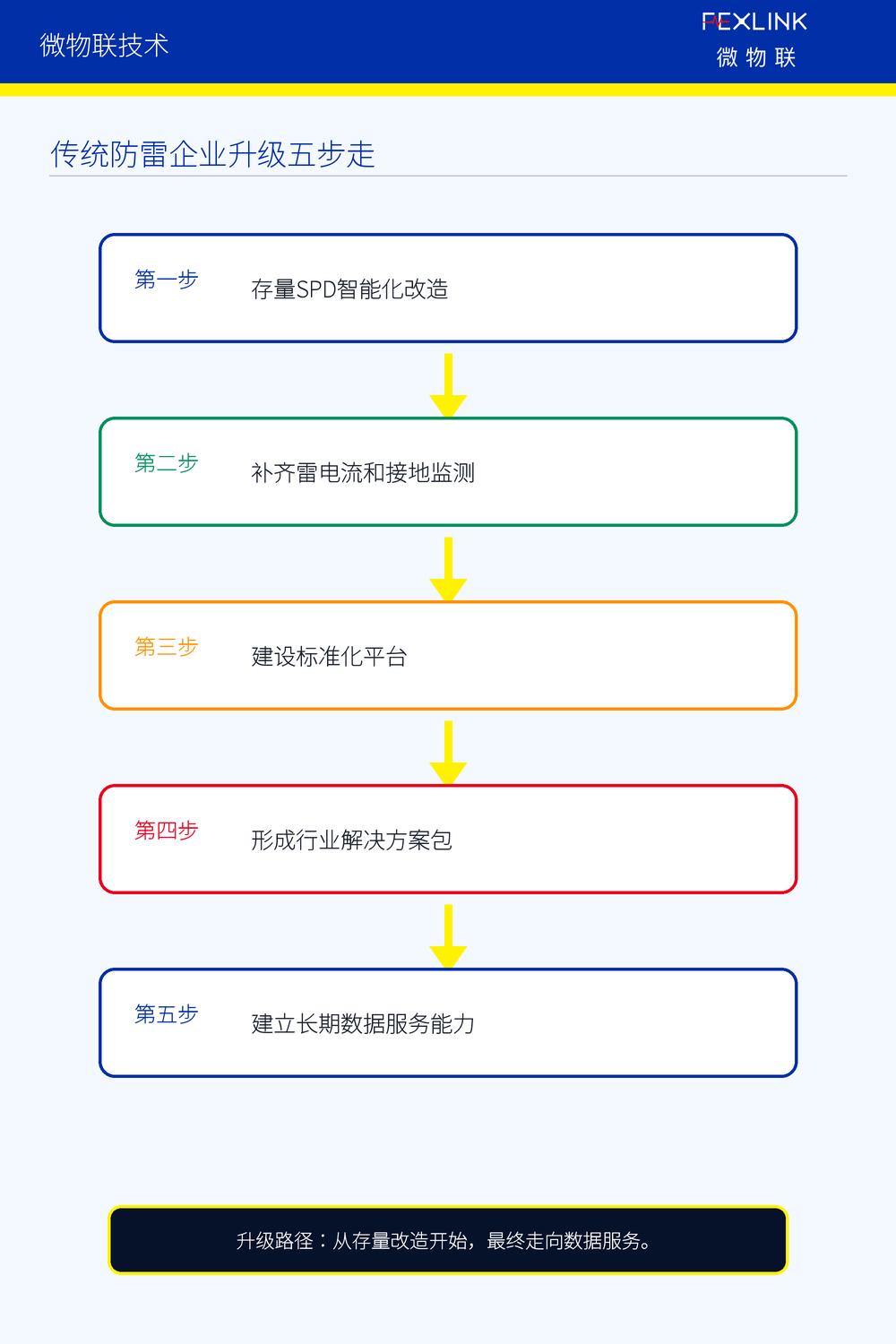
The first step is to start with the intelligent transformation of existing SPDs. Through remote signal collection, leakage current monitoring, temperature monitoring, backup protection status, in-cabinet gateway and platform access, the existing lightning protection system can first have status visibility capabilities.
The second step is to complete the lightning current and grounding monitoring capabilities. Intelligent lightning protection can not only look at the SPD, but also know whether a lightning strike occurs on site, the intensity of the lightning current, whether the grounding state is stable, and whether a review is required after the lightning strike.
The third step is to build a standardized platform. The platform does not have to be extremely large from the beginning, but it must at least have equipment management, alarm classification, historical trends, event files, operation and maintenance work orders, and report output.
The fourth step is to form an industry solution package. Don’t just make a product list, but form scenarios for computer rooms, highways, wind farms, oil and gas storage tanks, photovoltaic energy storage, communication base stations, etc.
The fifth step is to establish data service capabilities. Ultimately, it must be able to output lightning protection health reports, special reports after thunderstorms, SPD life trend reports, grounding status trend reports, annual risk assessment reports and rectification suggestions.
6. How does FEXLINK understand the intelligent transformation of lightning protection enterprises?
FEXLINK believes that the intelligent transformation of lightning protection companies is not to "electronize" or "network" traditional products, but to transform the lightning protection system into a safety perception system that can continuously produce data.
The focus of the FEXLINK system is not on a single function, but on whether lightning current events can be diagnosed, whether SPD status can be judged, whether grounding status can be continuously monitored, whether alarms can be classified, whether operation and maintenance can be closed-loop, and whether data can serve customers' long-term safety management.
This means that lightning protection companies need to complete three transformations: from selling lightning protection devices to providing lightning protection status data; from project delivery to continuous operation and maintenance services; from price competition to data quality and system solution capabilities.
Conclusion: The future of lightning protection companies is not low-price competition, but data service competition.
The traditional lightning protection industry will not lose value due to intelligence. On the contrary, companies that truly understand lightning protection, on-site, and engineering have the best chance of doing a good job in intelligent lightning protection.
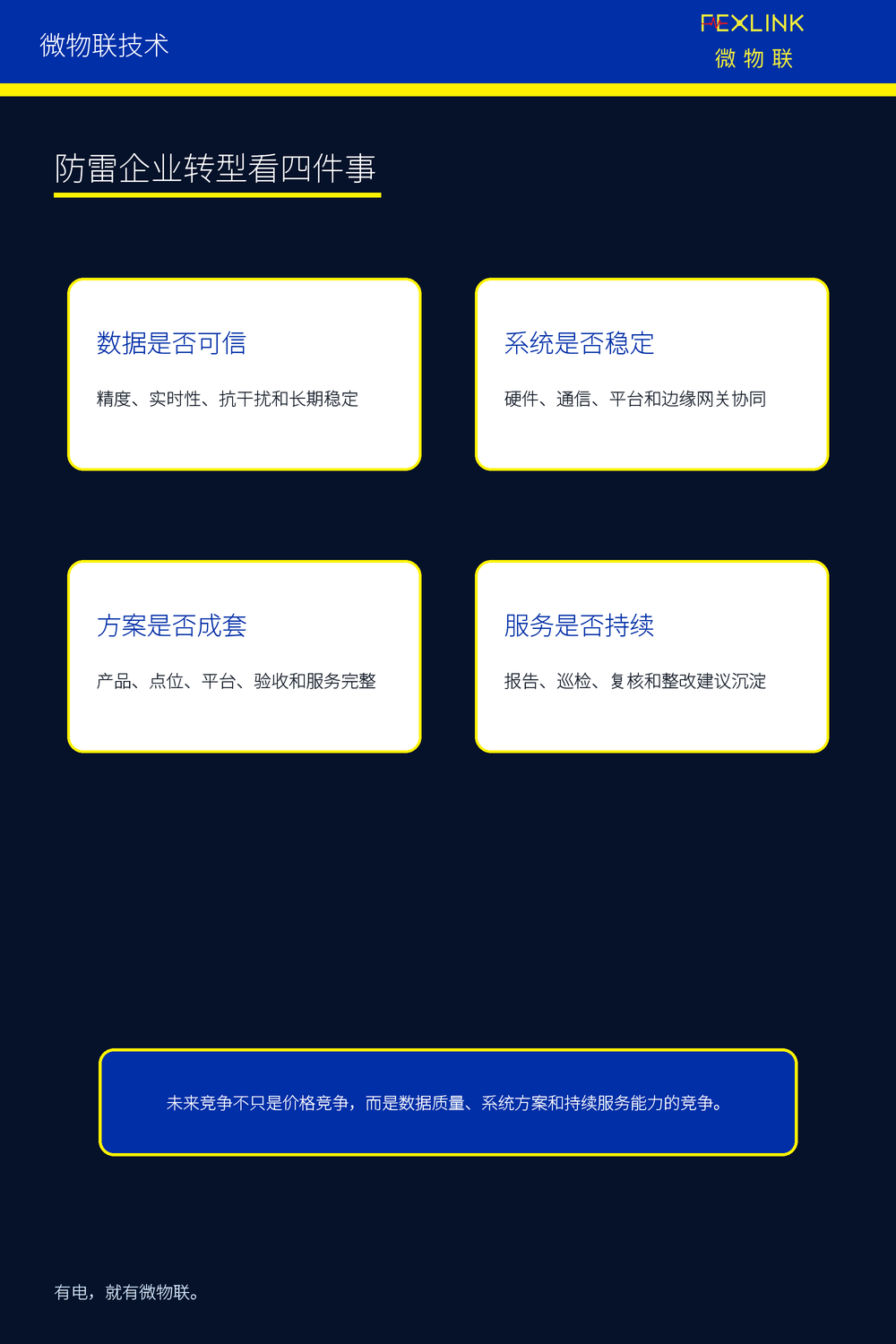
But the premise is that enterprises cannot just understand intelligence as "adding a communication module" or "making a platform page." The core of the future intelligent lightning protection competition is not how long the function list is, but whether the data is trustworthy, the system is stable, the risks are explainable, and the operation and maintenance can be closed-loop.
The key to the transformation and upgrading of lightning protection companies is to move from one-time product sales to long-term data services.
FEXLINK technology will continue to share content related to intelligent lightning protection, early warning of electrical safety, digital power distribution, energy supervision and industrial Internet of Things.
FEXLINK/FEXLINK uses data to reconstruct energy efficiency and electrical safety.
Where there is electricity, there is FEXLINK.