Abstract: The lightning protection risk of railway systems cannot be simply understood as a problem with a certain machine room, a certain power distribution cabinet or a certain SPD. The station signal room, communication room, interval equipment, trackside boxes, base stations along the line, video surveillance, power distribution facilities and grounding systems together form a long protection chain. The value of intelligent lightning protection online monitoring is to unify the protection status of scattered points, lightning surge events, grounding changes, equipment alarms and operation and maintenance processing into the line-level data system, so that railway lightning protection can move from "point installation" to "line-level status management".
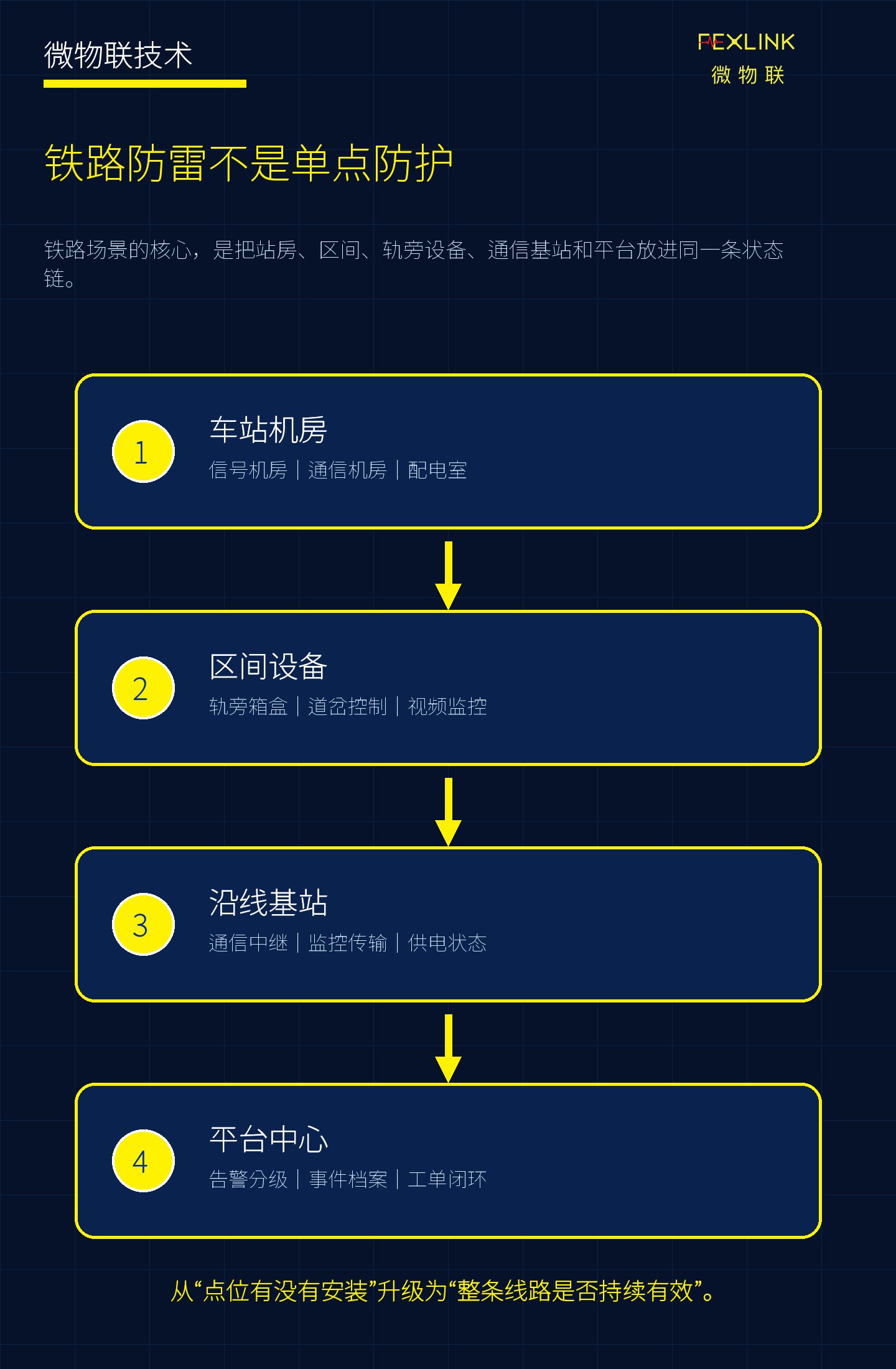
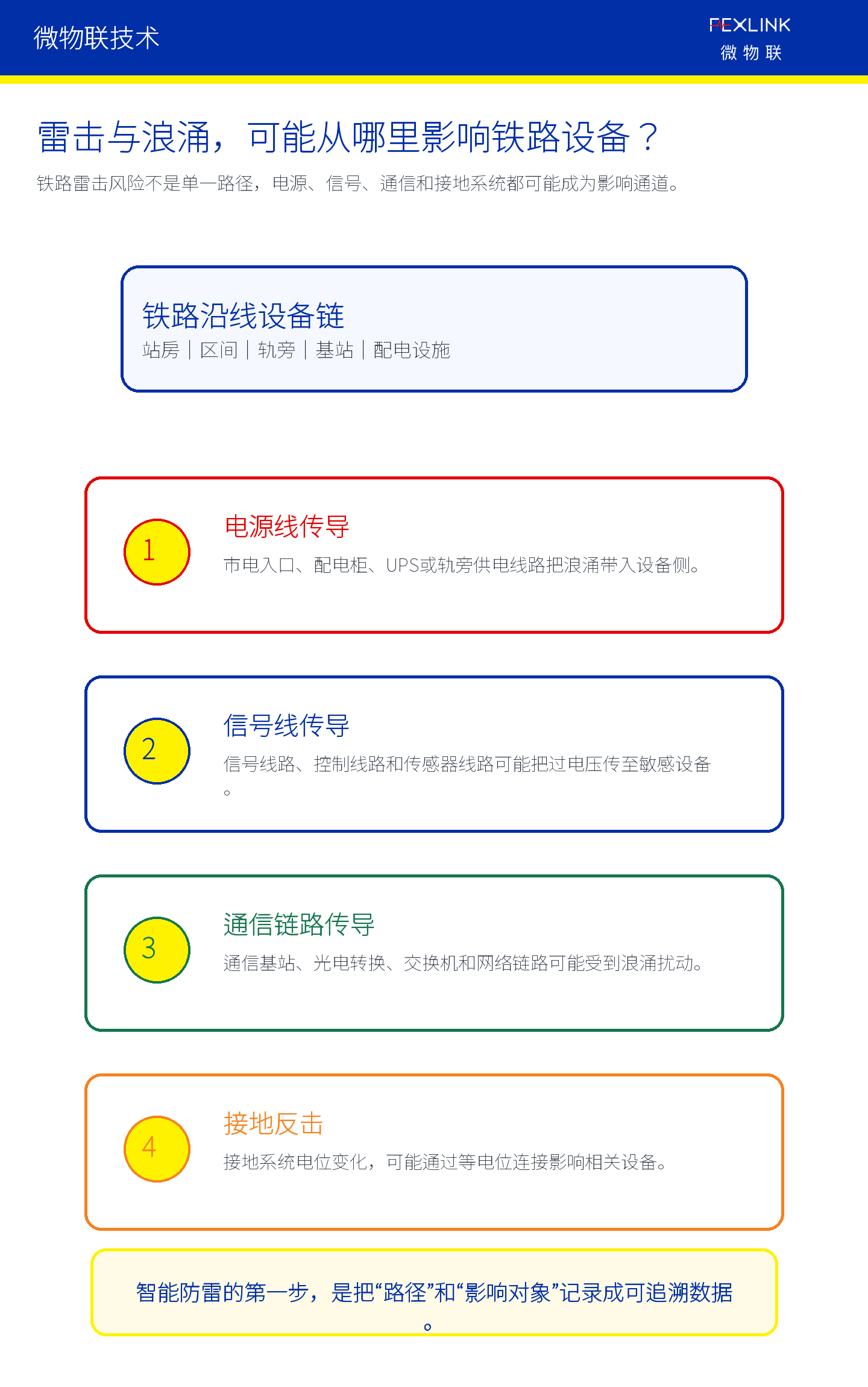
The biggest difference between a railway system and ordinary buildings and ordinary computer rooms is that it is not a centralized point, but a continuously extending infrastructure link. A station has a signal machine room, a communication machine room, a power distribution room and an equipment room; outside the station there are interval signaling equipment, trackside boxes, switch control-related equipment, communication base stations along the line, video monitoring points, tunnels and bridges electromechanical facilities. The impact of lightning strikes or surges does not necessarily stop at one equipment point, but may be conducted along power lines, signal lines, communication links, grounding systems or metal structures.
Therefore, when it comes to railway lightning protection, we can’t just ask “whether SPD is installed at this point”, but also ask: has this point experienced lightning strikes or surge impacts? Is SPD still valid? Is the grounding condition stable? Is a certain equipment failure related to a lightning protection incident? Which sections along the route are more susceptible to lightning strikes and surges? These questions are only possible to answer by relying on continuous online data.
1. Why is railway lightning protection not a single point issue?
The railway system has the characteristics of long lines, scattered points, sensitive equipment, and strong operation continuity. There are complex couplings between signaling systems, communication systems, power systems, video surveillance systems and interval equipment. A surge impact at a certain location may manifest as local SPD action, or may manifest as communication interruption, equipment offline, signal equipment abnormality, or power module damage.
Traditional lightning protection is usually designed and accepted based on specific points. For example, a certain computer room is equipped with power SPD, signal SPD and grounding system, and a certain trackside equipment is equipped with corresponding surge protection. But what railway operation management requires is a line-level perspective. Because what really affects operation and maintenance decisions is not just whether a piece of equipment is installed properly, but which stations, sections, and equipment along the entire line are exposed to higher risks.
2. What on-site pain points does traditional railway lightning protection face?
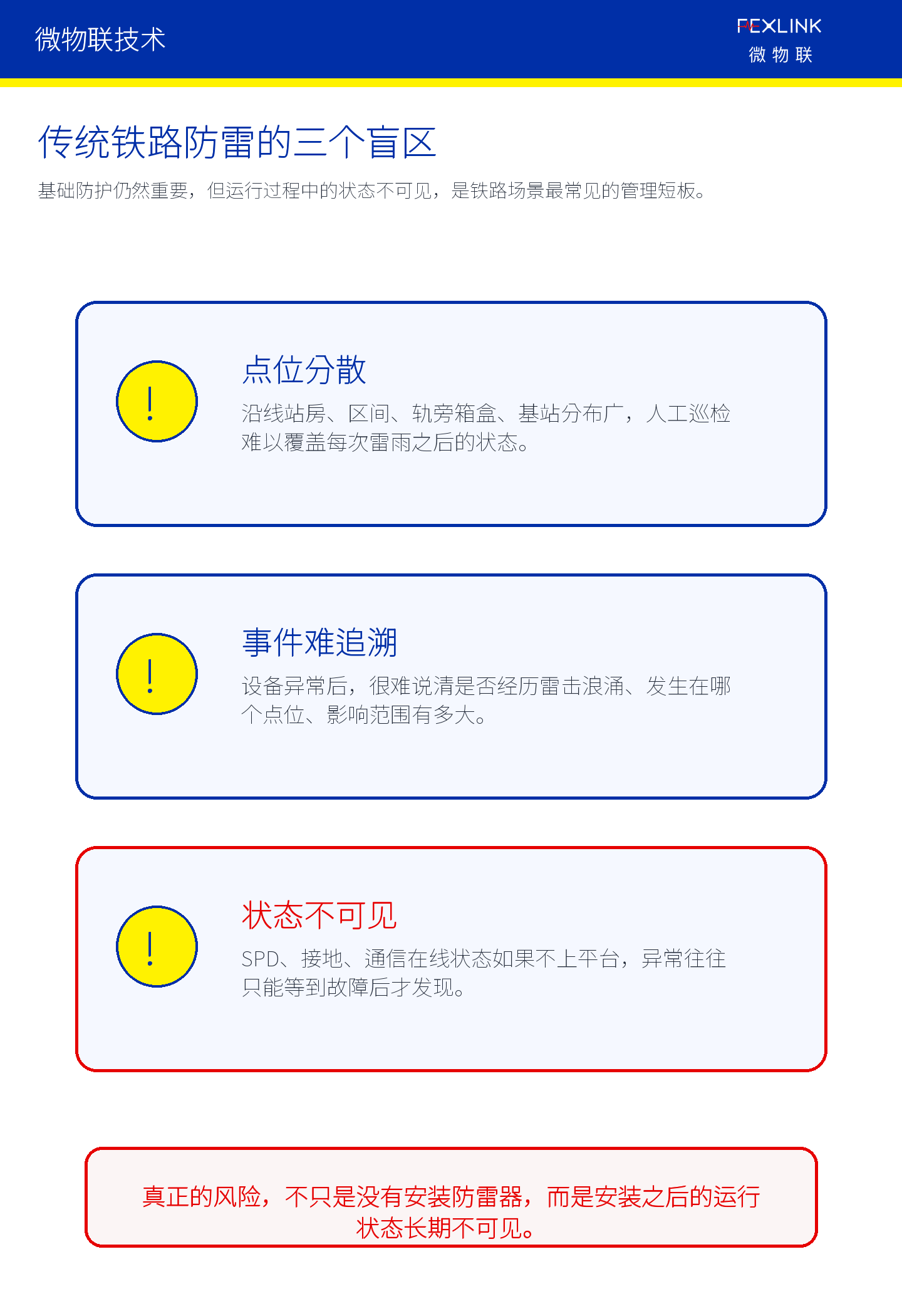
The first pain point is the scattered points. Equipment along the railway may be distributed in mountainous areas, bridges, tunnel entrances, sections, stations and remote base station locations. Manual inspections can detect some problems, but inspections are periodic and cannot cover status changes after thunderstorms in real time.
The second pain point is that lightning strikes cannot be traced back. After an equipment failure occurs, the scene often can only judge that "it may be related to lightning strikes", but lacks specific data to support it. When does the impact occur? At what point does the impact occur? What is the approximate intensity level of the incident? Is SPD in action? Has the grounding status changed? Without online event records, subsequent review, responsibility judgment, and rectification and optimization will become difficult.
The third pain point is that guard status is not visible. After the SPD trips, if there is no remote monitoring, it can only be discovered during on-site inspection; the fact that the SPD has not tripped does not mean that it has not experienced multiple impacts or entered a state of deterioration. For a distributed scenario like railways, discovery delays are a risk in themselves.
The fourth pain point is that the grounding state is obviously affected by the environment. Soil conditions, moisture, corrosion, construction disturbance, and ground connection status vary greatly from section to section. The grounding system will not be stable forever after being tested once. Especially after thunderstorms, construction, long-term corrosion and environmental changes, it is even more necessary to continuously observe trends.
3. What data should be looked at for online monitoring of railway intelligent lightning protection?
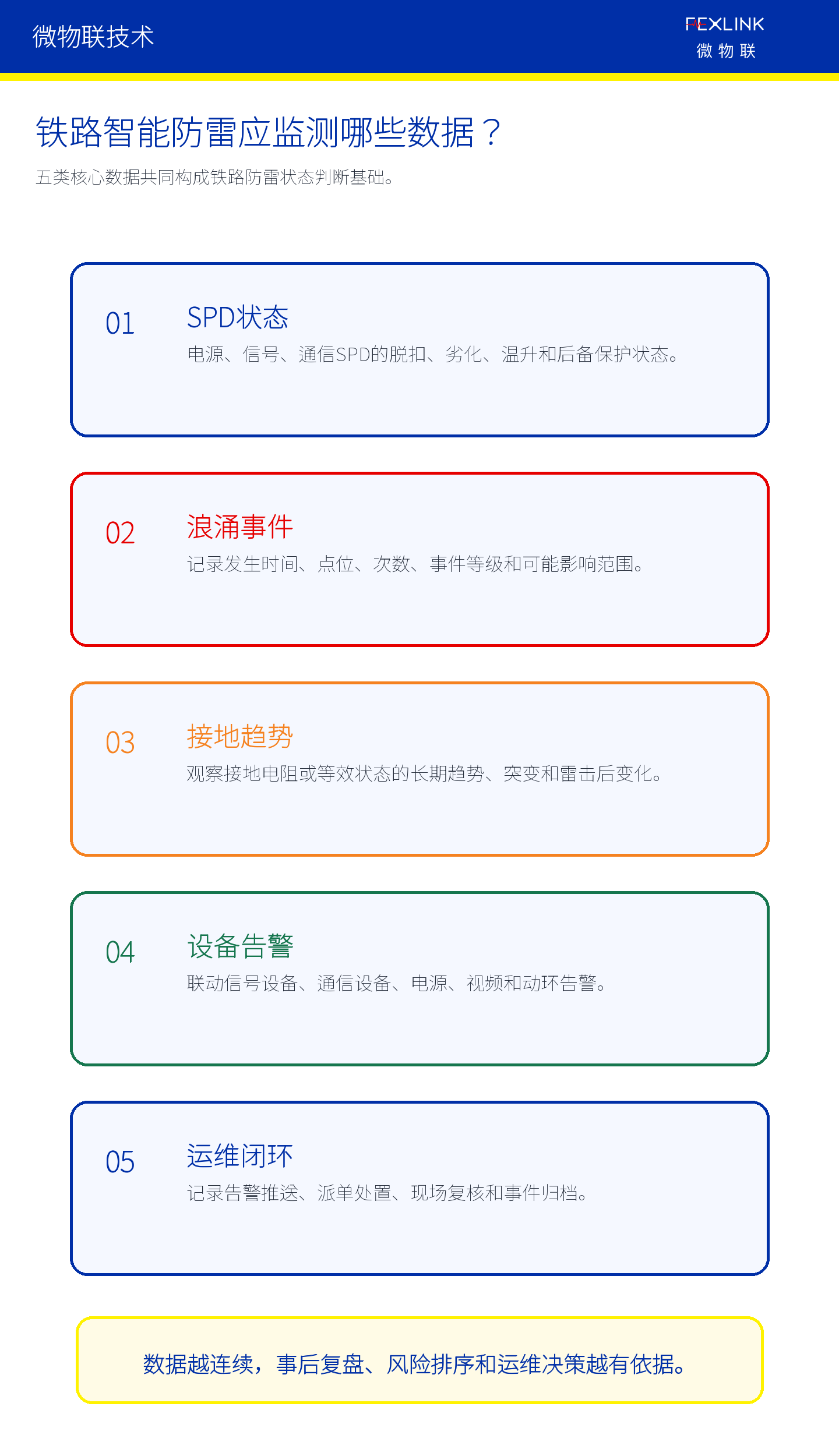
Railway intelligent lightning protection cannot only use one remote signaling contact, nor can it only display whether a certain SPD has tripped. A more complete monitoring system should include at least five types of data: protective device status, lightning surge events, grounding status, equipment operation alarms and platform closed-loop data.
The protection device status includes power SPD, signal SPD, communication SPD and backup protection status. Lightning surge events include occurrence time, occurrence point, number of impacts, event level, and equipment that may be affected. Grounding status includes grounding resistance or equivalent grounding status trends, abnormal mutations, changes after lightning strikes, and comparison of similar points. Equipment alarms include signal equipment abnormalities, communication interruptions, video surveillance disconnections, power supply equipment alarms, and computer room dynamic environment alarms. The closed-loop data of the platform should record whether the alarm is pushed, whether an order is dispatched, whether it is reviewed on site, whether it is replaced and maintained, and whether the status is restored.
Looking at these data individually, they are only partial clues; only by putting them on the same timeline can we form a judgment. For example, if a surge event occurs in equipment in a certain interval during a thunderstorm, and then the communication status becomes abnormal and the grounding status suddenly changes, then this alarm should not be treated as ordinary offline processing, but should enter a higher-priority lightning protection review process.
4. How should the railway intelligent lightning protection system solution be designed?
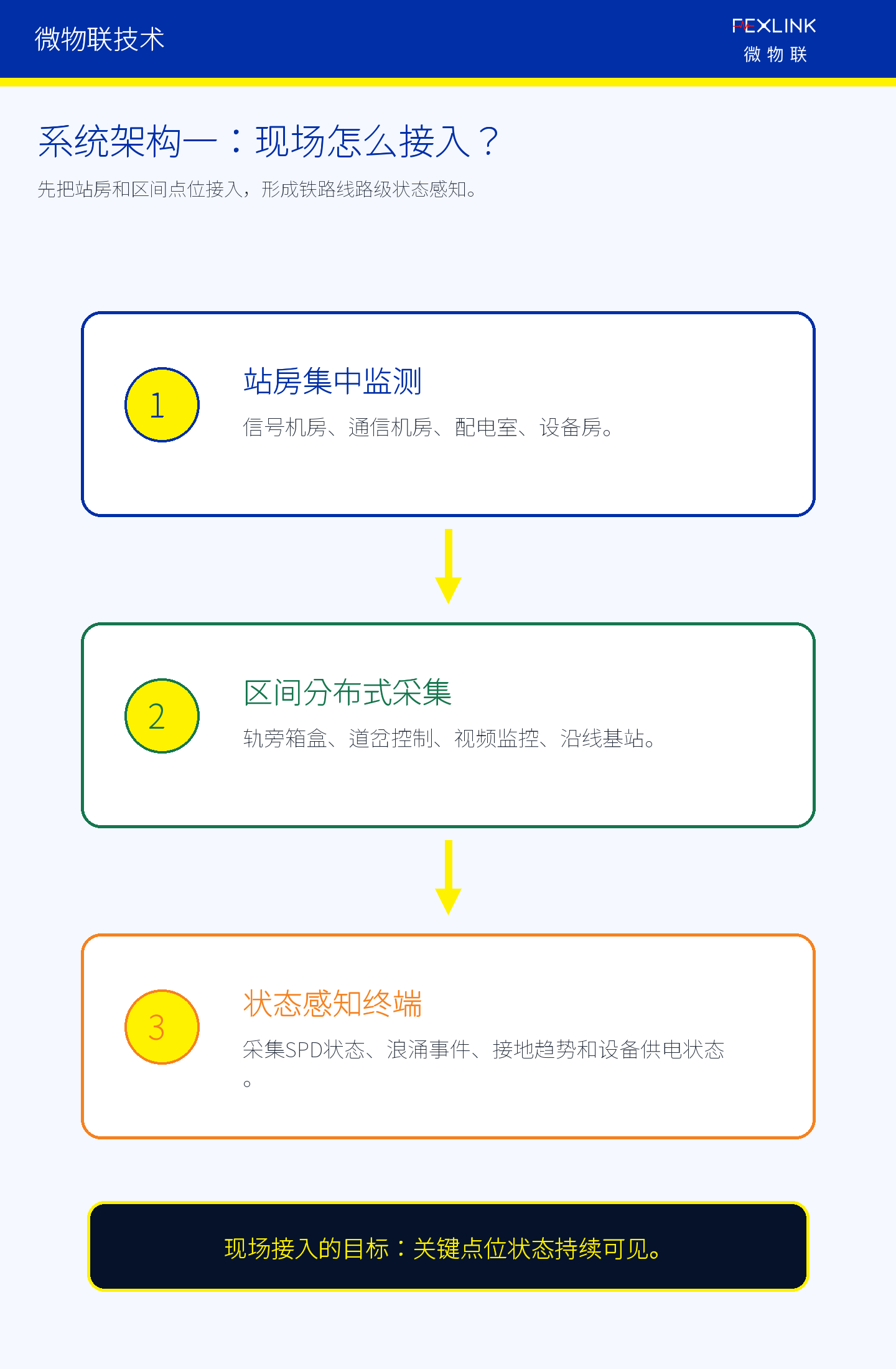
Railway intelligent lightning protection online monitoring can be divided into three basic scenarios: centralized monitoring in stations, distributed monitoring in intervals and unified platform management. Centralized monitoring of station buildings is suitable for signal equipment rooms, communication equipment rooms, power distribution rooms and equipment rooms, focusing on power supply SPD, signal SPD, grounding systems, surge events, equipment room environment and equipment alarms.
Interval distributed monitoring is suitable for trackside boxes, interval signaling equipment, switch control-related equipment, video monitoring points along the line and communication base stations. These points are characterized by dispersion, complex environment, and high inspection costs. Therefore, the system must focus on terminal online rate, power supply status, lightning arrester status, key grounding point status, and communication reliability.
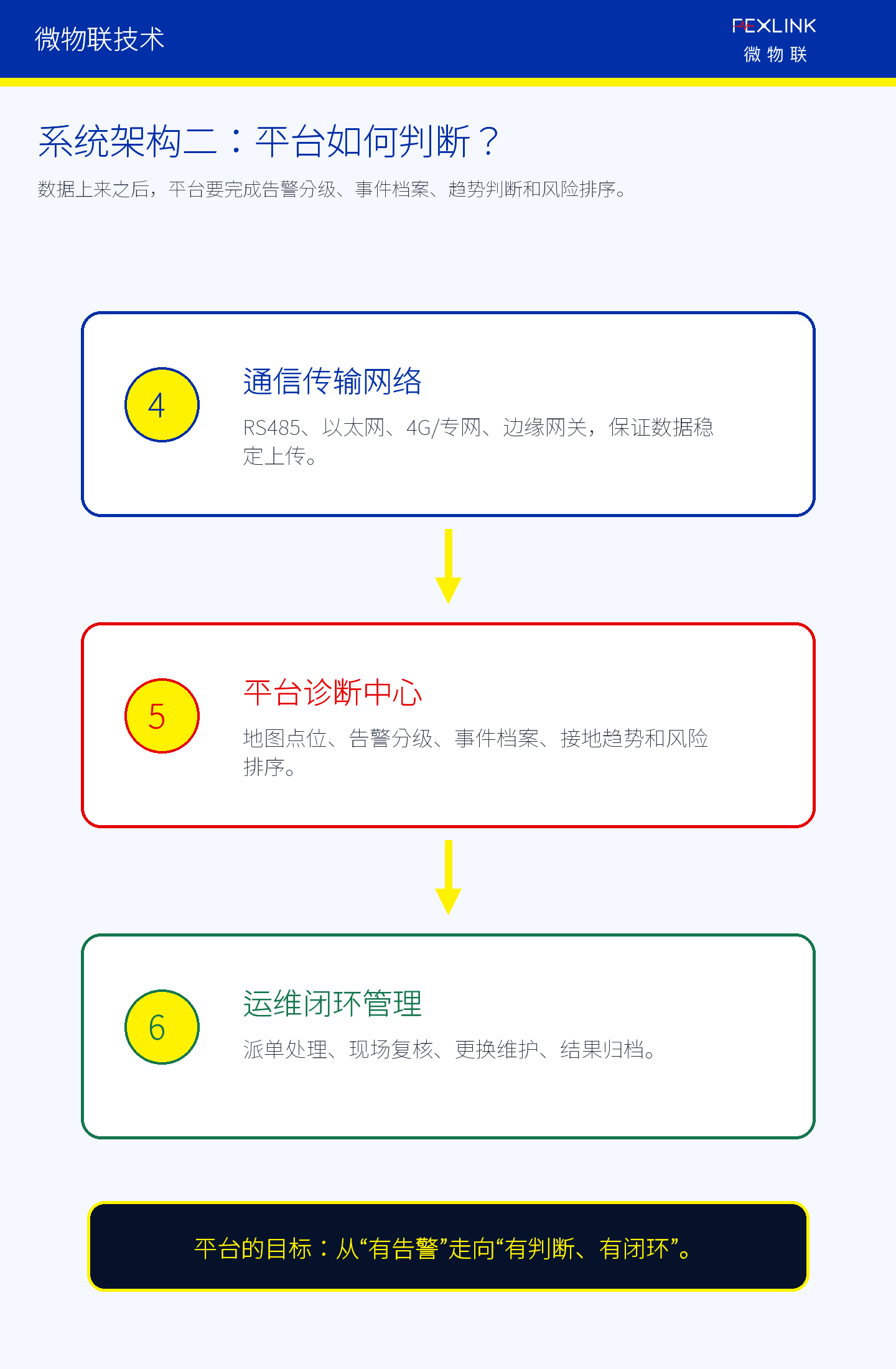
Unified management of the platform is the key to whether the entire system can truly exert its value. The platform should not only display online points, but also support map management, alarm classification, event files, grounding trends, site risk portraits, section risk ranking and work order closed loop. The digital value of railway lightning protection will ultimately be reflected in the specific issues of "which point is more dangerous, who should deal with it first, and whether it will be restored after treatment."
5. Alarm is not the end, closed loop is the value
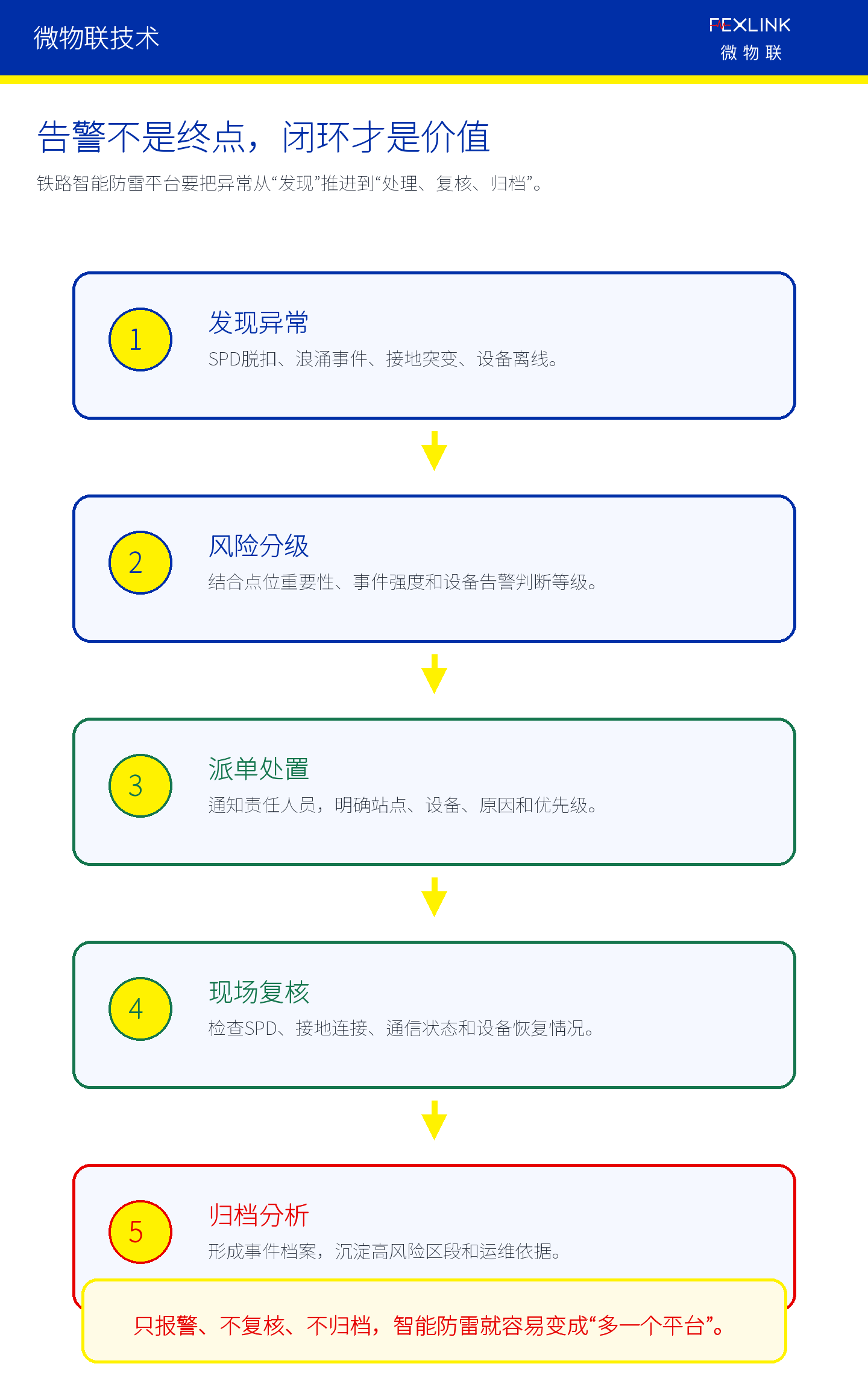
Many intelligent systems tend to stay at "alarms, pages, and curves." But the railway lightning protection scenario is more concerned with what happens after the alarm. An SPD abnormality only detects problems, and a surge event only records problems. Only when dispatching, processing, review and archiving are completed can a management closed loop be truly formed.
The significance of closed loop is, on the one hand, to allow on-site risks to be dealt with in a timely manner; on the other hand, it is to form long-term operation and maintenance evidence. Through continuous recording, the platform can know which sites have frequent lightning strikes, which equipment repeatedly alarms, which sections have significant fluctuations in grounding status, and which points have poor recovery results after maintenance. This data will in turn support inspection planning, spare parts allocation, modification prioritization and line-level risk assessment.
6. Line-level risk ranking: let operation and maintenance resources be used at key points
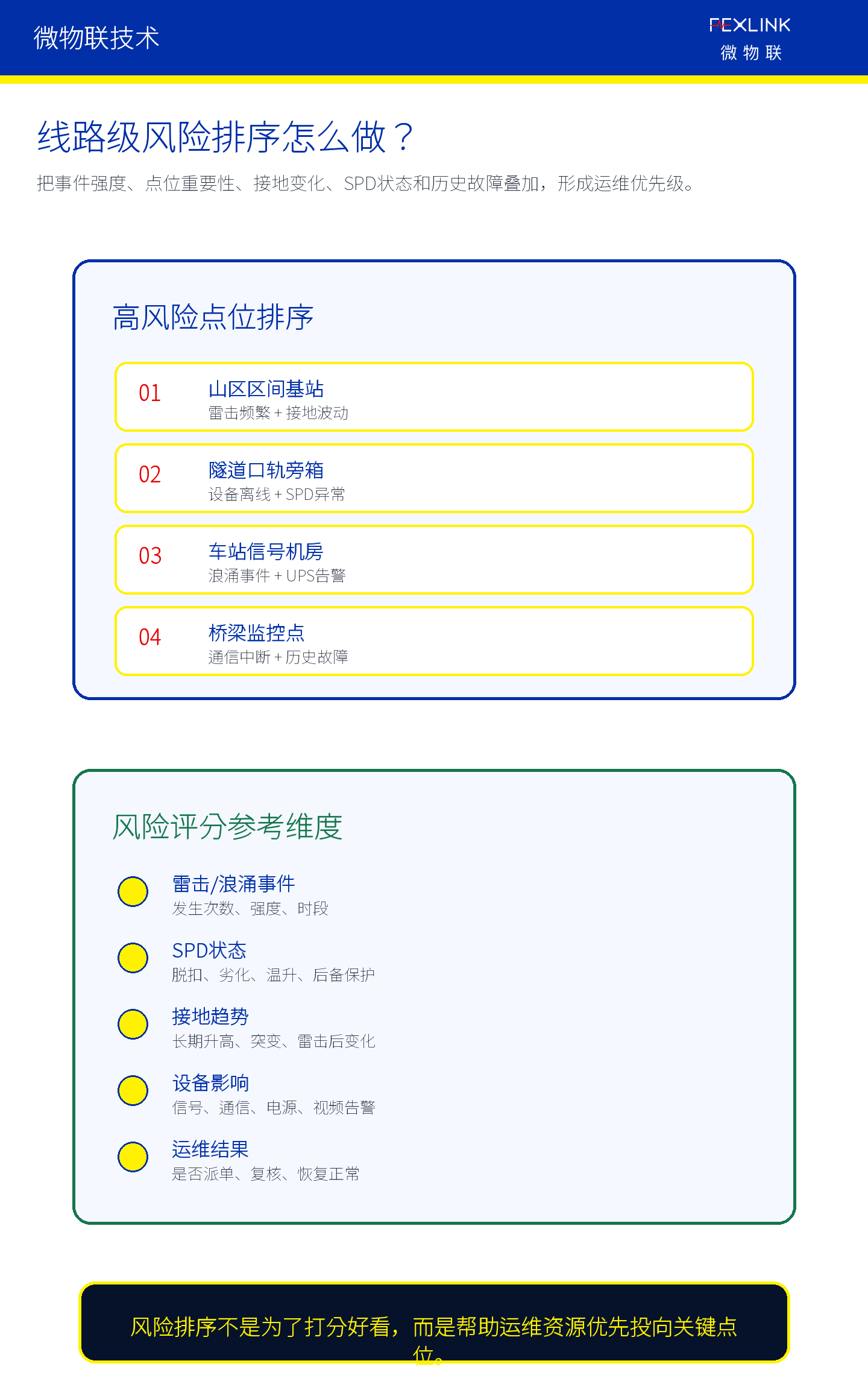
There are many points along the railway and limited operation and maintenance resources. The intelligent lightning protection system cannot treat all abnormalities as equally important. An effective platform should superimpose event intensity, point importance, SPD status, grounding changes, equipment alarms and historical faults to form a risk ranking.
For example, if the same SPD anomaly occurs at a common auxiliary equipment point, the processing priority may be different; if it occurs at a critical interval, important signaling equipment, communication relay point or historical lightning strike high-incidence point, the risk level should be increased. The value of an intelligent lightning protection system is not to create more alarms, but to allow the truly critical risks to be seen first.
7. How does FEXLINK understand railway intelligent lightning protection?
FEXLINK believes that the core of railway intelligent lightning protection is not to simply connect SPD to the platform, but to unify lightning protection facilities, protection status, lightning surge events, grounding status and equipment operation alarms along the railway into a line-level risk data system.
FEXLINK's idea is to upgrade railway lightning protection from "single point protection" to "line-level status management", from "regular inspection" to "online awareness", from "post-fault troubleshooting" to "event traceability", from "whether the equipment is installed" to "whether the protection continues to be effective." Only in this way can lightning protection data truly serve the reliable operation and safe operation and maintenance of the railway system.
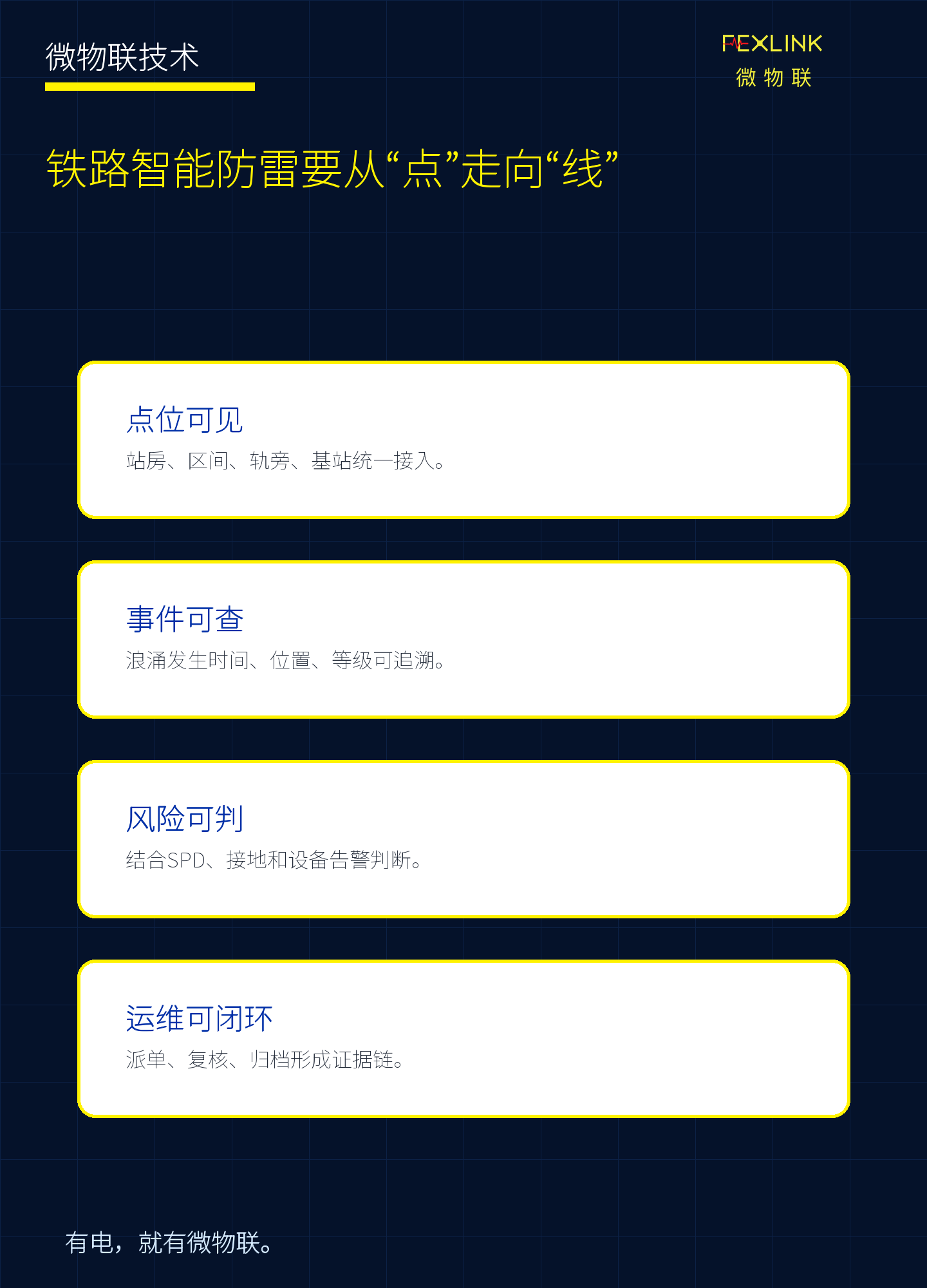
Conclusion: The essence of railway lightning protection upgrade is to turn risks along the line into manageable data.
The difficulty of lightning protection in the railway system lies not in whether a single point is equipped with a protective device, but in the numerous points along the line, the complex operating environment, and the long chain of fault effects. Without online data, the lightning protection system can easily stay in the construction and acceptance stage; with continuous monitoring, the lightning protection system can enter the operation management stage.
The value of intelligent lightning protection online monitoring is to unify the protection status of scattered points, lightning surge events, grounding changes, equipment alarms and operation and maintenance processing, so that risks can be seen, events can be detected, status can be determined clearly, and treatment can be retained.
FEXLINK technology will continue to share content related to intelligent lightning protection, early warning of electrical safety, digital power distribution, energy supervision and industrial Internet of Things.
FEXLINK/FEXLINK uses data to reconstruct energy efficiency and electrical safety.
Where there is electricity, there is FEXLINK.