Abstract: New energy stations usually have the characteristics of large area, scattered equipment, long DC side lines, high value of inverters and box-type transformers, many communication control systems, and sensitive energy storage systems. Traditional lightning protection focuses more on whether the SPD is installed, while smart lightning protection requires further answers: whether a lightning surge occurs, which partition the impact is affected, whether the SPD is still valid, whether the grounding status is stable, whether the inverter/box-type transformer/energy storage alarm is related to the surge event, and whether subsequent operation and maintenance forms a closed loop.
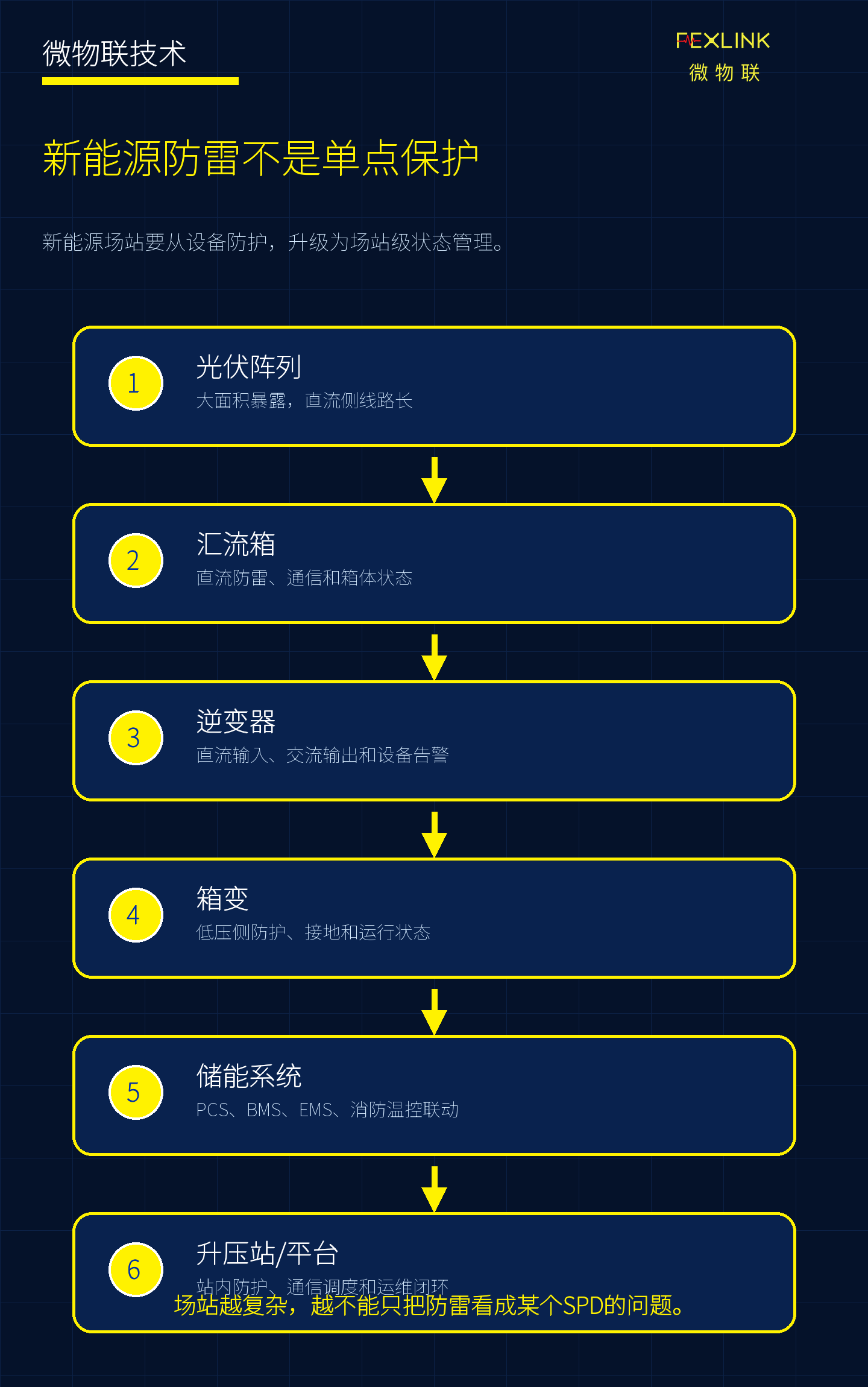
Photovoltaic power stations, energy storage power stations and integrated wind and solar power stations often occupy large areas, have scattered equipment points, long DC side cables, high value AC side equipment, and complex communication and control systems. A lightning strike or induced surge may not only cause an SPD to operate, but also affect the combiner box, inverter, box-type transformer, energy storage PCS, BMS, EMS, communication system and even booster station equipment.
The difficulty in lightning protection for new energy stations is not whether SPDs are installed, but which areas in the station have experienced impacts, which equipment has been affected, and which protection status is deteriorating. Without continuous online data, site lightning protection can easily stay in the configuration list during the construction phase and fail to enter risk management during the operation phase.
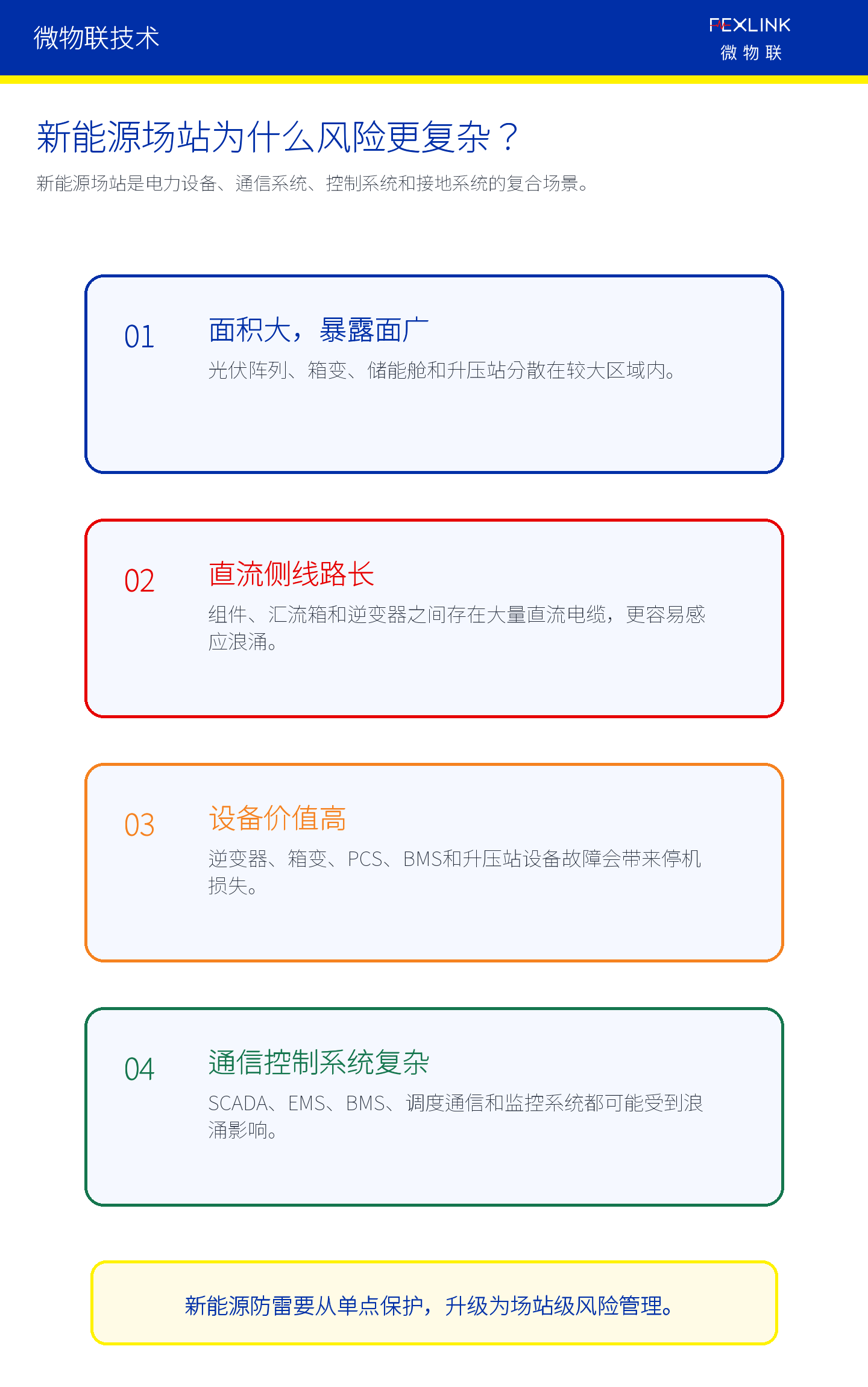
1. Why are new energy stations more prone to complex lightning protection risks?
First of all, new energy stations are large in area and have wide exposure. Photovoltaic arrays, brackets, combiner boxes, inverters, box-type transformers, energy storage cabins and booster stations are scattered over a larger area. A lightning strike or induced surge may affect a local area or multiple devices through cabling, grounding systems, and communications links.
Secondly, the DC side line is long. There are a large number of DC cables between photovoltaic modules to the combiner box and the combiner box to the inverter. Long lines are more likely to induce surges, and DC side equipment is also more sensitive to overvoltage, insulation state changes and impact processes.
Third, the equipment is of high value and the downtime losses are significant. Once the inverter, box-type transformer, energy storage PCS, BMS, EMS and booster station protection equipment are damaged, it will not only incur maintenance costs, but may also cause power generation loss, grid connection abnormality or operation and maintenance shutdown.
Fourth, there are many communication control systems. New energy stations rely on communication systems, monitoring systems, dispatching systems, EMS, BMS and SCADA to achieve operation management. Surges may not only damage electrical equipment, but may also affect communications links, control systems, or data acquisition equipment.
2. What are the blind spots in lightning protection of traditional new energy stations?
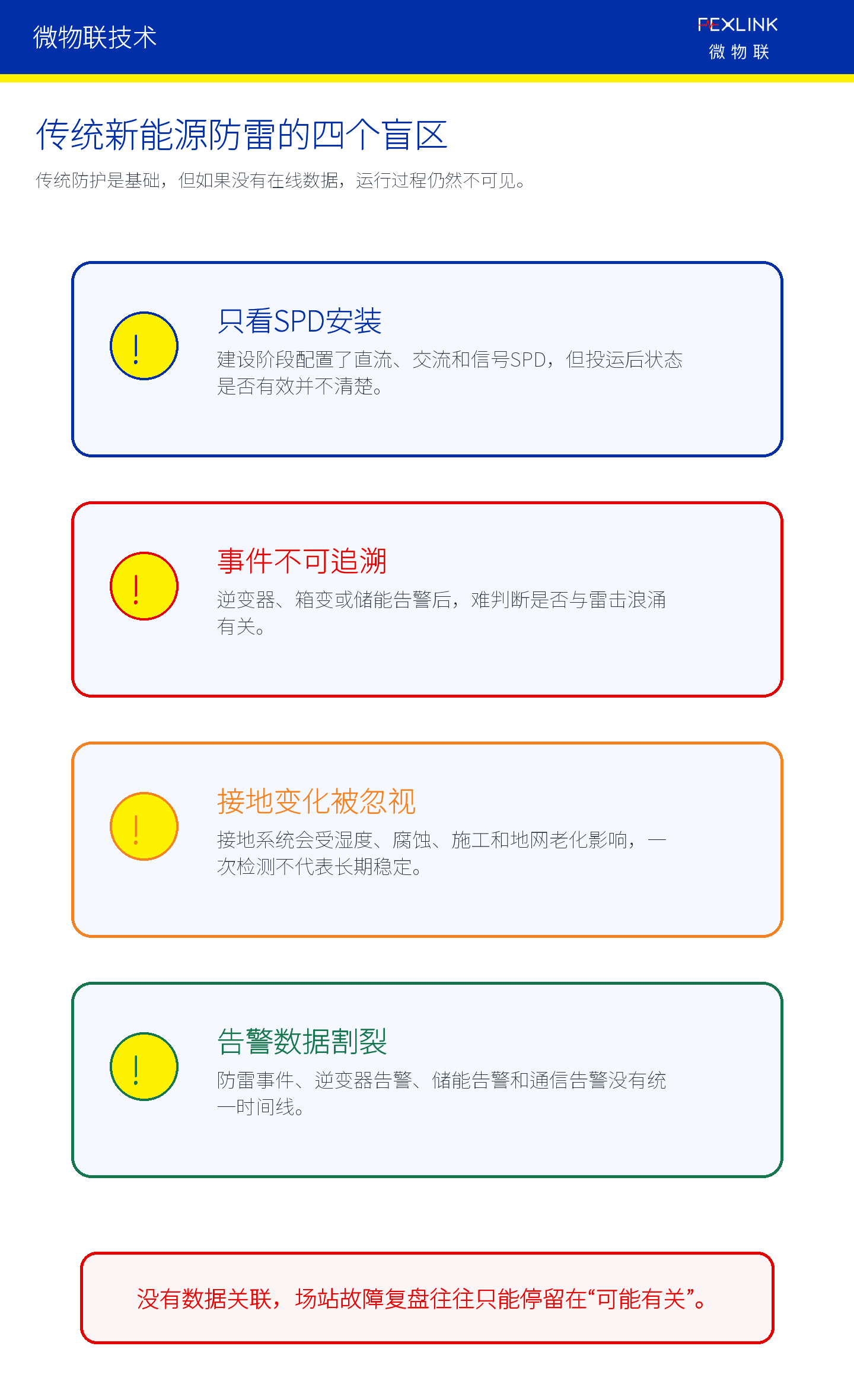
The first blind spot in traditional new energy station lightning protection is whether SPD is installed. Many projects will be equipped with power SPD, DC SPD, AC SPD and signal SPD during construction. However, after putting into operation, it is difficult to know in time whether the SPD has operated, deteriorated, tripped, needs to be replaced, and whether the backup protection is normal. Without online monitoring, it is difficult to know in time.
The second blind spot is that lightning surge events cannot be traced. After an inverter failure, box-type transformer anomaly, communication interruption, or energy storage PCS alarm occurs, it is often difficult to determine whether it is related to a lightning surge, which area the event occurred in, which equipment was affected, whether adjacent equipment needs to be checked, and whether the grounding system needs to be reviewed.
The third blind spot is that changes in grounding status are easily overlooked. The grounding system of new energy stations will be affected by factors such as soil moisture, corrosion, construction, cable connections, and aging of the ground network. One detection value cannot represent long-term operating status.
The fourth blind spot is the separation of equipment alarms and lightning protection events. Many sites have inverter alarms, box-type transformer alarms, energy storage alarms and communication alarms, but the lightning protection system data are not associated with these alarms, resulting in a lack of a complete timeline for subsequent review.
3. What objects should be monitored for intelligent lightning protection in new energy stations?
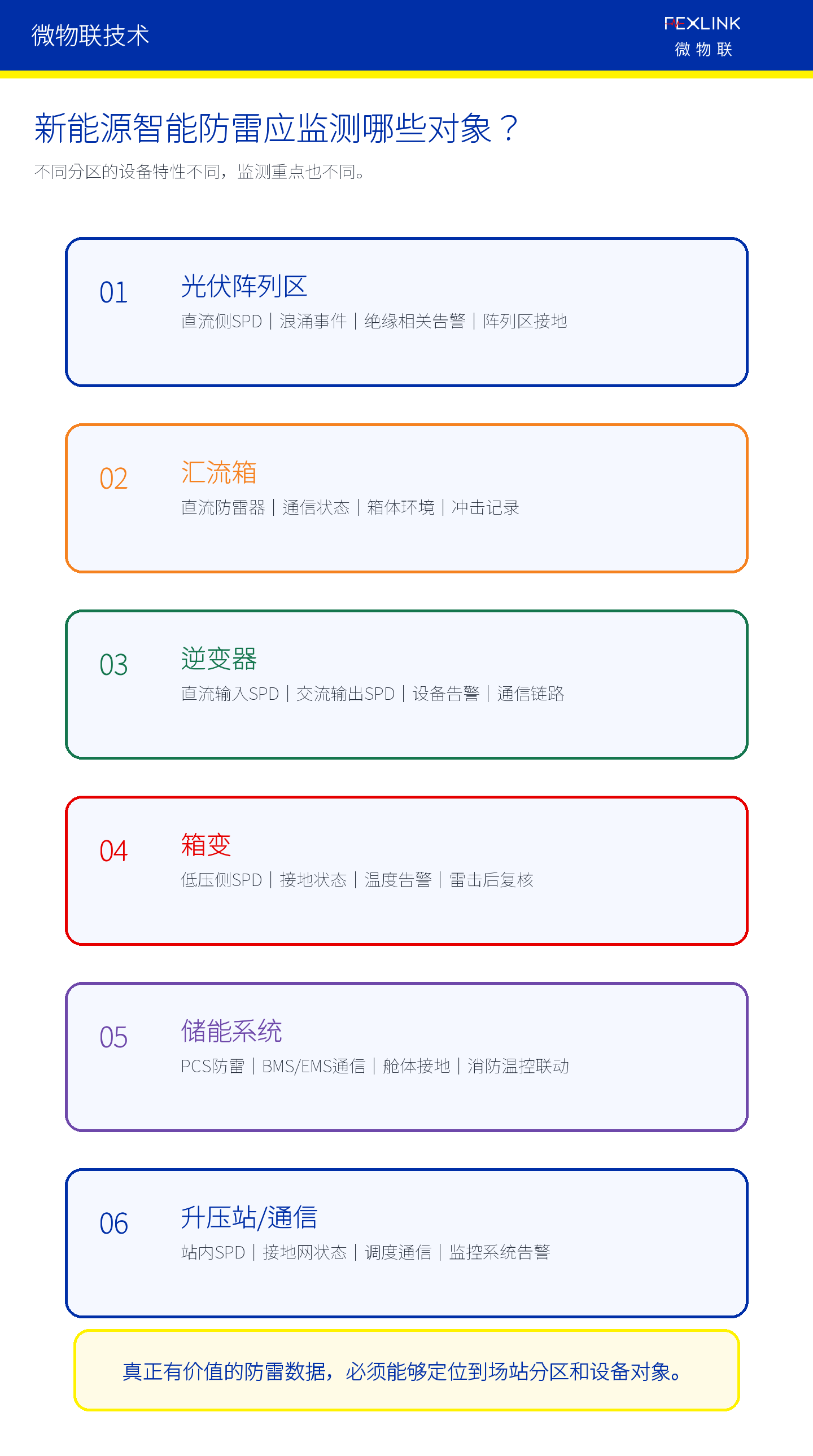
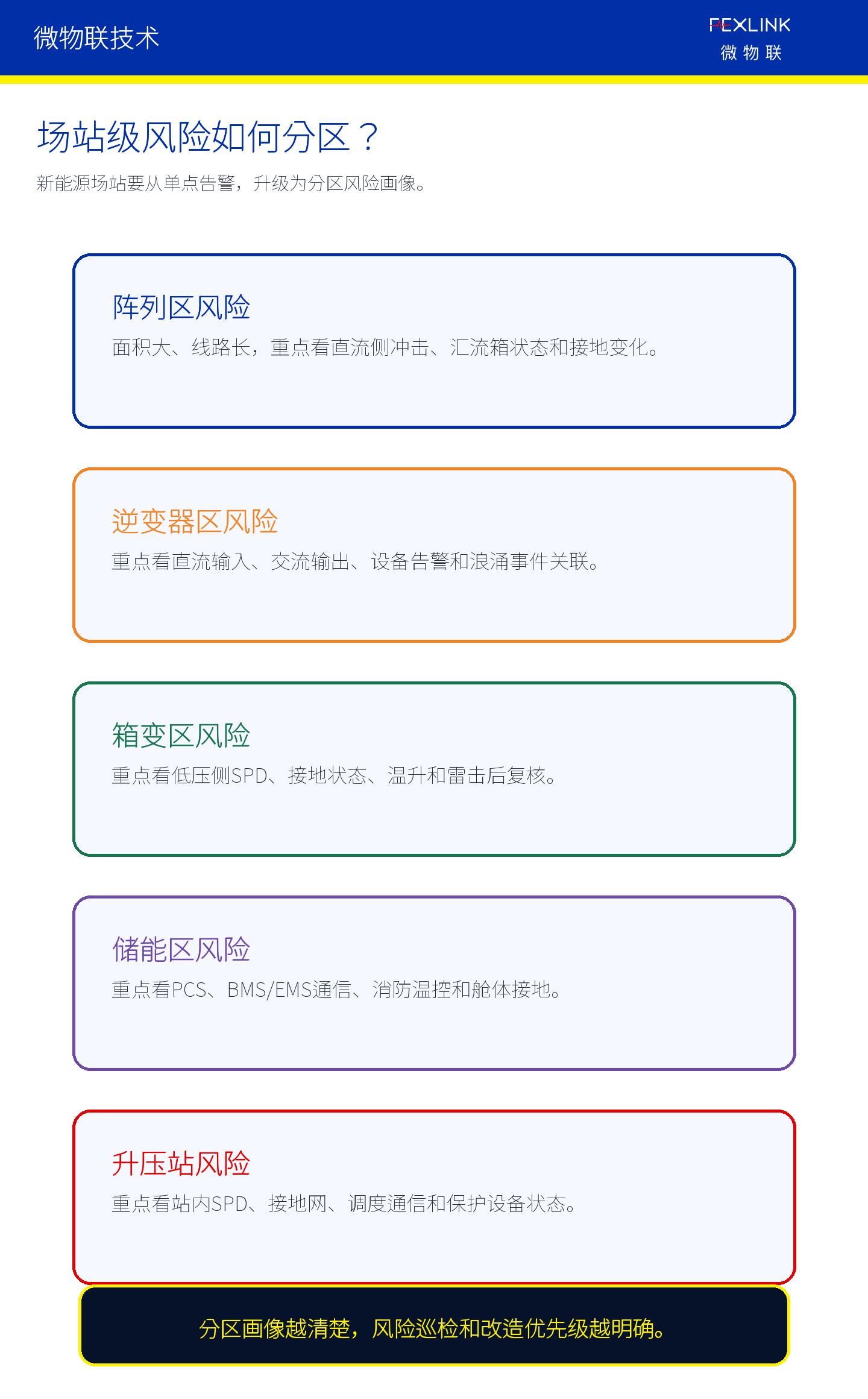
The photovoltaic array area should focus on monitoring the DC side SPD status, combiner box lightning protection status, surge events, insulation abnormality related alarms and array area grounding status. The array area is large and the lines are long, so zone monitoring is more meaningful than a single status for the entire site.
The combiner box should focus on monitoring the DC lightning arrester status, power loop status, communication status, box environment and surge impact records. The combiner box not only connects a large number of component circuits, but also serves as a risk gathering point on the DC side.
The inverter should focus on the DC input side SPD, AC output side SPD, equipment alarms, communication links, and the time correlation between equipment alarms and surge events. The inverter is the core of power generation conversion, and the impact of faults is directly reflected in the power generation capacity.
Box transformers should pay attention to low-voltage side SPD, high-voltage side related protection status, grounding status, temperature and operation alarms, and status review after lightning strikes. The energy storage system should pay attention to the SPD on the PCS input and output side, BMS/EMS communication protection, energy storage cabin grounding status, fire protection and temperature control linkage alarms, as well as the correlation between lightning surge events and energy storage alarms. The booster station and communication system should also pay attention to the SPD status in the station, the lightning protection status of communication equipment, the status of the grounding network, monitoring system alarms and dispatch communication link status.
4. How to design an integrated intelligent lightning protection system?
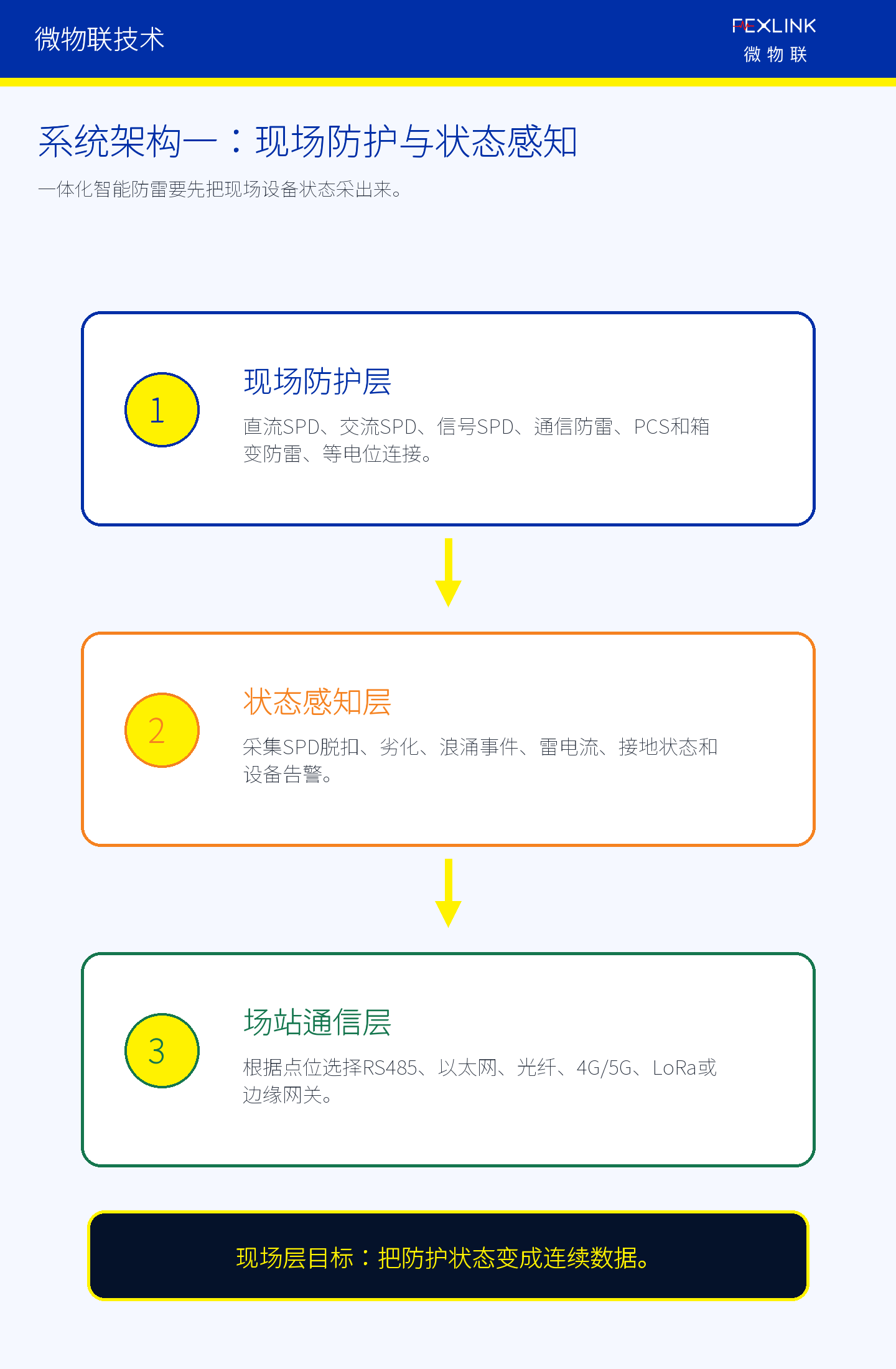
The integrated intelligent lightning protection system cannot just list the equipment, but must be designed in layers. The first layer is the on-site protection layer, including photovoltaic DC side SPD, AC side SPD, signal SPD, communication lightning protection, energy storage PCS lightning protection, box transformer/boost station lightning protection, grounding and equipotential connection. It solves basic protection problems.
The second layer is the status awareness layer, including SPD tripping status, SPD degradation status, surge event recording, lightning current monitoring, grounding resistance or grounding status, box environment and key equipment alarm collection. It solves the problem of invisible status.
The third layer is the station communication layer. The communication conditions of new energy stations are complex, and RS485, Ethernet, optical fiber, 4G/5G, LoRa, edge gateway, local platform or cloud platform access can be selected according to the location. It solves the problem of whether data can be transmitted stably.
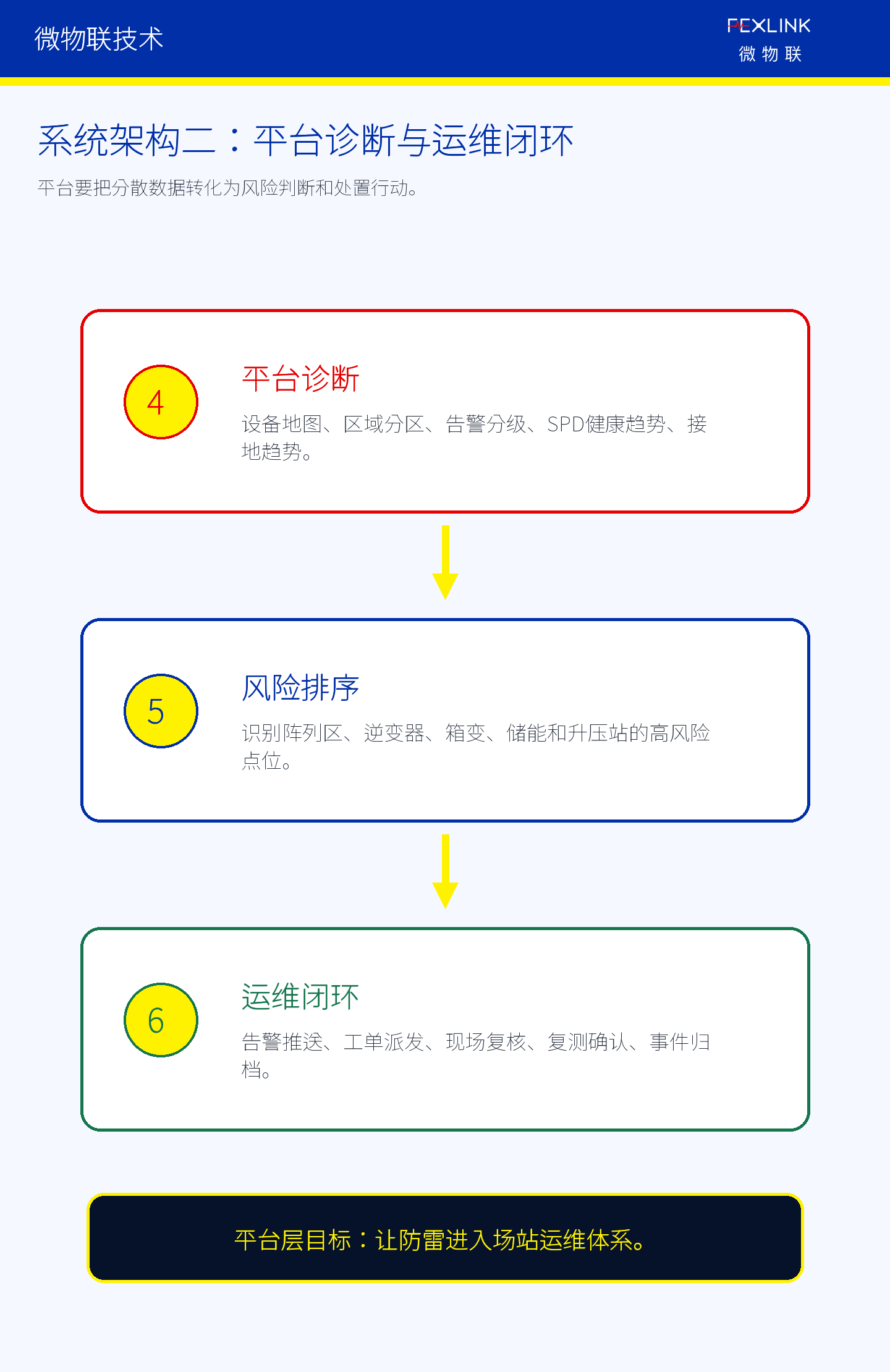
The fourth and fifth layers are the platform diagnosis layer and the operation and maintenance closed-loop layer respectively. The platform should form equipment maps, regional partitions, alarm classifications, lightning surge event files, SPD health trends, grounding trends, equipment alarm correlations and high-risk area rankings; the operation and maintenance closed loop should include alarm push, work order dispatch, on-site review, SPD replacement, grounding inspection, retest confirmation, event archiving and risk reporting.
5. What is the core value of digital lightning protection for new energy stations?
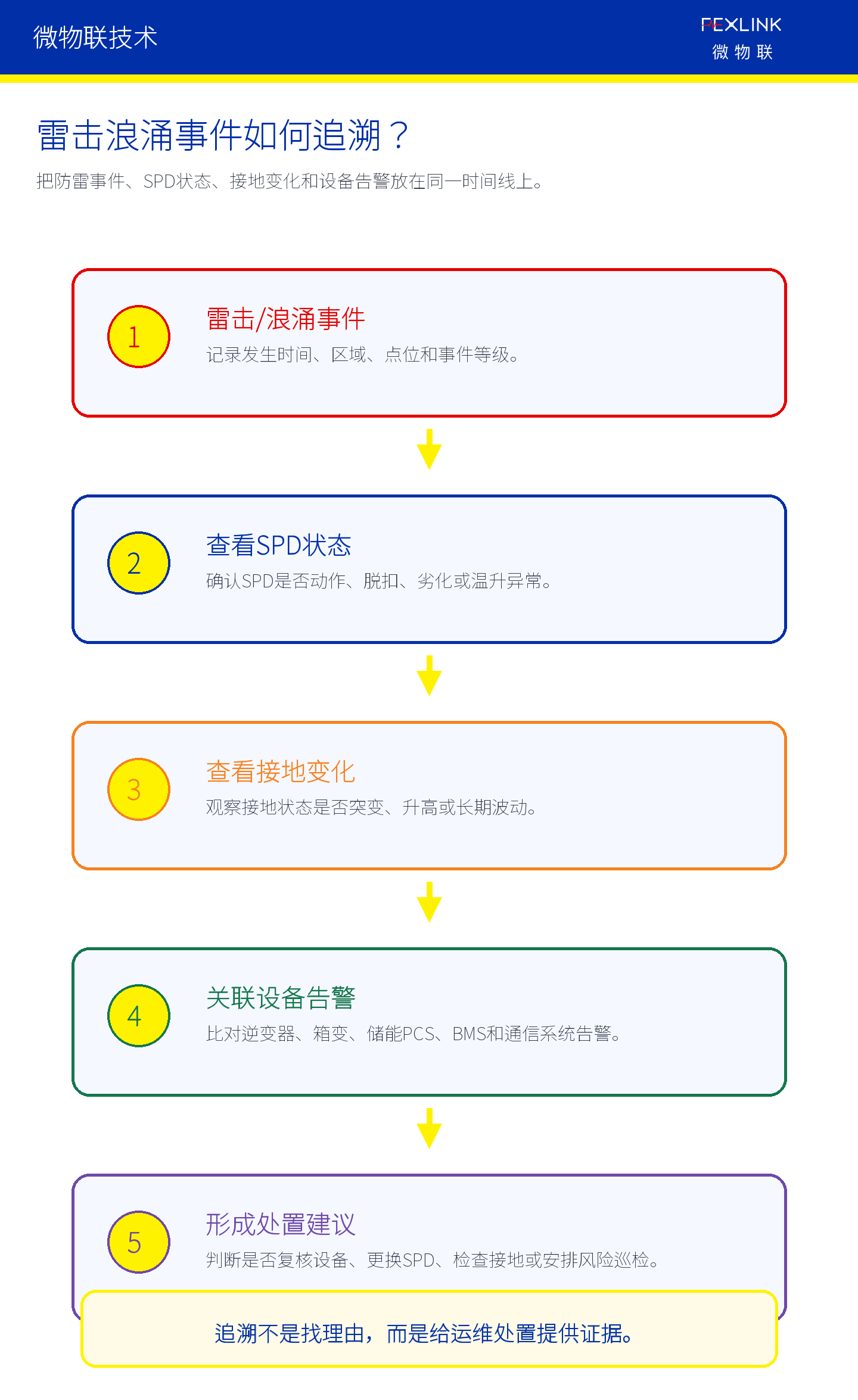
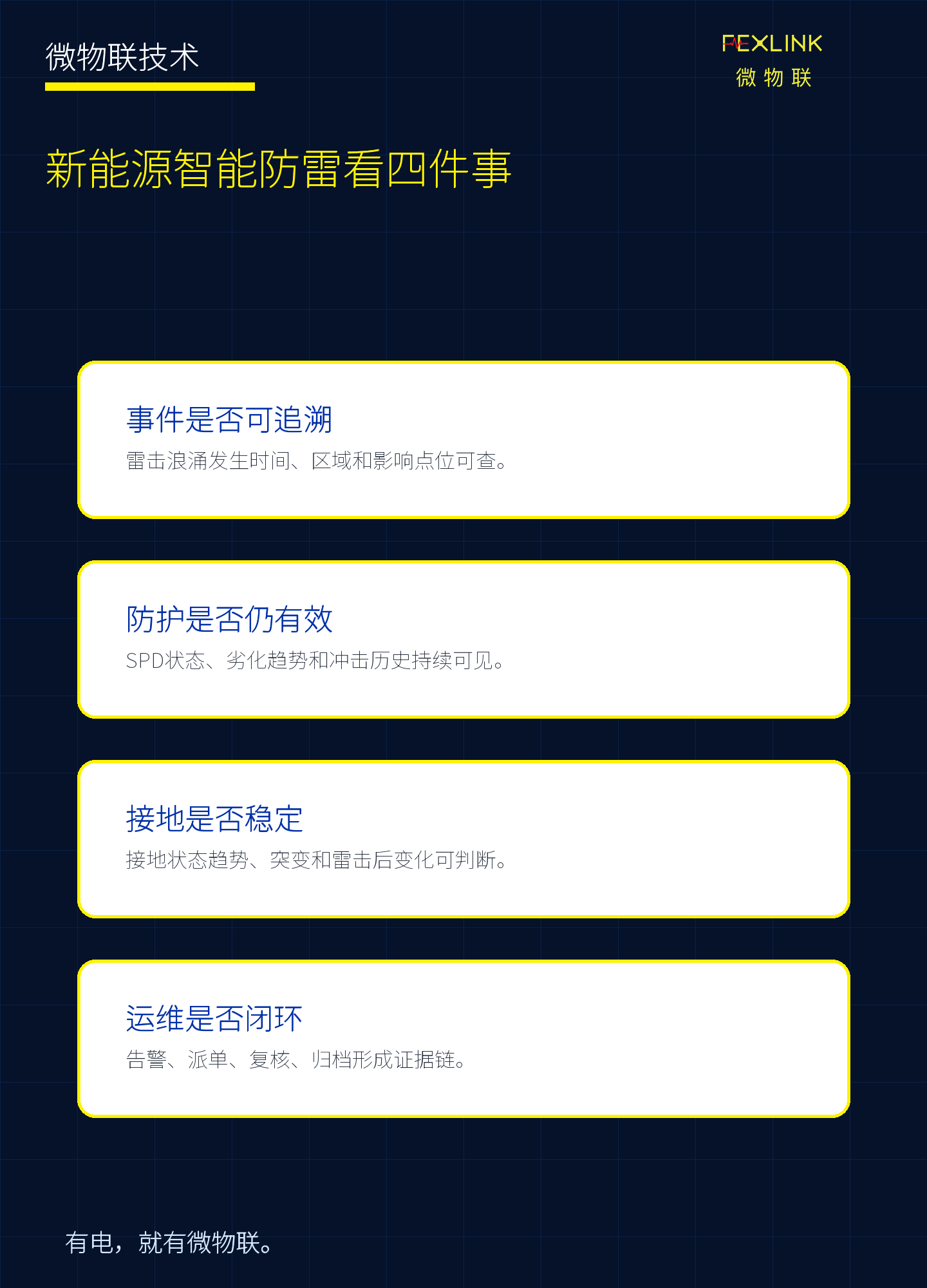
First, make the impact of lightning strikes traceable. After a lightning surge occurs, you can check the occurrence time, occurrence area, affected point, SPD action status, grounding changes, and whether equipment alarms appear simultaneously.
Second, make the lightning protection status manageable. Intelligent lightning protection does not wait until the SPD breaks down to discover it, but sees deterioration, tripping, temperature rise, impact history and trend changes in advance.
Third, let the operation and maintenance change from full-site inspection to risk inspection. The platform can tell operation and maintenance personnel which array area has high risk, which inverter has many incidents near it, which box transformer has abnormal grounding status, which group of energy storage equipment needs to be reviewed, and which points can be inspected as planned.
Fourth, let lightning protection data serve power generation reliability. Lightning protection is not only a safety system, but also affects equipment availability, power generation continuity, downtime, operation and maintenance costs, asset life and site reliability evaluation.
6. How does FEXLINK understand intelligent lightning protection in new energy stations?
MicroIoT believes that the core of intelligent lightning protection for new energy stations is not to simply connect SPD to the platform, but to make the lightning protection system a part of the station’s operating data. New energy stations need to complete three transformations: from single-point protection to partitioned status management; from post-maintenance to event tracing and predictive maintenance; from lightning protection islands to station electrical safety data integration.
The FEXLINK digital lightning protection system hopes to continuously collect lightning current, SPD, grounding, surge events and electrical equipment alarm data, so that lightning protection equipment can continue to produce credible data, and incorporate lightning protection data into the power generation reliability and electrical safety early warning system. For new energy stations, lightning protection should not be just a construction acceptance item, but should become a part of long-term operation management.
Conclusion: New energy lightning protection upgrade is part of the reliable operation of the station
The lightning protection upgrade of new energy stations is not only to reduce lightning damage, but also to make the risk status of photovoltaics, energy storage, box-type transformers, inverters, communication systems and grounding systems visible for a long time. For stations with large areas, many points, high equipment value, and high operational continuity requirements, the lightning protection system cannot just stay in the configuration list during the construction phase, but should become a status data system during the operation phase.
The significance of integrated intelligent lightning protection is to unify scattered protective equipment, lightning surge events, grounding status, equipment alarms and operation and maintenance processing, so that the site can move from "equipment protection" to "risks can be judged and treatment can be closed loop".
FEXLINK technology will continue to share content related to intelligent lightning protection, early warning of electrical safety, digital power distribution, energy supervision and industrial Internet of Things.
FEXLINK/FEXLINK uses data to reconstruct energy efficiency and electrical safety.
Where there is electricity, there is FEXLINK.