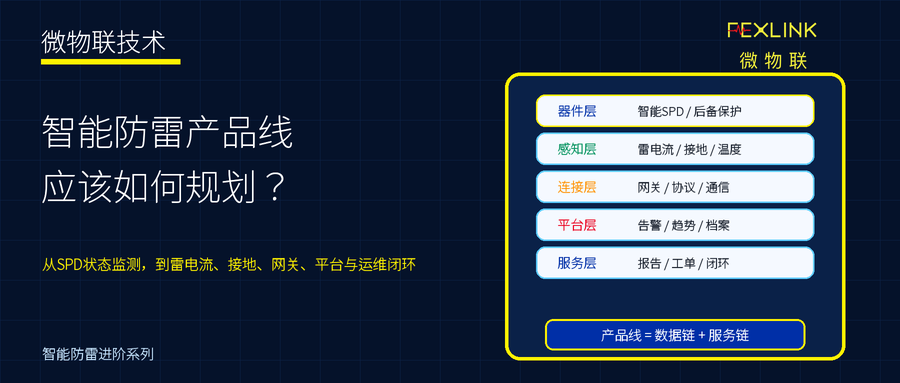
Public account cover picture: How should the intelligent lightning protection product line be planned?
Abstract: The intelligent lightning protection product line cannot be simply understood as a "smart SPD product list", nor can it just add communication modules to traditional lightning arresters. A truly competitive intelligent lightning protection product line should start from SPD status monitoring and gradually cover lightning current monitoring, grounding online monitoring, signal and communication protection monitoring, intelligent gateway, edge collection, platform diagnosis and operation and maintenance closed loop, forming a complete data chain from on-site status to customer management value.
When many companies develop intelligent lightning protection product lines, their first reaction is to change traditional SPDs into "communication-equipped" SPDs. This direction can be used as a starting point, but if it only stays at the level of a single device, the product line can easily become "lightning protectors with more complex functions" rather than a set of intelligent lightning protection systems that can sustainably operate.
In the end, customers do not only care about whether a certain device is communicating, but whether the lightning protection system is still effective, whether lightning strikes and surges occur, whether the grounding status is reliable, whether someone handles the alarm after it is reported, and whether the data can form a basis for reporting and rectification.
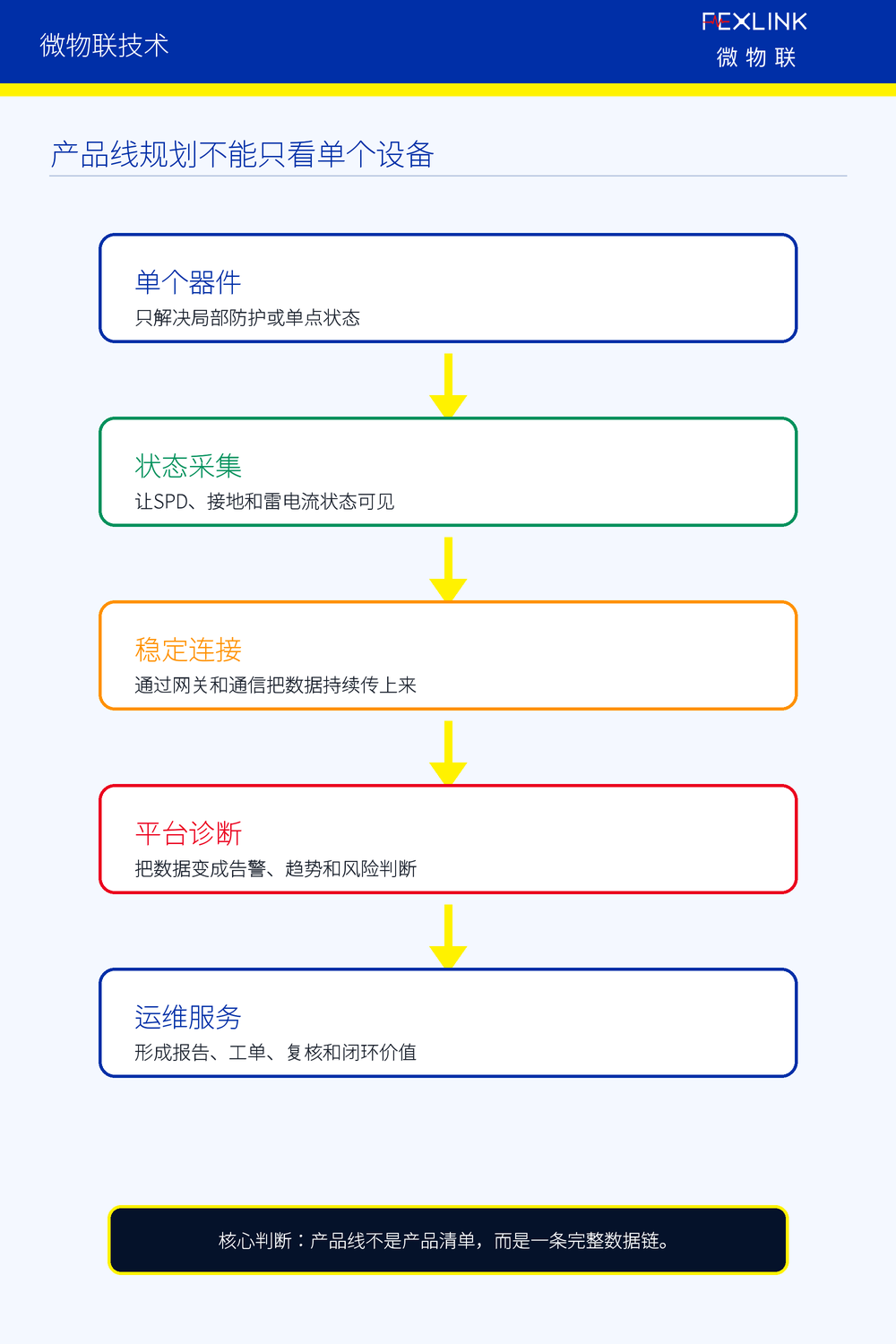
Therefore, the core of product line planning is not to pile up functions, but to design on-site protection, status awareness, communication connections, platform diagnosis and operation and maintenance services into a continuous data chain.
1. What objects should the intelligent lightning protection product line start with?
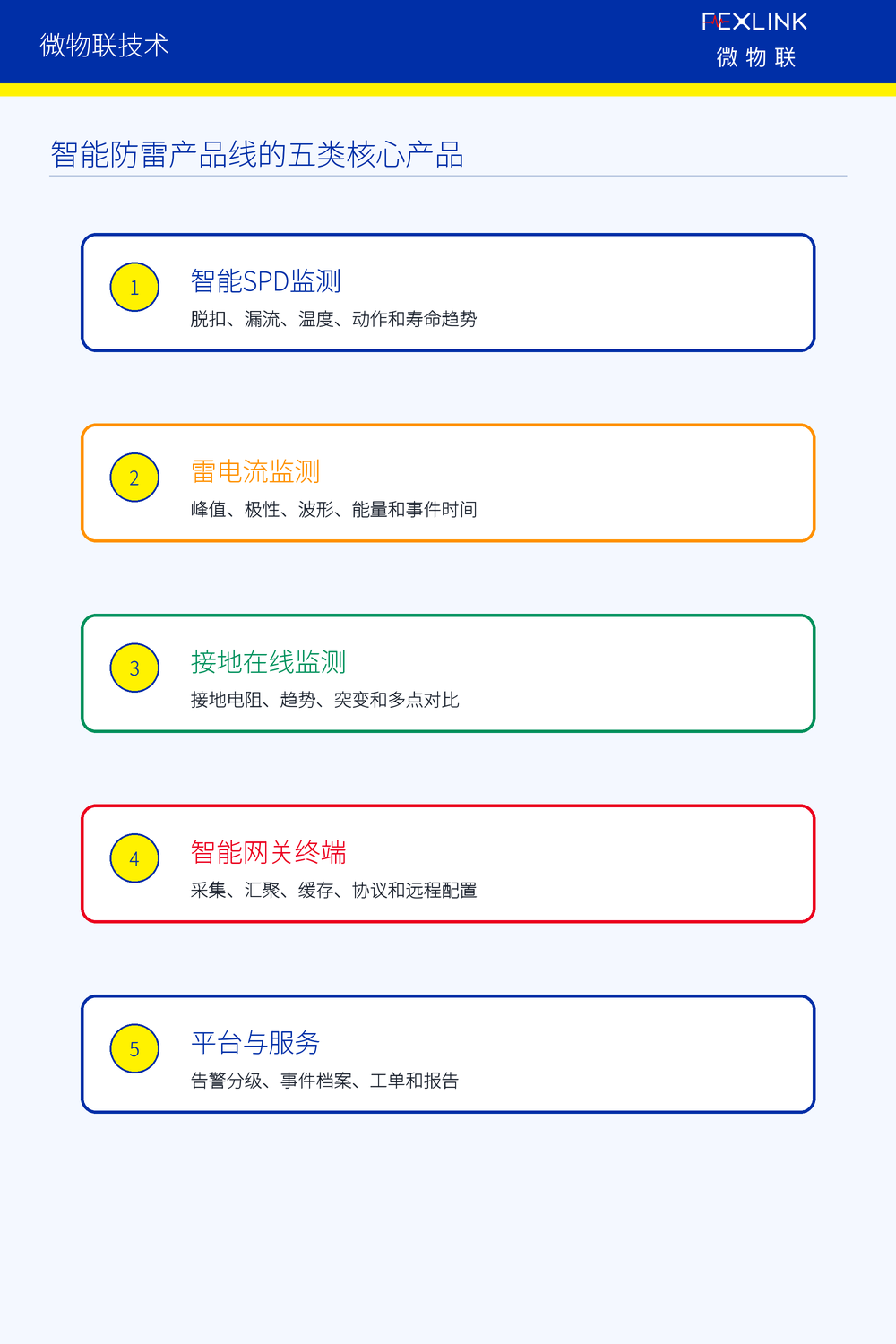
The first category is intelligent SPD monitoring. SPD is still the foundation of the lightning protection product line, but smart SPD should not only focus on tripping remote signaling. More valuable data include leakage, temperature, backup protection status, action records, number of impacts and life trends.
The second category is lightning current monitoring. Lightning current monitoring solves "what exactly happened in the lightning strike event". It should pay attention to lightning strike time, peak current, polarity, waveform, duration, charge amount, unit energy and event point to provide a basis for accident review and equipment review.
The third category is grounding online monitoring. Grounding is not a one-time test report, but a long-term operating status. Online grounding monitoring should pay attention to grounding resistance, trend changes, abnormal mutations, multi-point comparison, state changes after lightning strikes and seasonal fluctuations.
The fourth category is intelligent gateways and collection terminals. As long as the points are scattered, there are many types of devices, and the communication environment is complex, you must rely on the gateway to complete collection, aggregation, caching, protocol conversion, breakpoint resuming, and remote configuration.
The fifth category is platforms and services. The platform cannot just display normality and faults, but should complete alarm classification, trend analysis, event files, risk ranking, work order closed loop and report output.
2. Product line planning should move from “equipment function” to “customer value”
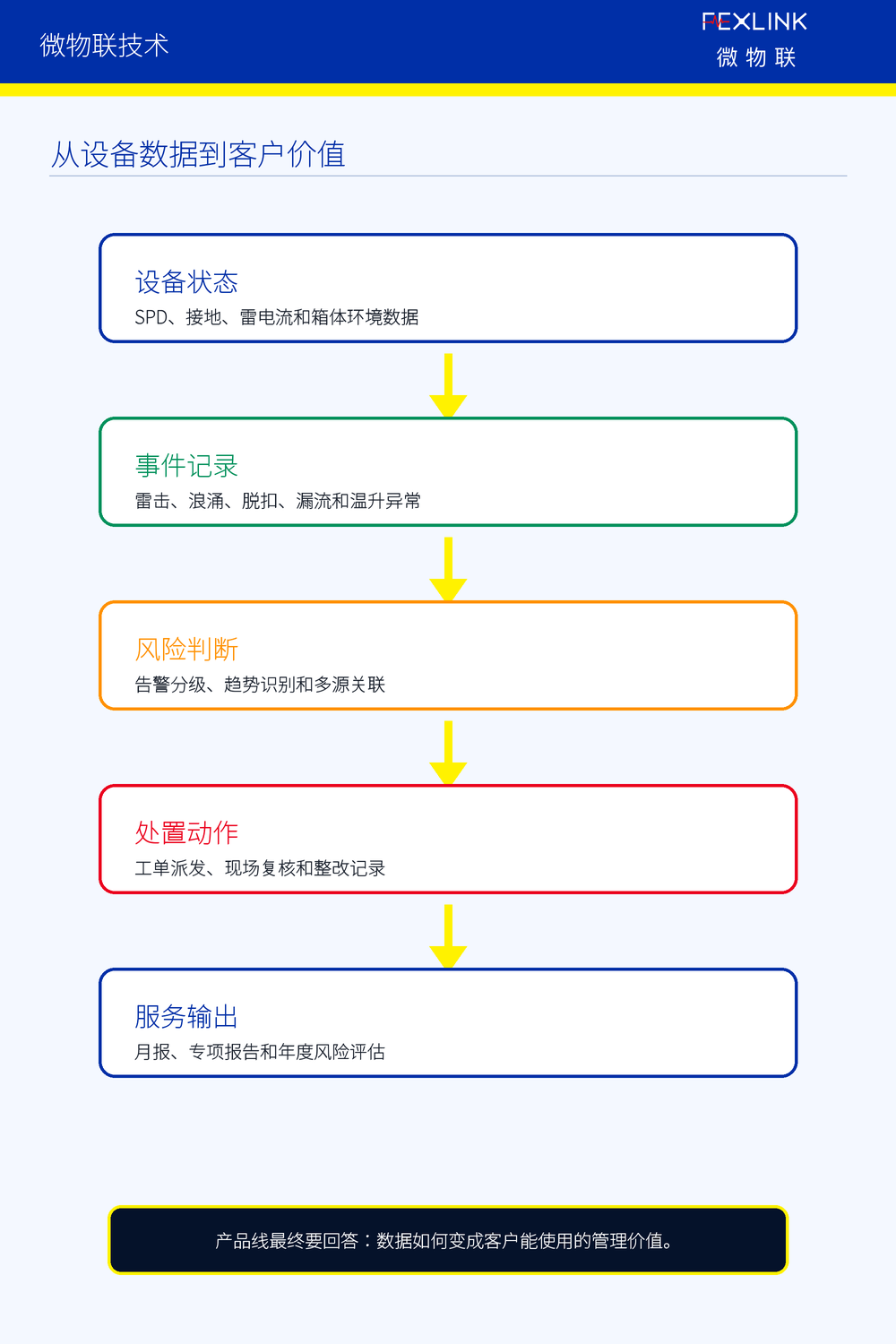
Many product line plans tend to fall into a problem: the product function list is very long, but customers still don’t know what management problems these functions can solve. For the intelligent lightning protection product line to move from equipment functions to customer value, the key is to turn data into judgment, and then turn judgment into disposal.
The first step is device status data. Including SPD status, leakage current, temperature, lightning current, ground resistance, box environment and communication status, these data answer "whether the scene is visible?"
The second step is event recording. Including lightning strikes, surges, tripping, leakage current abnormalities, temperature rise abnormalities, sudden grounding changes and equipment offline, these records answer "what happened".
The third step is risk judgment. The platform needs to determine alarm levels, risk locations, possible causes, and priority processing based on thresholds, trends, multi-point comparisons, and multi-source correlations.
The fourth step is the disposal action. Intelligent lightning protection cannot stop at the billboard, but must enter work order dispatch, on-site review, equipment replacement, recovery confirmation and incident archiving.
The fifth step is service output. What customers really need is monthly health reports, special reports after thunderstorms, SPD life trend reports, grounding status trend reports and annual risk assessment reports.
3. Product line planning is recommended to be promoted in phases
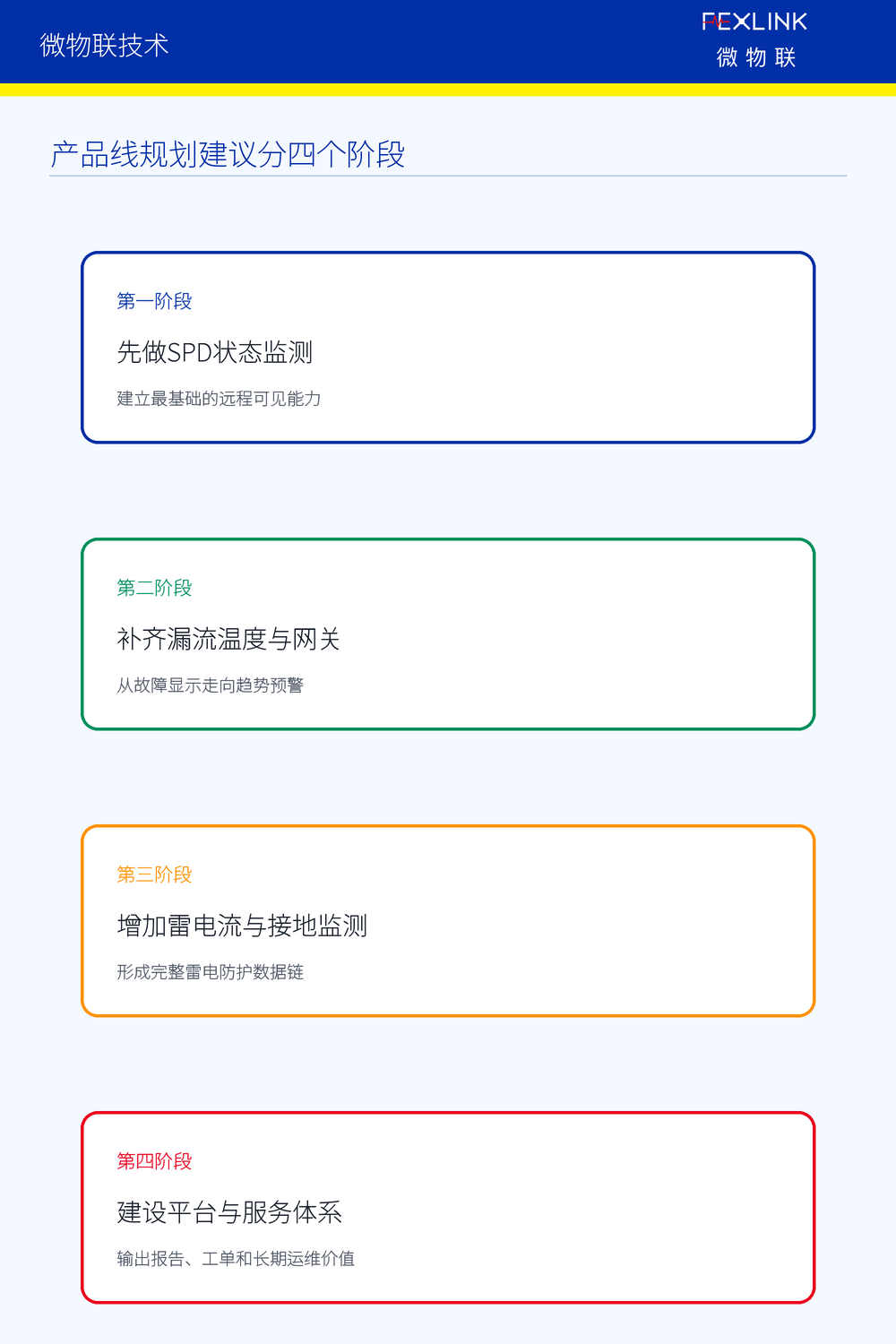
In the first stage, SPD status monitoring is done first. This is the easiest entry point to implement, and can cover existing SPD remote signaling, trip status, equipment online status and basic alarms with priority. This stage does not pursue complete functions, but first allows customers to see the originally invisible state of the lightning protector.
In the second stage, leakage current, temperature and gateway capabilities are completed. When the system has leakage, temperature and backup protection status, it can detect faults and gradually move towards early warning of deterioration trends. The gateway capability ensures that on-site data can be stably and continuously accessed the platform.
In the third stage, online monitoring of lightning current and grounding is added. Intelligent lightning protection cannot only look at the lightning protector itself, but also needs to know whether a lightning strike has occurred, how strong the impact is, and whether the grounding path is reliable. At this stage, a complete lightning protection data link begins to form.
The fourth stage is to build the platform and service system. The platform must complete alarm classification, event files, trend analysis, work order closed loop and report output, and the service system must be able to support post-thunderstorm review, quarterly inspection recommendations and annual risk assessment.
4. The product line cannot be separated from the scenario plan
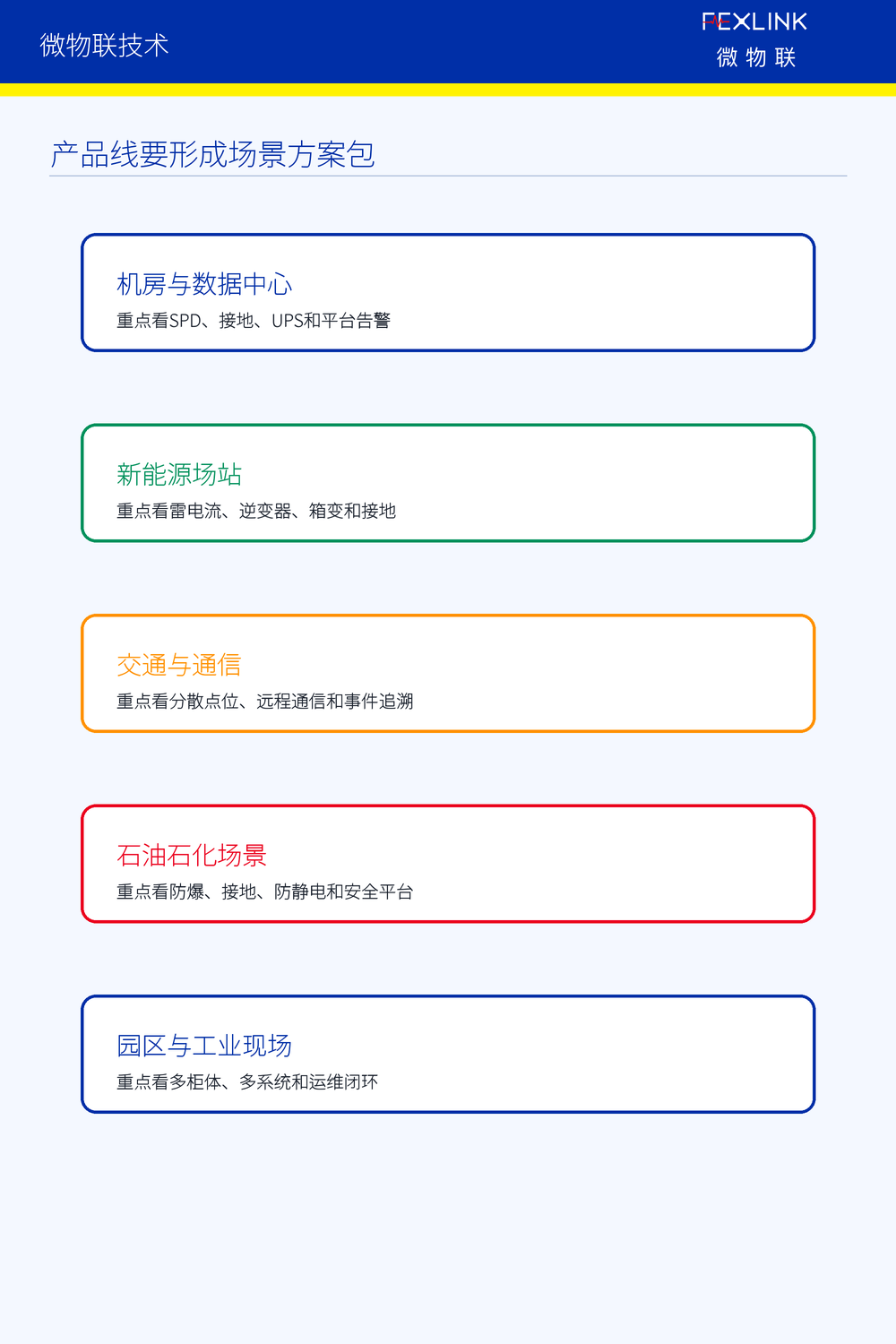
For the same set of products, if there is no scene-based expression, it will be difficult for customers to quickly understand the value. Computer rooms and data centers value SPD, grounding, UPS power supply and platform alarms; new energy stations value inverters, box-type transformers, booster stations, lightning current and grounding status.
Transportation and communication scenarios are usually dispersed, focusing on remote communications, edge gateways, event tracing, and batch operation and maintenance. Petroleum and petrochemical scenarios require attention to explosion protection, grounding, anti-static, communication methods and safety platform access. Parks and industrial sites pay more attention to multi-cabinet, multi-system, multi-role collaboration and work order closed loop.
Therefore, the product line cannot just be a general equipment list, but also form a scenario package of "product portfolio + point design + communication network + platform function + operation and maintenance process".
5. What are the pitfalls when planning an intelligent lightning protection product line?
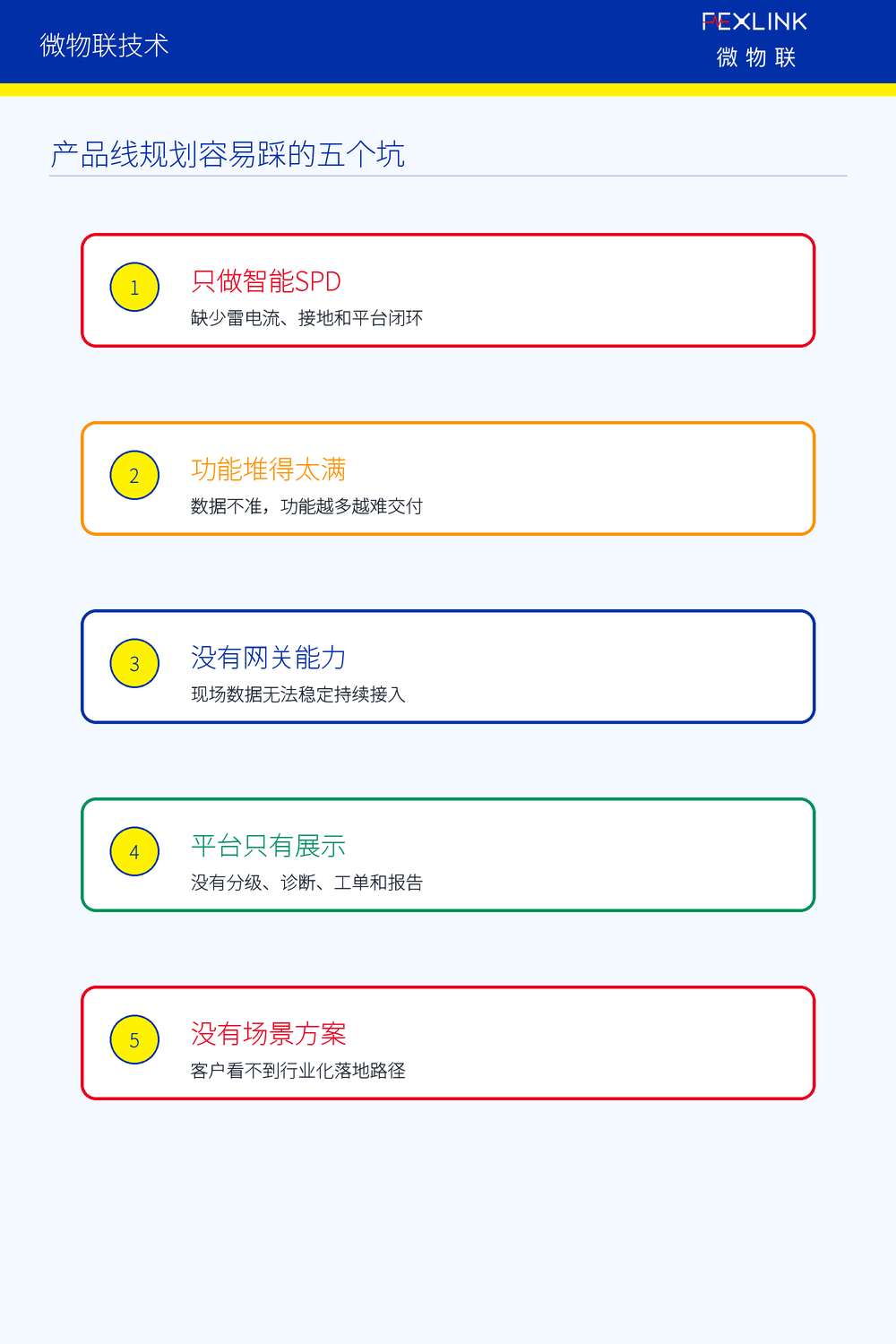
The first misunderstanding is to only do smart SPD. SPD is important, but without lightning current, grounding, gateways and platform closed loops, the product line remains at the single point device level.
The second misunderstanding is that there are too many functions. More functions do not mean higher value. If data accuracy, anti-interference, long-term stability and field verification are insufficient, more functions will make it harder to deliver.
The third misunderstanding is that there is no gateway capability. Intelligent lightning protection sites often have many points, complicated protocols, long distances, strong interference, and no stable collection and communication capabilities. No matter how beautiful the platform is, there is no reliable data.
The fourth misunderstanding is that the platform is only for display. Customers do not lack a display page. What they need is classification, diagnosis, cause explanation, disposal suggestions, work order closed loop and report output.
The fifth misunderstanding is that there is no scene plan. Different scenarios have different risk objects, different points, different communication methods, and different management processes. Without industry solutions, it is difficult for products to truly enter customer budgets.
6. How does FEXLINK understand the intelligent lightning protection product line planning?
FEXLINK believes that the essence of intelligent lightning protection product line planning is not to network traditional lightning protection products, but to equip the lightning protection system with the ability to continuously produce data, explain risks and support operation and maintenance decisions.
The FEXLINK system focuses on: whether the SPD status can be judged, whether lightning current events can be traced, whether the grounding status can be continuously monitored, whether the gateway can be stably connected, whether the platform can complete diagnosis and classification, and whether the service can form reports, work orders, and long-term reviews.
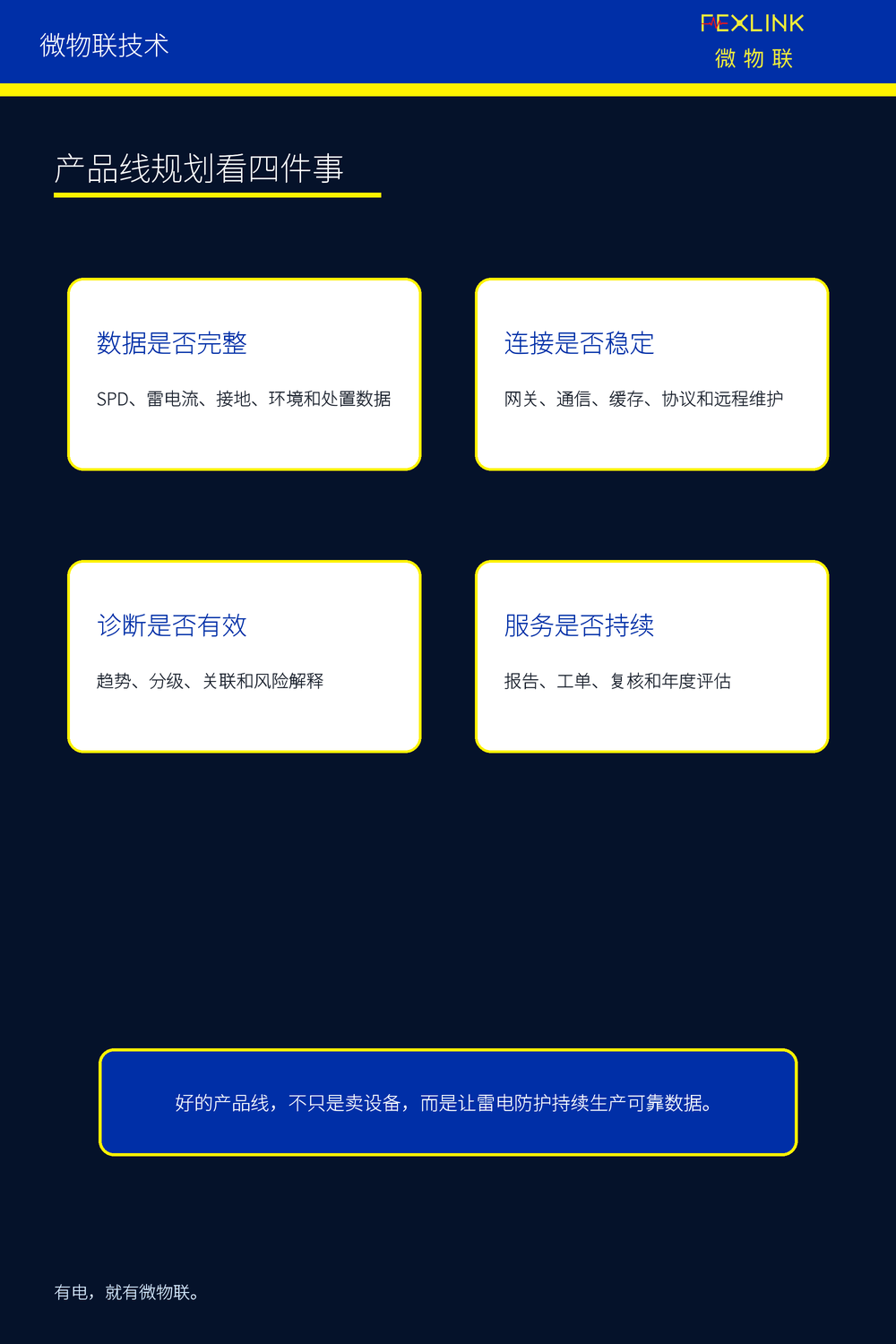
A mature product line must answer at least four things: whether the data is complete, whether the connection is stable, whether the diagnosis is effective, and whether the service is continuous.
Conclusion: A good product line moves from data chain to service chain
The smart lightning protection product line is not the more complex, the better, nor is the more functions the better. A truly good product line should allow customers to clearly see: whether the on-site status can be seen, whether risks can be judged, whether exceptions can be handled, and whether the data can continue to form management value.
From SPD status monitoring to lightning current monitoring, from online grounding monitoring to smart gateways, from platform alarms to work order closed loops, the core of the smart lightning protection product line is to upgrade disposable protective equipment into a continuously operating data system.
FEXLINK technology will continue to share content related to intelligent lightning protection, early warning of electrical safety, digital power distribution, energy supervision and industrial Internet of Things.
FEXLINK/FEXLINK uses data to reconstruct energy efficiency and electrical safety.
Where there is electricity, there is FEXLINK.