Summary: Temperature anomalies are more than just “the device is hot.” In many power distribution scenarios, loose terminals, increased contact resistance, oxidative corrosion, and local overloading will all manifest themselves through temperature rise. Temperature warning should not only look at the absolute value, but also look at the temperature rise trend, load relationship and comparison of similar points.
Heating in electrical equipment is common, but not all heat is dangerous, and not all dangers manifest themselves immediately as high temperatures. What really needs attention is the reason behind the abnormal temperature rise.
In distribution cabinets, terminal blocks, busbar connections, switch contacts and connectors, temperature abnormalities are often external manifestations of changes in contact status. If you only wait until obvious heat or ablation occurs, the risk has already advanced to the later stages.
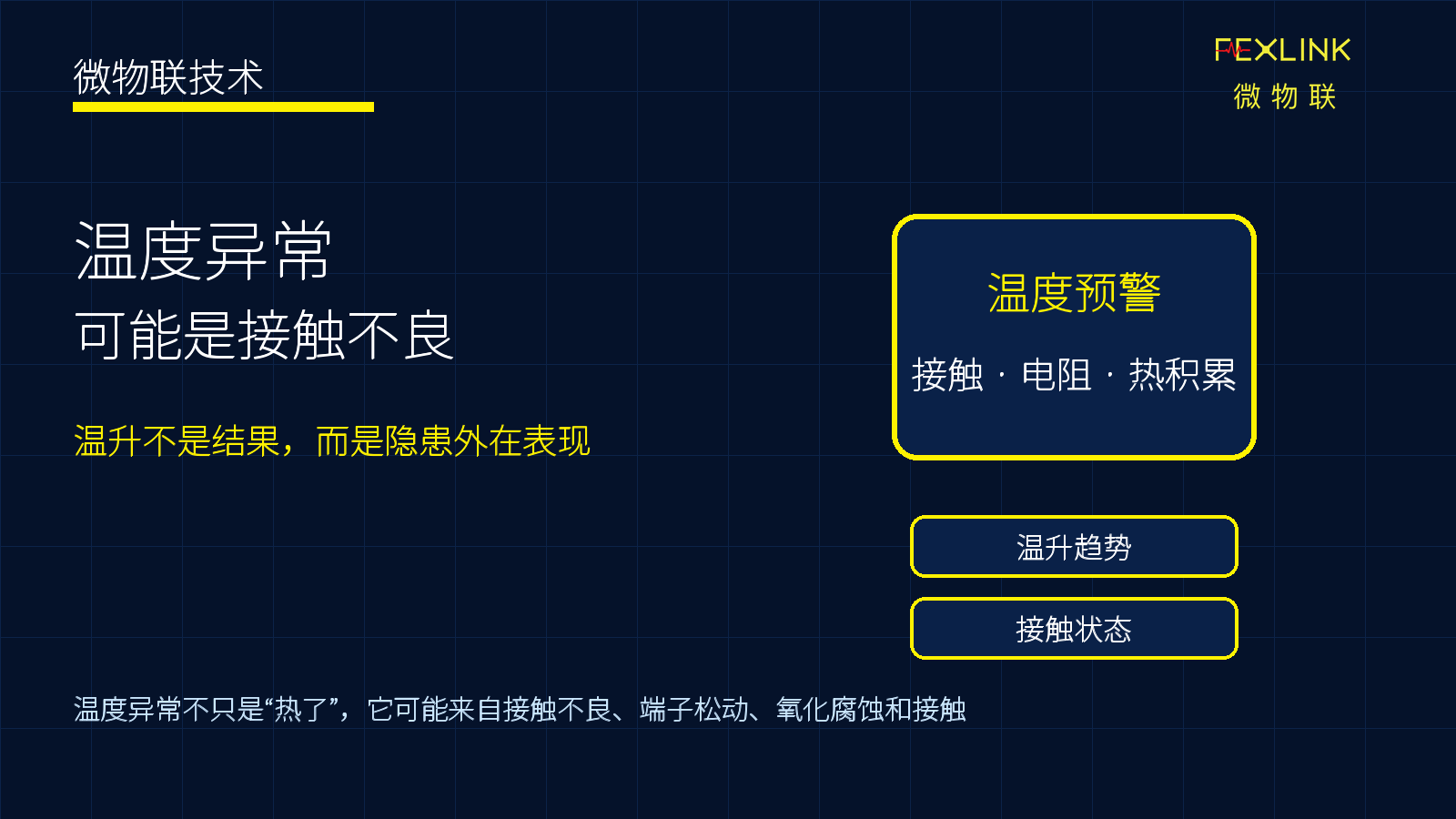
1. Why does heat occur due to poor contact?
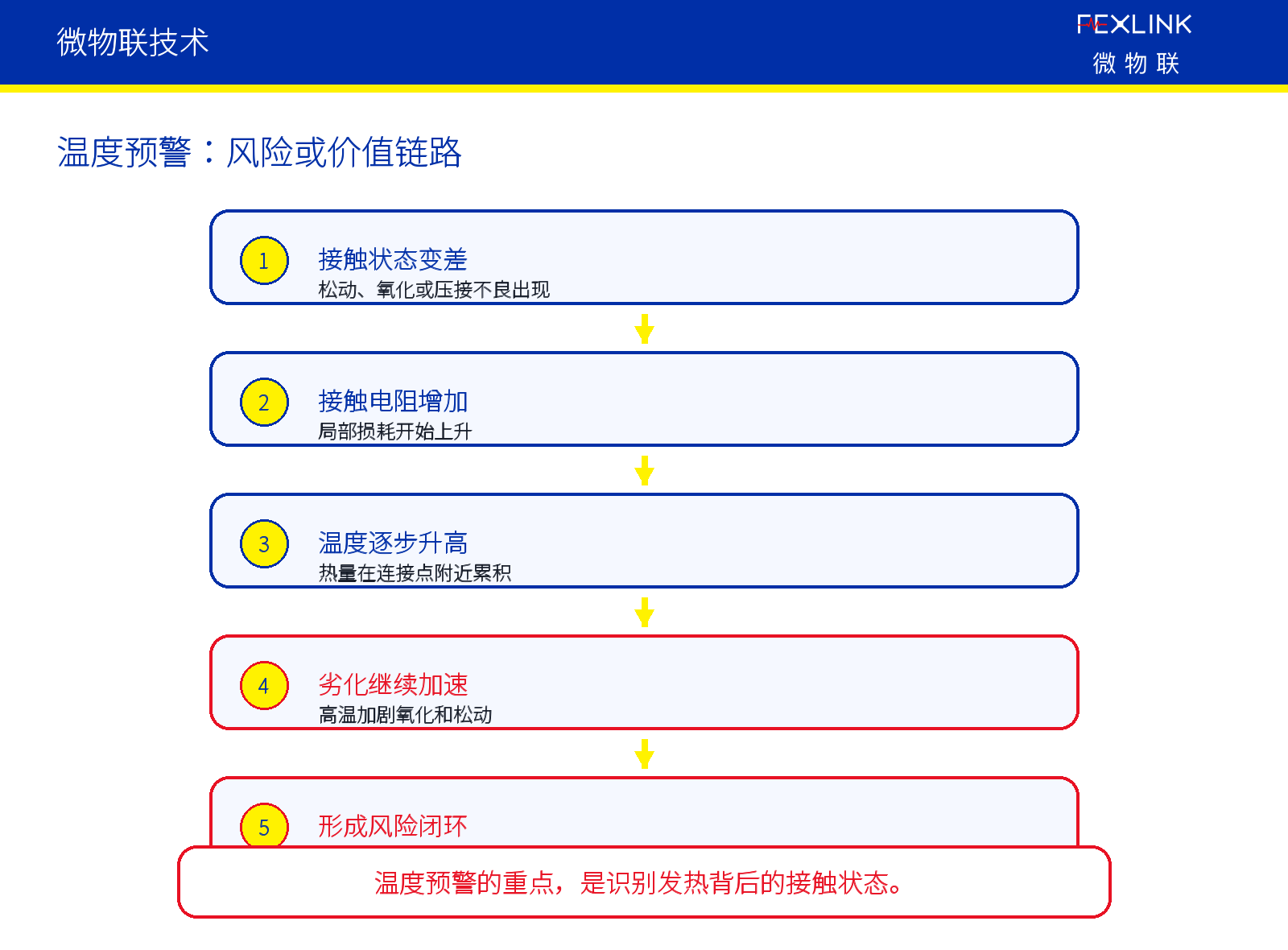
When current passes through a connection point, contact resistance increases if the contact surface is loose, oxidized, corroded, or under-crimped. As the resistance increases, local losses increase and heat is concentrated near the contacts, causing a temperature rise.
The temperature rise will accelerate oxidation and material aging, further deteriorating the contact state. This cycle of "increased contact resistance-heating-oxidation-worse contact" is an important mechanism for many electrical fire hazards.
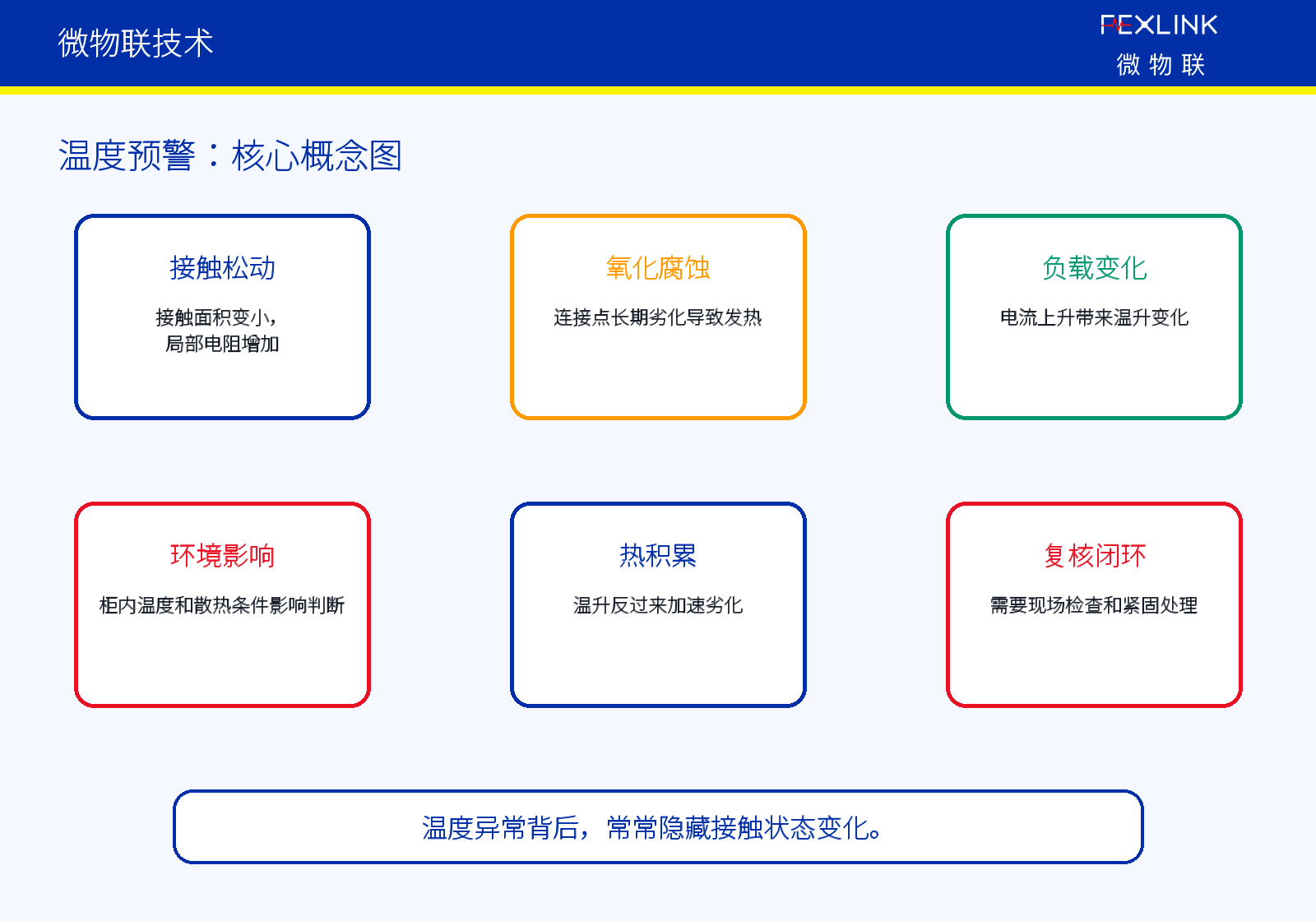
2. Temperature abnormalities do not necessarily come from overloading
When many people see the temperature rising, they first think of excessive load. But if the current is not high, but the temperature of a certain contact is significantly higher than that of a similar point, you should be more vigilant about poor contact.
Under the same load conditions, if the temperature of a certain phase terminal is high, it may indicate that the connection status of the phase is abnormal; if the temperature difference between adjacent points in the same cabinet is too large, it may also indicate that there is a problem with the local contacts. Therefore, temperature must be viewed together with current, location, and environment.
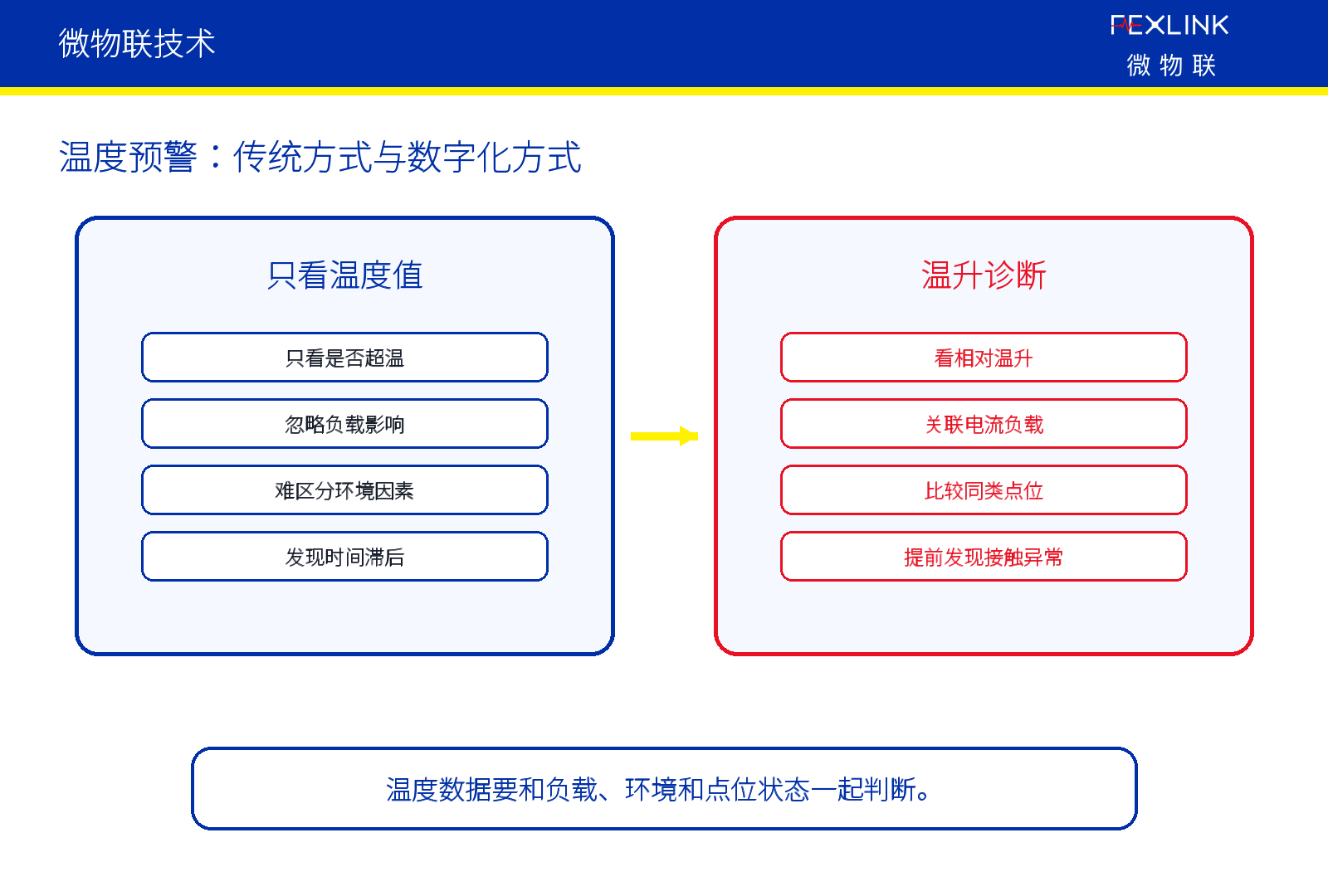
3. Why can’t we just look at the absolute temperature?
Different equipment, different locations, and different environments have different normal temperatures. In summer, when the cabinet is closed and the load is running, the temperature will be higher. If only a fixed threshold is used for judgment, it is easy to cause false positives or false negatives.
A more effective way is to look at the temperature rise trend, phase differences, comparison of similar points and load correlation. If the temperature continues to rise, is obviously too high locally, and does not match the current, it is more worthy of warning.
4. How to enter the closed loop of temperature warning
After a temperature abnormality is discovered, you cannot just push a high temperature alarm. The system should prompt to check the terminals, tightening status, contact surface oxidation, load distribution and environmental heat dissipation. After treatment, you should also check whether the temperature has dropped.
Only by forming a closed loop of alarm, inspection, maintenance, and review can temperature monitoring not simply look at thermal images, but become a contact status management tool.

5. How does FEXLINK understand temperature abnormality warning?
FEXLINK believes that temperature is an external manifestation of electrical hazards and cannot be judged in isolation. FEXLINK pays more attention to the relationship between temperature, current, location, environment and historical trends to determine whether it is a normal thermal state or an abnormal exposure risk.
The value of temperature warning is to expose changes in contact status that are invisible to the naked eye in advance, allowing operation and maintenance to deal with them before ablation and power outage.
Conclusion: Behind temperature anomalies, the connection status is often changing.
Increased temperature is not just a thermal issue, but can be the result of a combination of contact resistance, load conditions, and the thermal environment. The real temperature warning should be upgraded from looking at absolute values to looking at trends, comparisons and reasons.
FEXLINK technology will continue to share content related to intelligent lightning protection, early warning of electrical safety, digital power distribution, energy supervision and industrial Internet of Things.
FEXLINK/FEXLINK uses data to reconstruct energy efficiency and electrical safety.
Where there is electricity, there is FEXLINK.