1. Voltage abnormalities are not just “high” and “low”
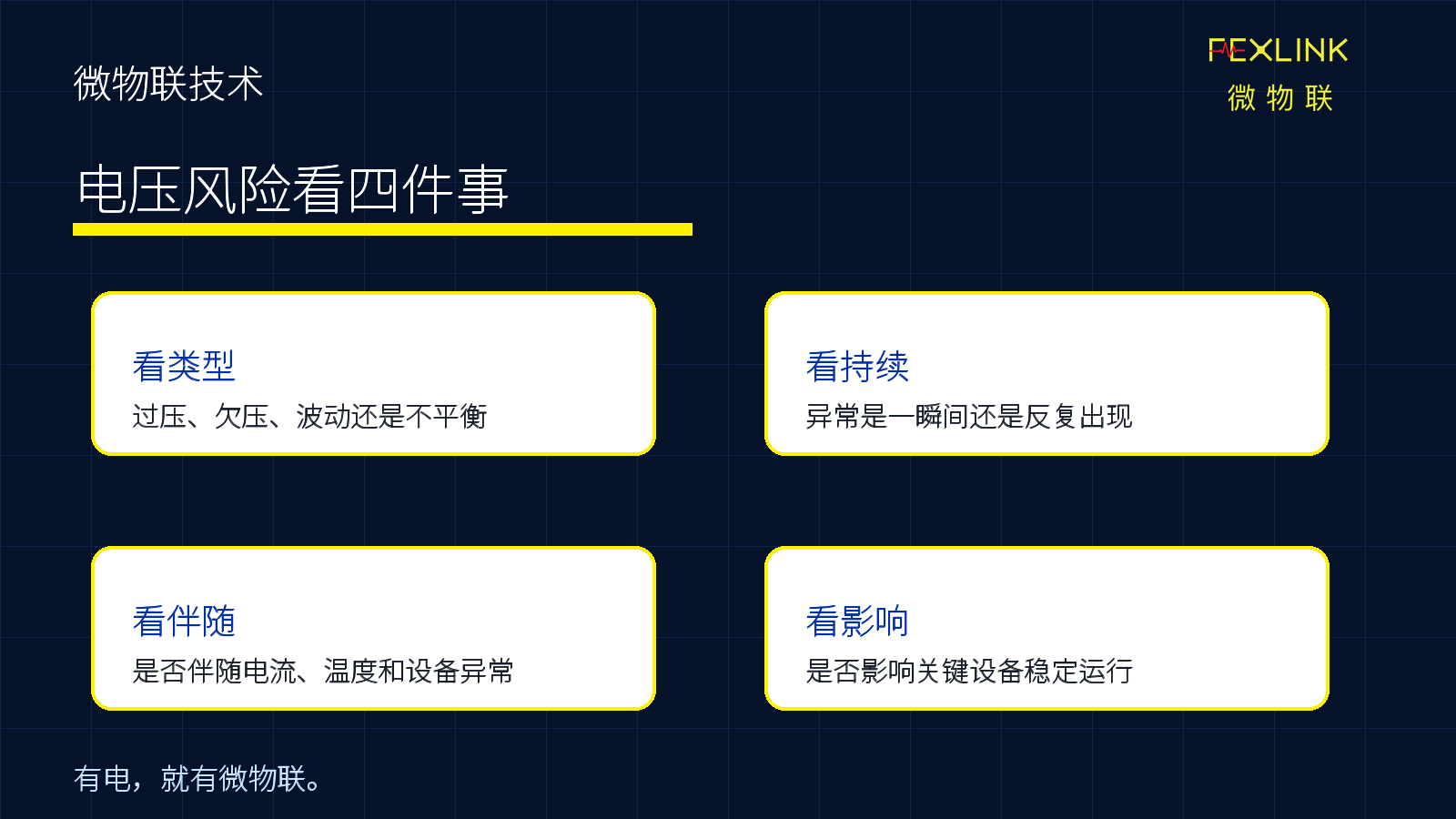
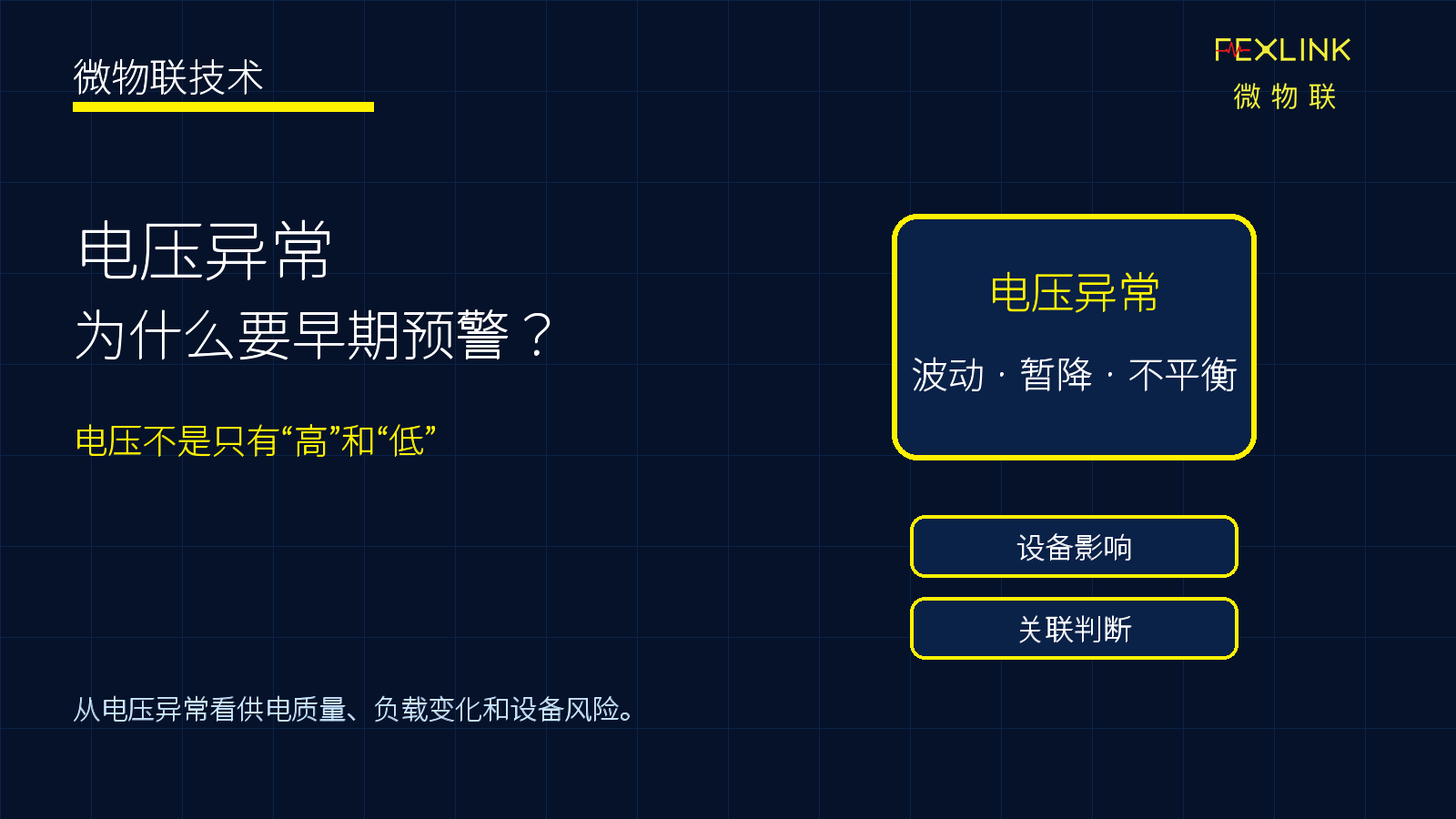
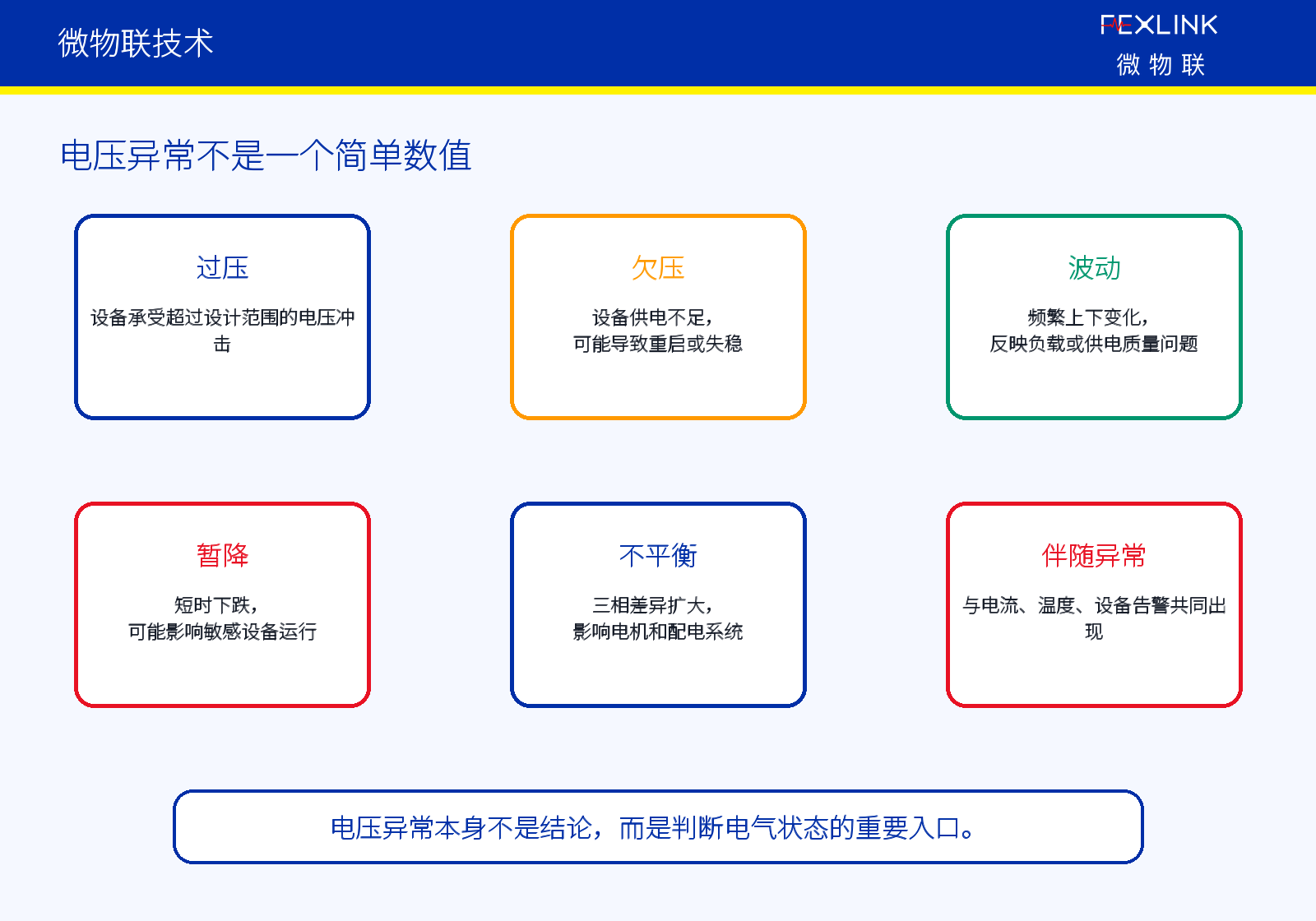
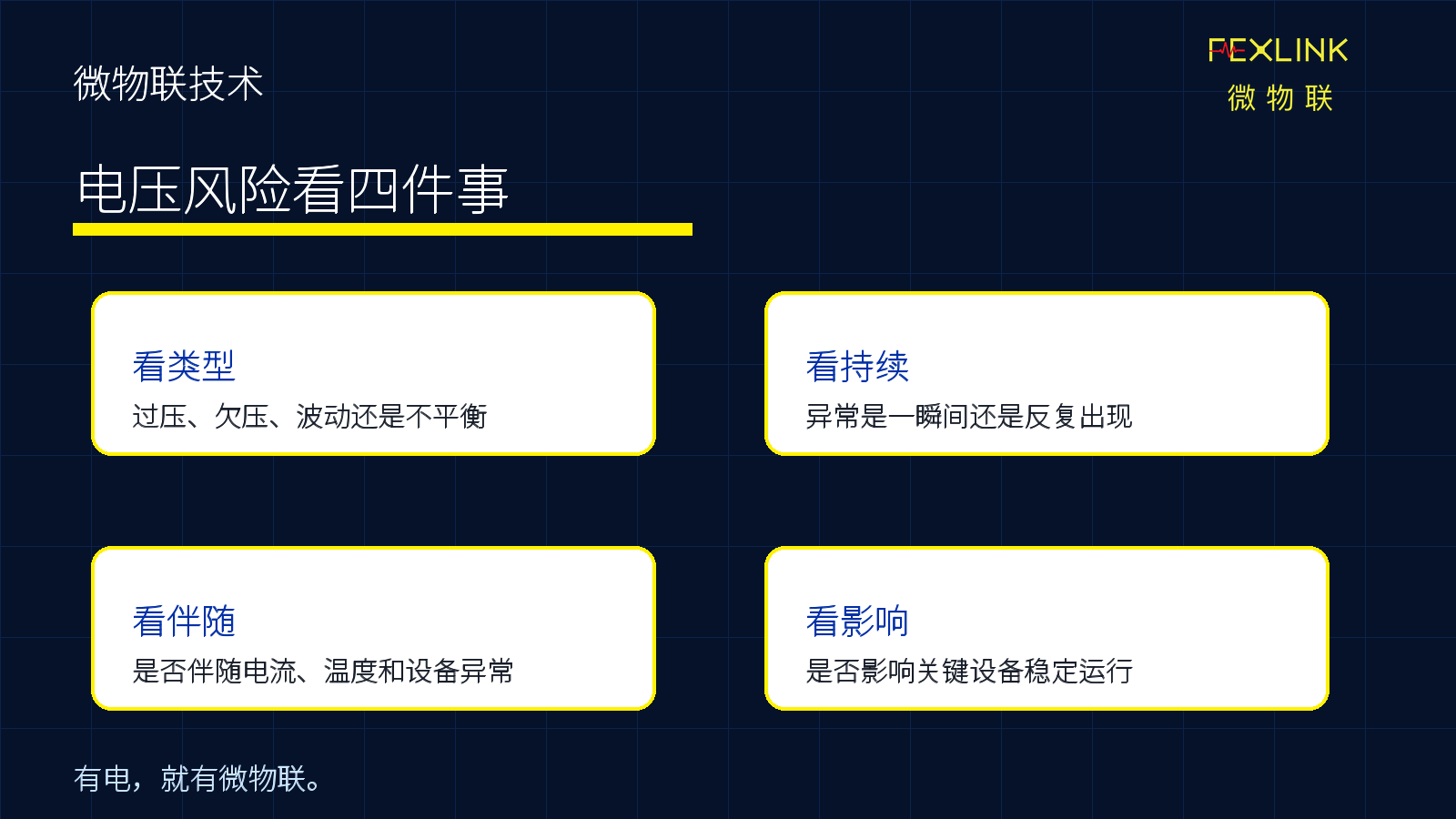
When many people understand voltage abnormalities, they first think of overvoltage and undervoltage. However, in real power distribution systems, voltage anomalies manifest themselves in far more than these two categories. Voltage fluctuations, short-term dips, three-phase unbalance, and frequent disturbances may reflect power supply quality, load changes, or line status problems.
For early warning of electrical safety, voltage is not an isolated value, but the entrance to the system's operating status. A short-term fluctuation does not necessarily represent a risk, but if the fluctuation occurs repeatedly and is accompanied by equipment alarms or abnormal currents, further judgment is required.
2. What equipment will be affected by abnormal voltage?
Power modules, frequency converters, communication equipment, charging piles, lighting systems and precision control equipment are all sensitive to voltage fluctuations. Overvoltage may cause shock, undervoltage may cause equipment to restart or become unstable, and sag may cause temporary abnormality in the control system.
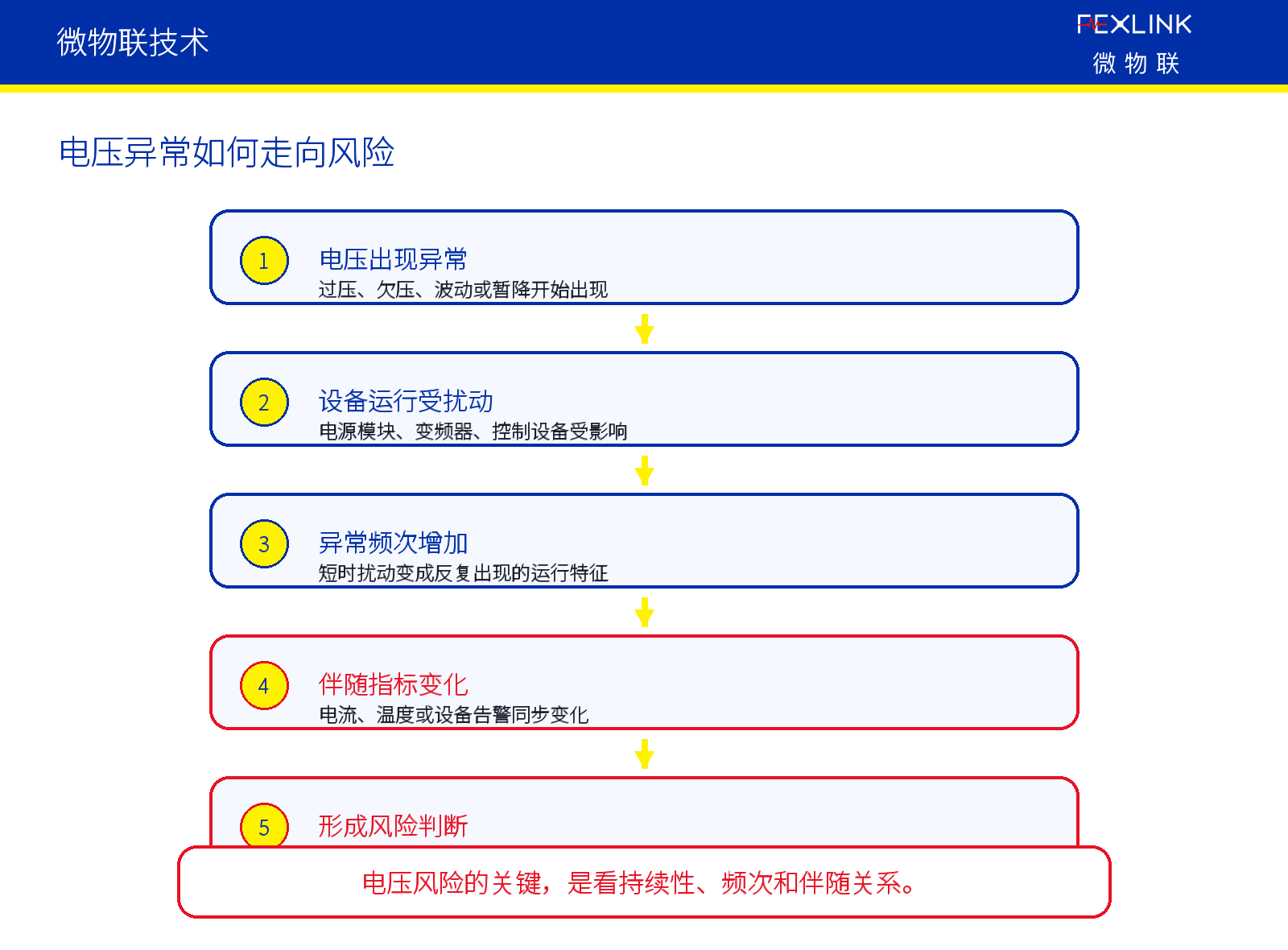
In many sites, equipment failure does not necessarily directly manifest itself as voltage exceeding the limit, but manifests itself as unstable operation, frequent restarts, protection actions or communication interruptions. If there is a lack of voltage process data, it will be difficult to restore the cause during accident review.
3. Why can’t we just look at the instantaneous value?
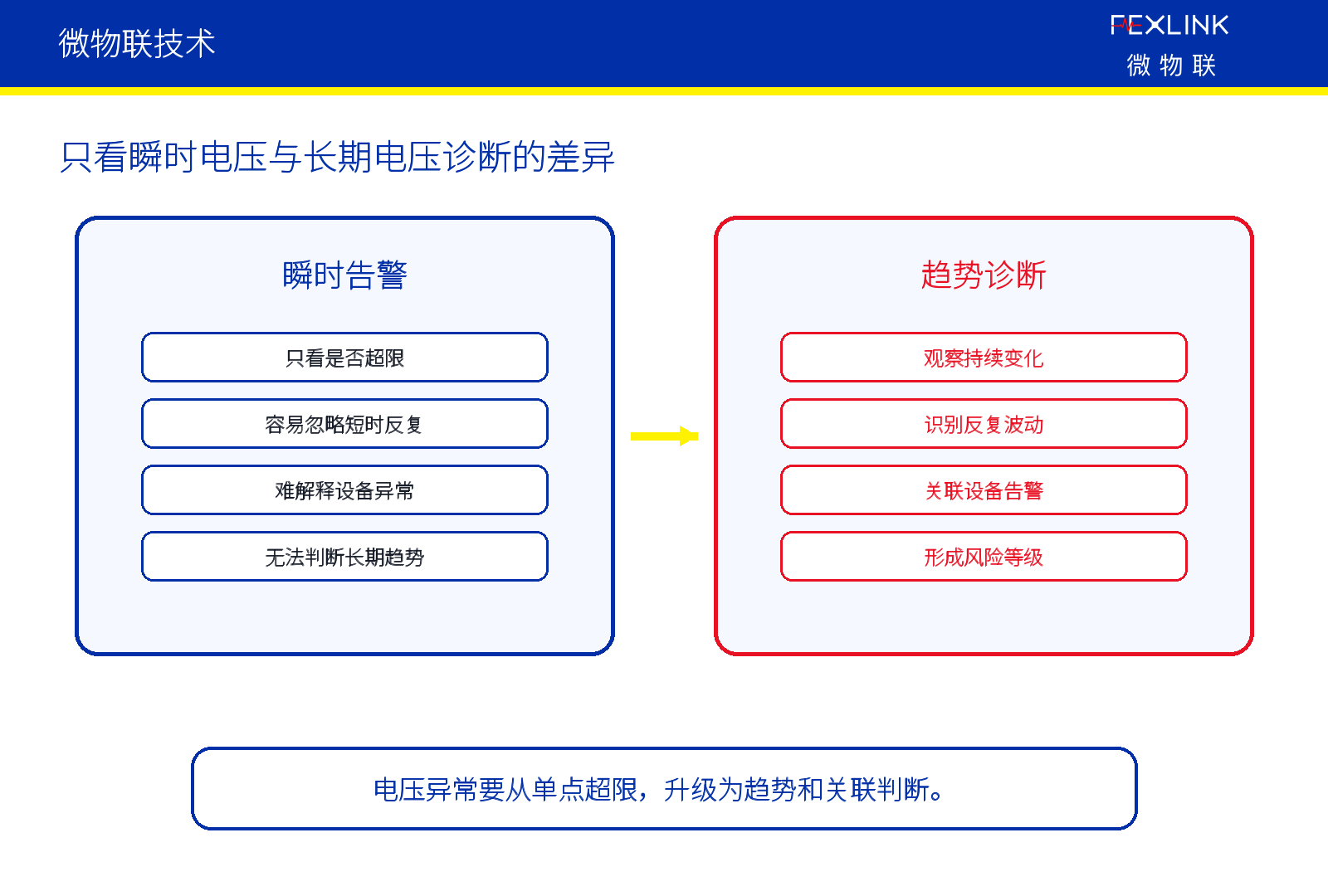
Short-term voltage fluctuations may come from load start and stop, or from power supply side disturbances. Simply using a threshold to judge is prone to false alarms, and it is also easy to miss recurring small fluctuations.
What’s more valuable is looking at trends, duration and frequency. For example, repeated voltage sag during a certain period indicates that the system may have a load impact or power supply quality problem during that period; the expansion of the three-phase voltage difference may affect the motor, frequency converter and three-phase load.
4. Voltage anomalies need to be correlated with other indicators
Voltage anomalies themselves are only clues and must be looked at along with current, temperature, leakage and equipment alarms. Voltage fluctuations are accompanied by current surges, which may be related to the start and stop of the load; voltage imbalance is accompanied by temperature rise, which may reflect abnormal three-phase loads or contact status.
Therefore, the focus of digital voltage monitoring is not to record a curve, but to put the voltage curve into a larger electrical status diagnosis system.
5. How digital monitoring improves identification capabilities
Digital monitoring can record voltage changes over a long period of time, identify fluctuation frequency, duration and abnormal periods, and time-correlate it with equipment alarms.
FEXLINK believes that the value of abnormal voltage lies not in “alarming if it exceeds a certain value”, but in determining whether the system is entering an unstable state through multi-dimensional data.
Conclusion: Let electrical safety move from result management to process management
If the fault is only dealt with after it occurs, a lot of losses have already been caused; if the risk can be seen early in the status change, operation and maintenance will have the opportunity to deal with it in advance.
FEXLINK technology will continue to share content related to electrical safety early warning, digital power distribution, arc fault identification, energy supervision and industrial Internet of Things.
Where there is electricity, there is FEXLINK.